Not a Postcard: Tenerife in Black & White
Day 1: Touchdown in Golf del Sur
Click to view larger
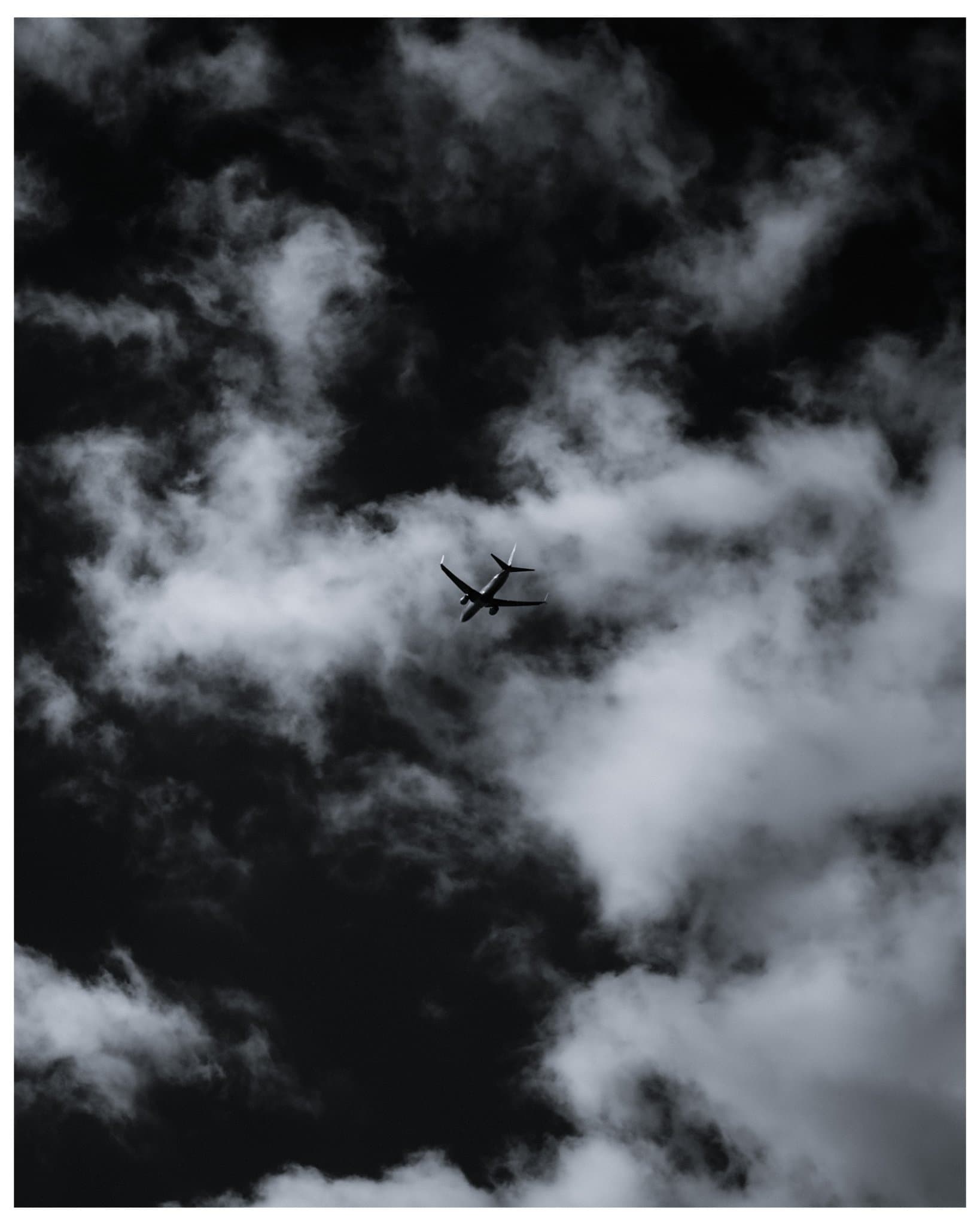
There is a strange feeling when you travel on December 30th. The rest of the world is rushing to finish the year, wrapping up work, or preparing for parties. But up here, suspended in the clouds, time stops. We descended into Tenerife not to a blaze of tropical sun, but to a dramatic, moody sky. It felt like the island was matching my own need for something quieter, slower.
Click to view larger
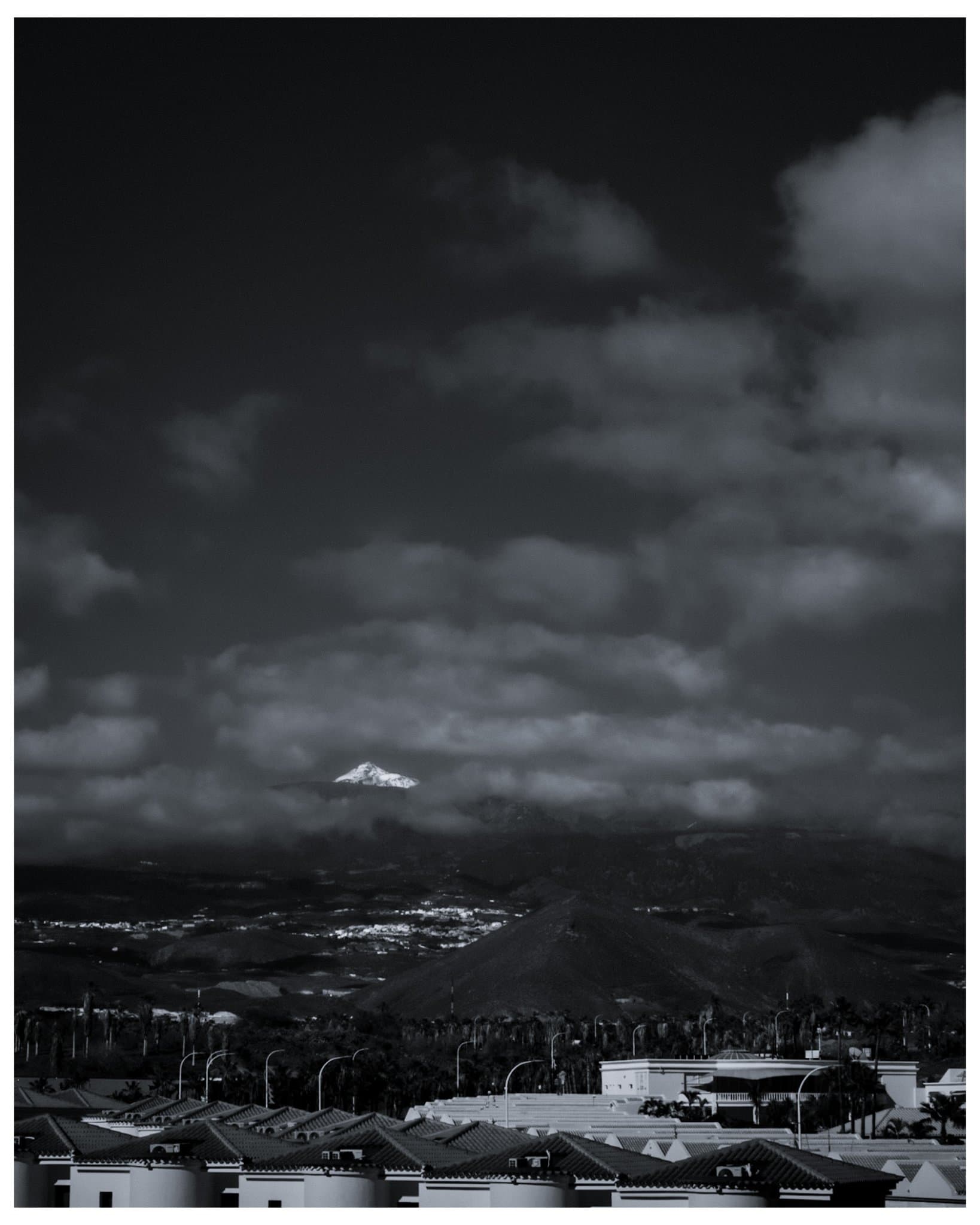
We headed south to Golf del Sur. It’s a small, rhythmic town, but you can never really forget where you are. Even amidst the holiday villas and the domestic calm of the rooftops, the Teide volcano looms in the distance. It is a silent giant, watching over the island, its peak dusted with snow - a reminder that nature here is still wild, no matter how many resorts we build at its feet.
Click to view gallery
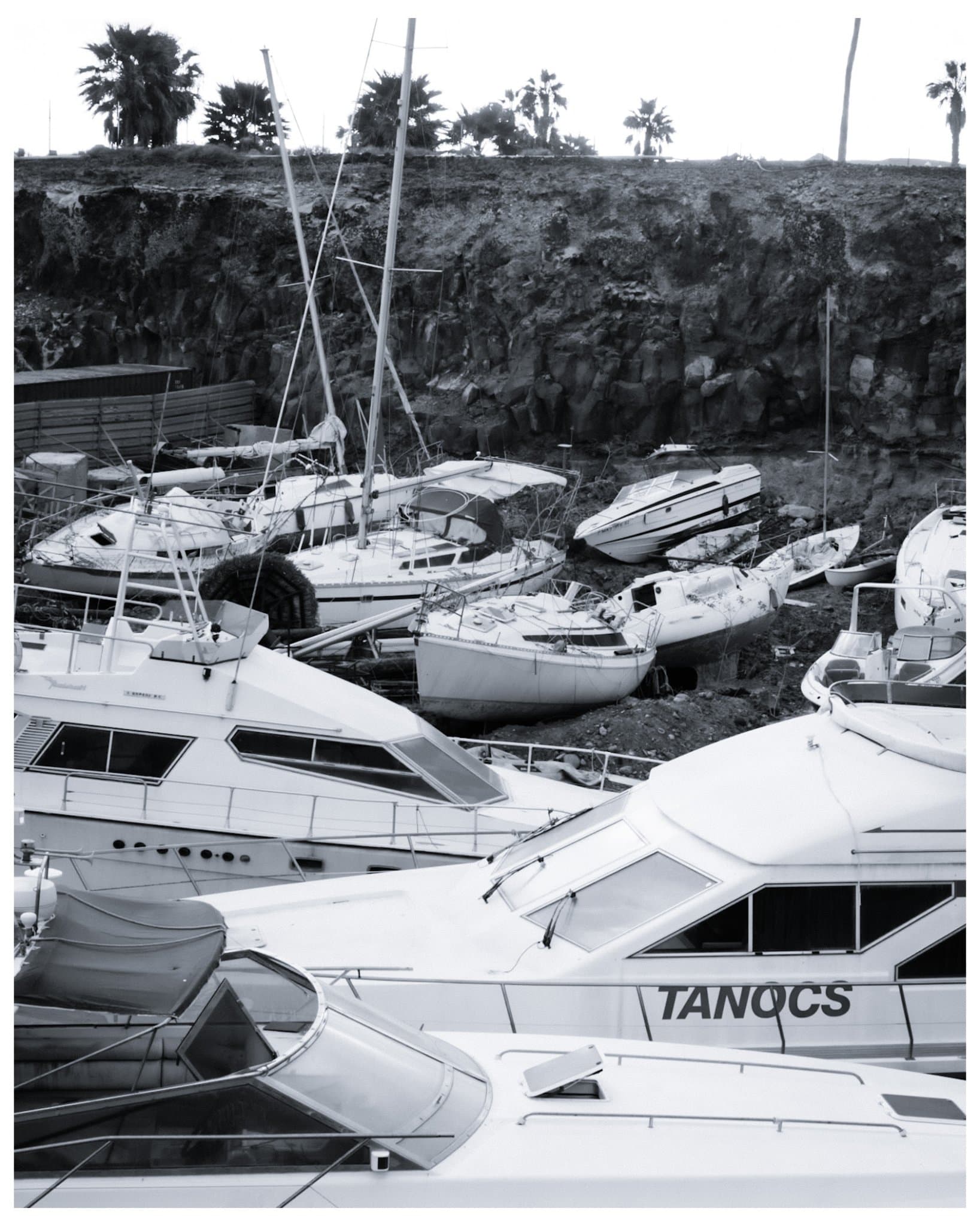
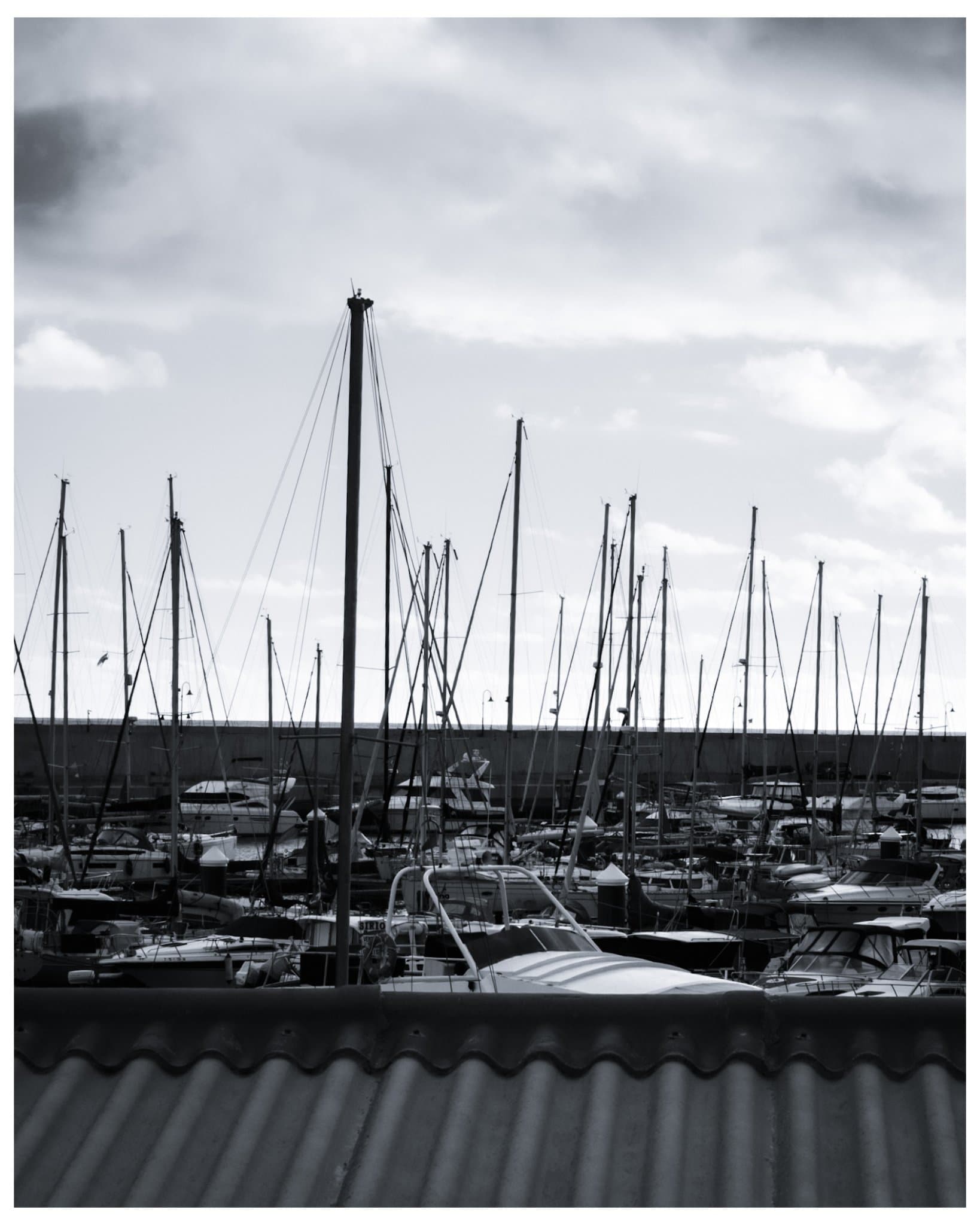
We spent the afternoon walking the harbor. It was peaceful. The boats were resting in the dry dock, and the masts swayed gently in the Atlantic breeze. There is a specific kind of silence in a port town during the off-season; it’s not empty, just resting. The ocean crashed against the volcanic rocks, a sound that instantly washes away the noise of the flight.
Click to view larger
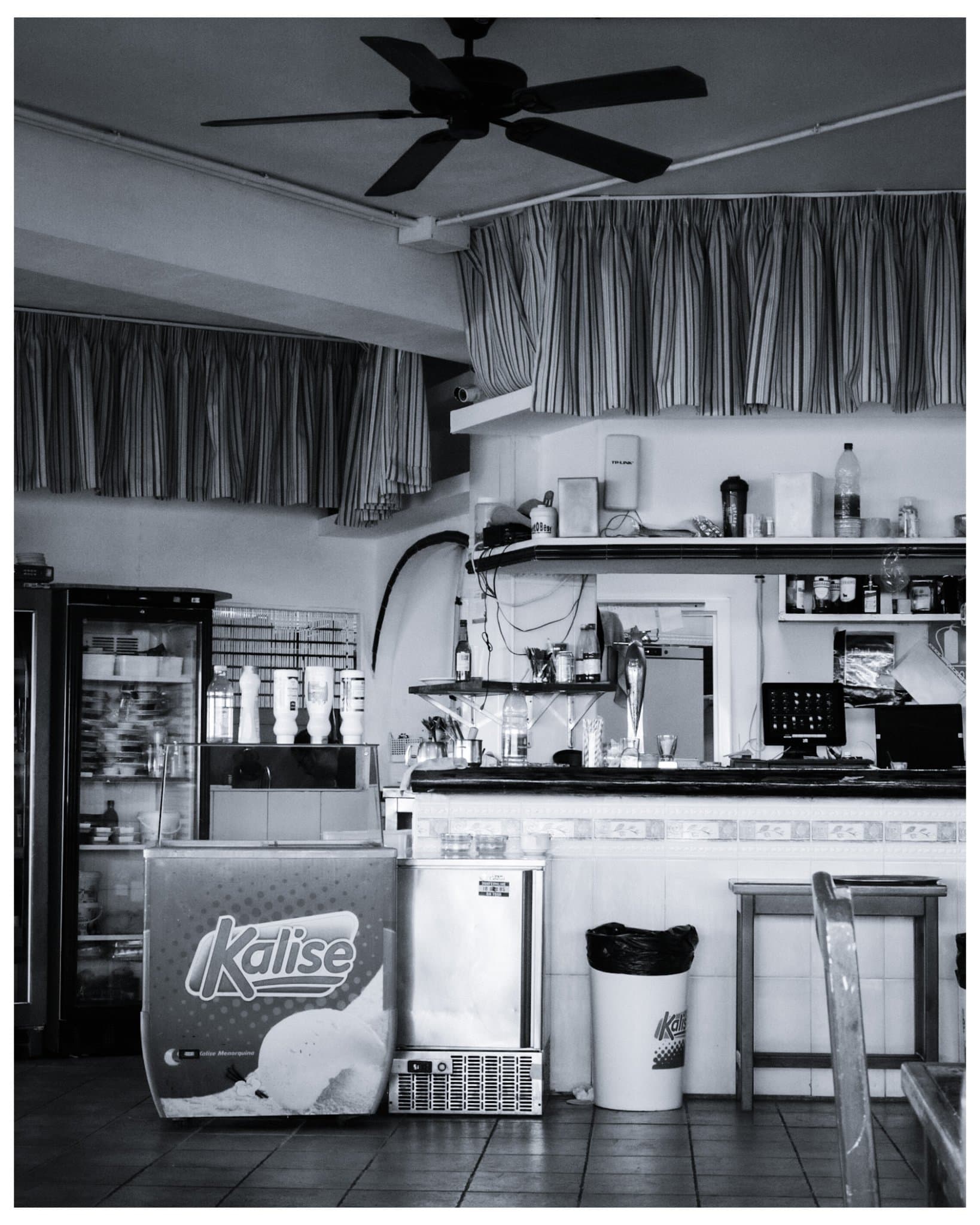
We ended the walk in a local bar. The "Kalise" freezer—usually a beacon of bright neon colors—sat quietly in the corner. Stripped of its red and yellow branding, it blended into the slow, rhythmic afternoon of the island. We sat next to it, watching the locals and the few stray tourists drifting by. Sitting there, with a cold drink in hand, I finally felt the year 2025 slipping away. We had arrived.
Day 2: The Crossover
Click to view larger
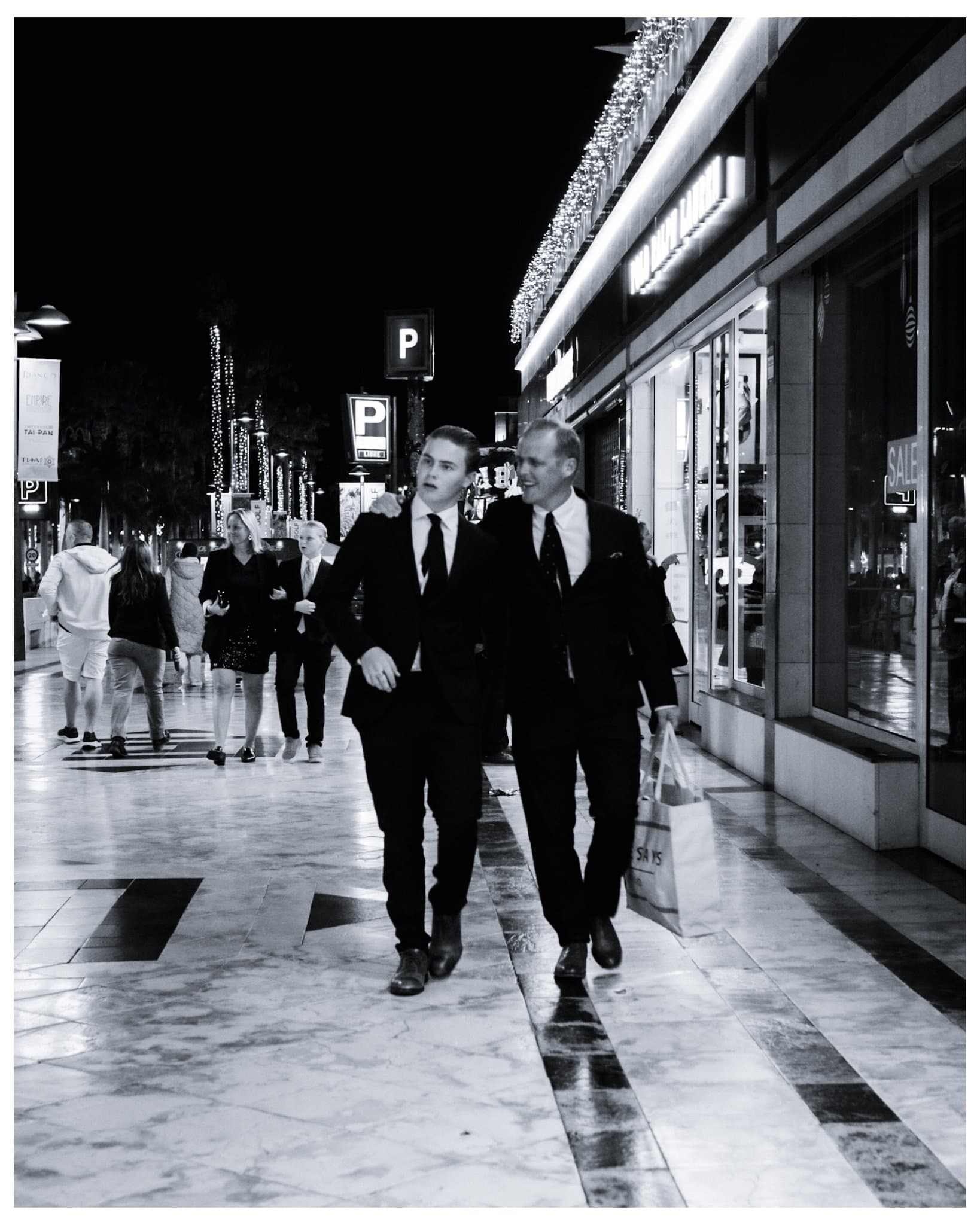
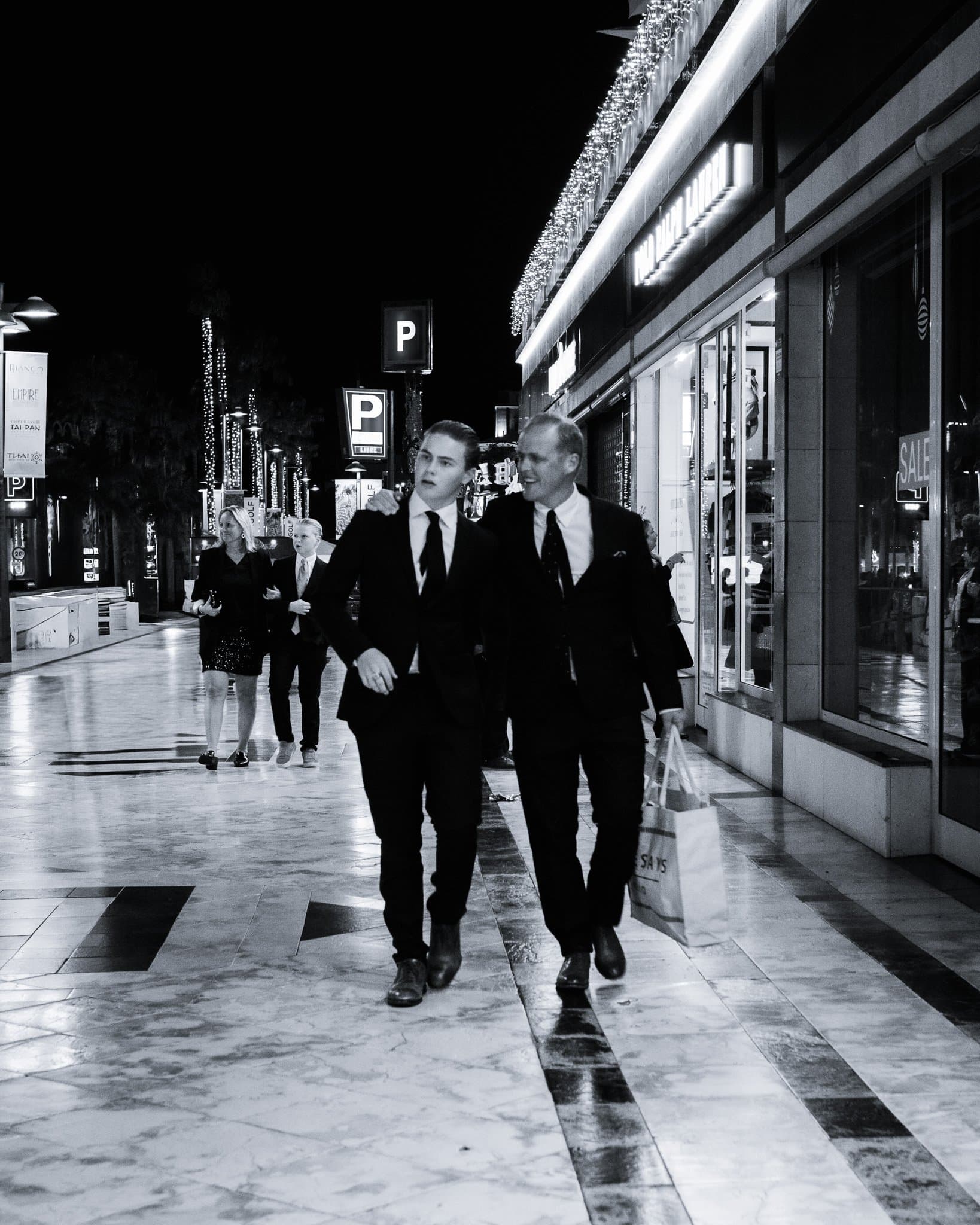
We left the silence of Golf del Sur for the pulse of Los Cristianos. It’s New Year’s Eve, the one night where the island’s casual rhythm speeds up. The streets became a runway of contrasts. You see father and sun in sharp suits walking arm-in-arm, laughing, carrying the anticipation of the night in their stride.
Click to view larger
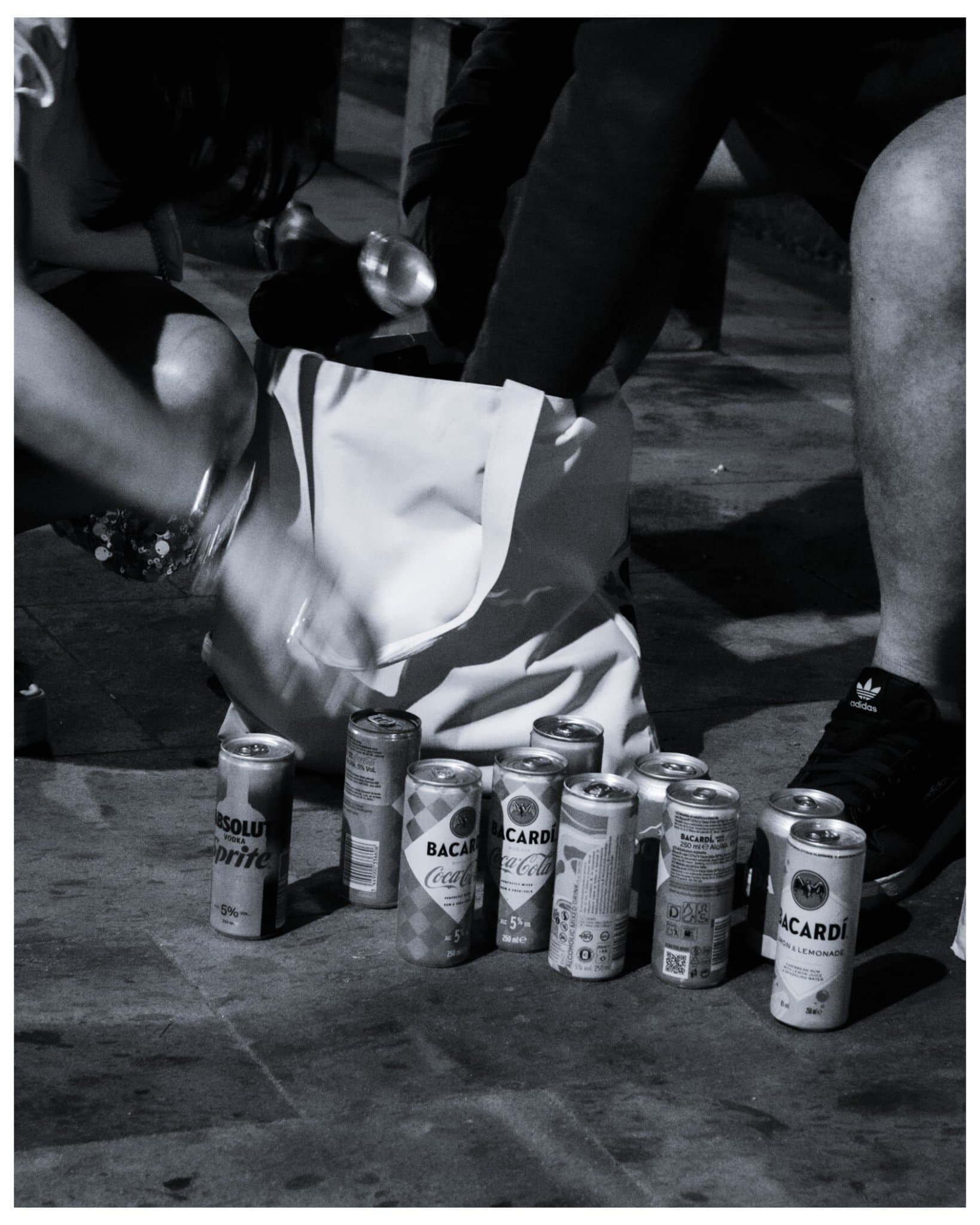
The real party wasn't in the VIP clubs; it was on the pavement. I loved the honesty of it. A stash of Bacardi mixers and beers huddled on the ground—a makeshift bar for the night. No glass, no waiters, just the essentials. It felt grounded, a reminder that the best celebrations are often the ones you make yourself on a street corner.
Click to view gallery
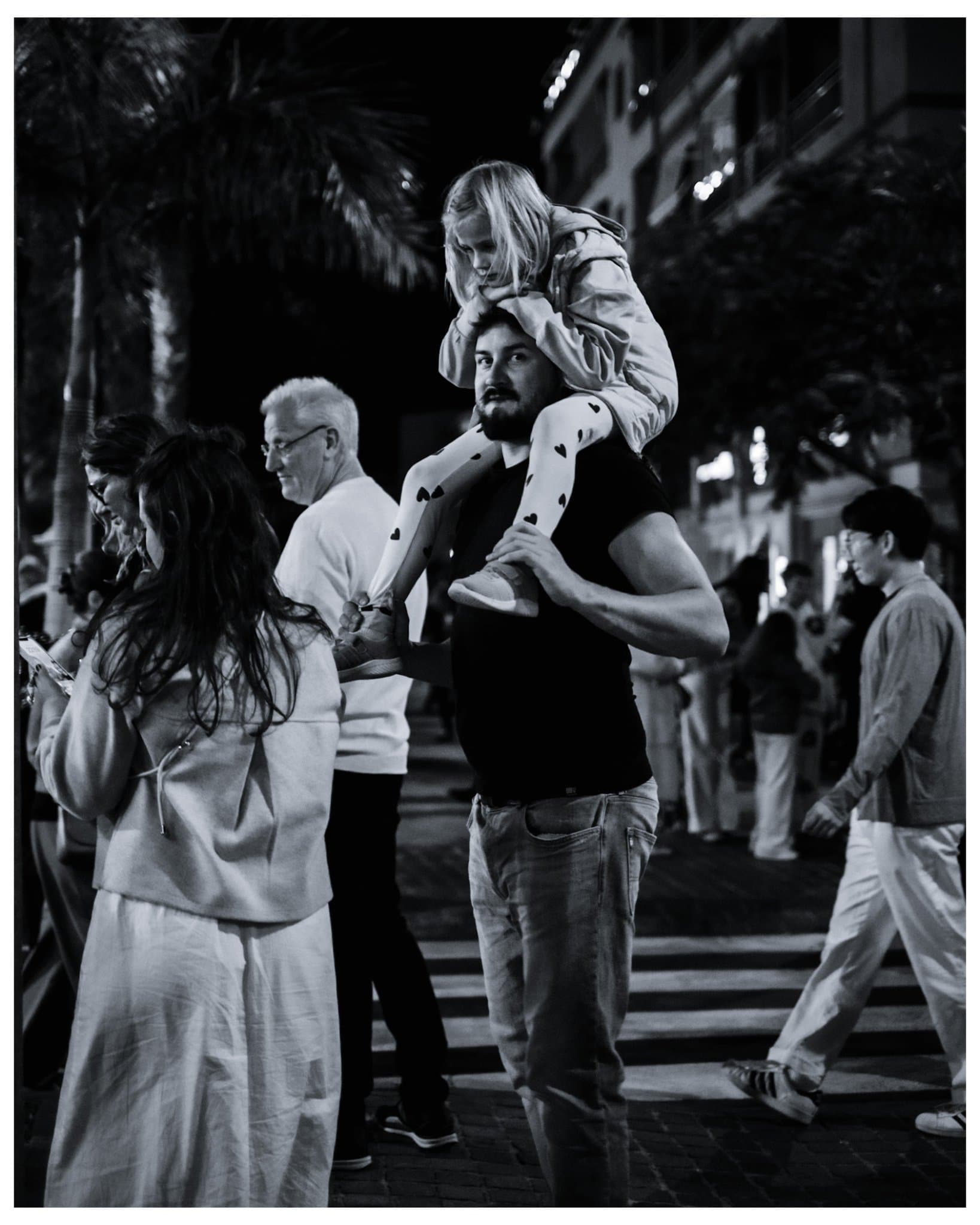
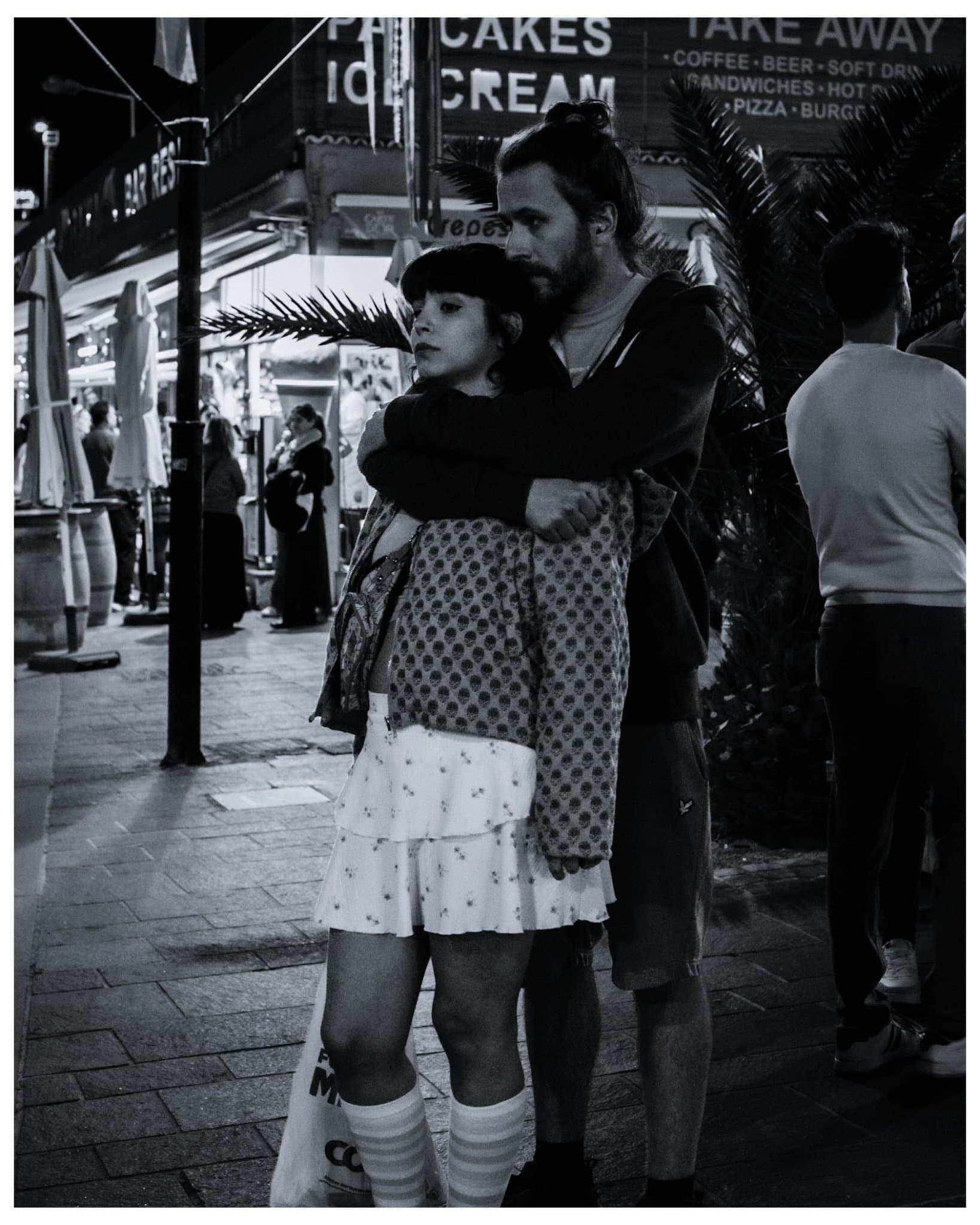
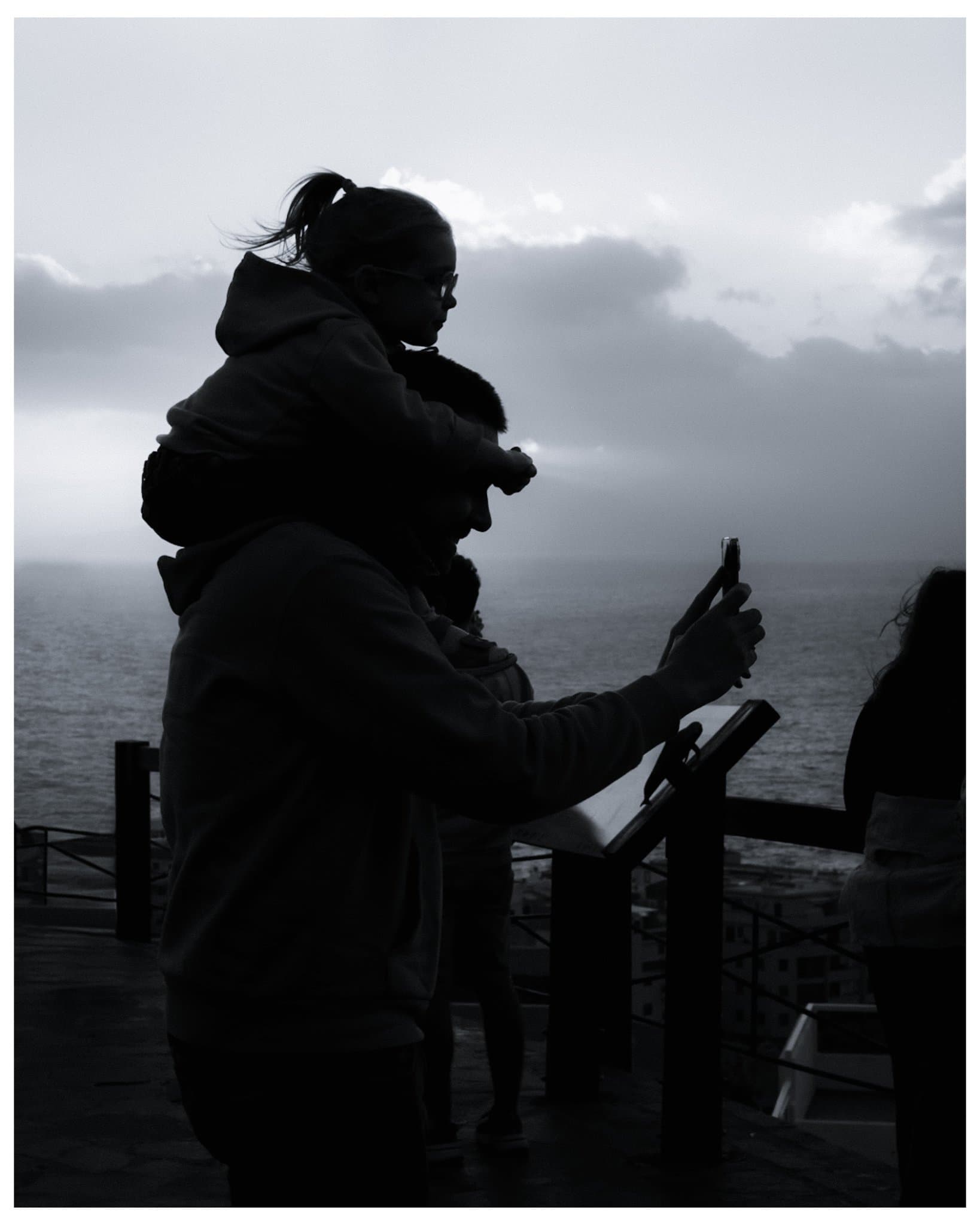
In the crush of the crowd, people created their own quiet bubbles. I caught a young couple lost in an embrace, looking like a scene from a classic film, completely oblivious to the noise. Nearby, a father hoisted his daughter onto his shoulders. She wasn't smiling for a camera; she was focused, scanning the horizon, waiting for the sky to change.
Click to view larger
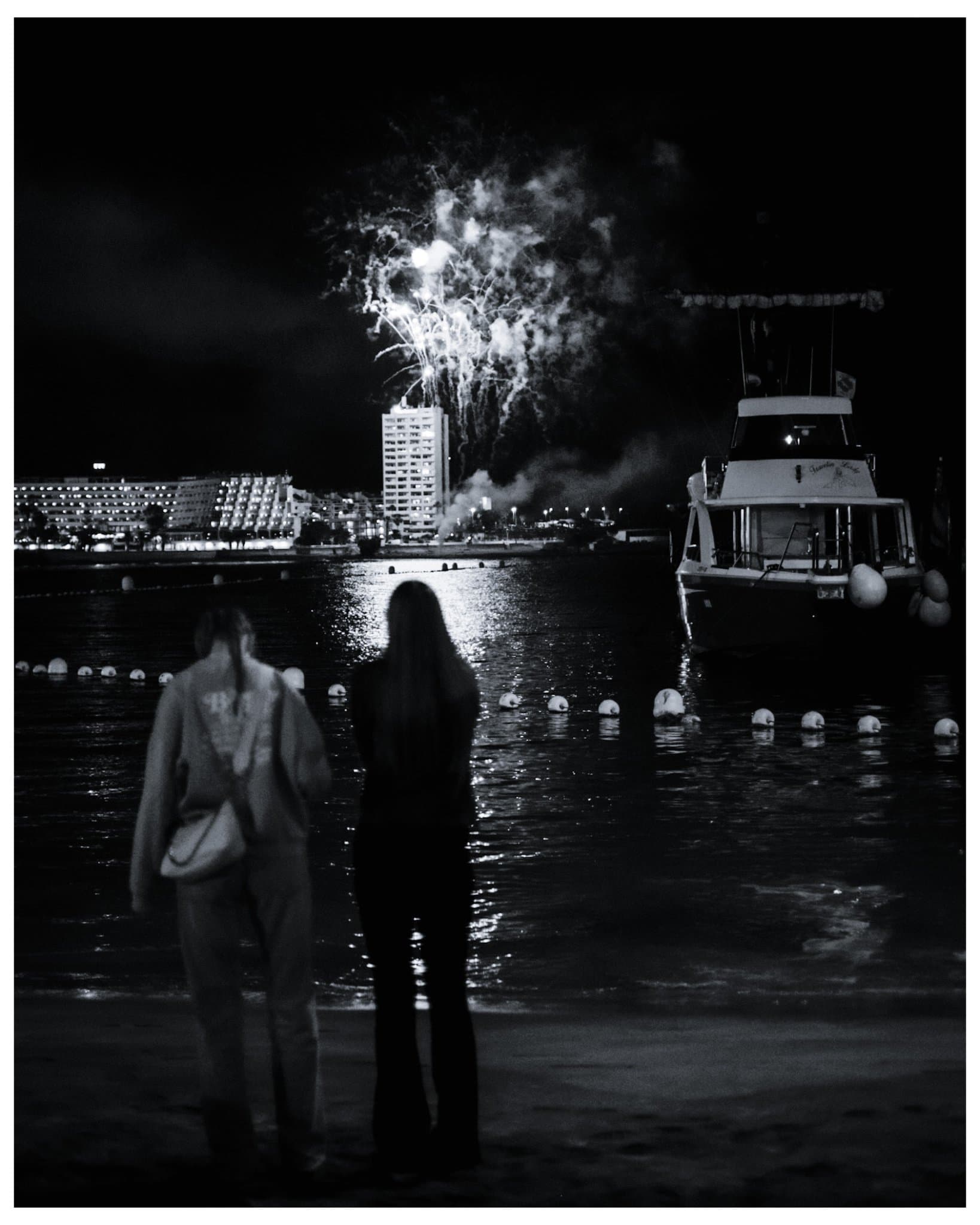
And then, midnight. The fireworks erupted over the harbor, painting streaks of light against the darkness. We watched from the beach, silhouetted against the shimmering water. The explosions were loud, but the ocean swallowed the sound quickly. Standing there, watching 2025 fade into smoke and light, felt like the perfect way to begin.
Day 3: The Cloud Forest
Click to view larger
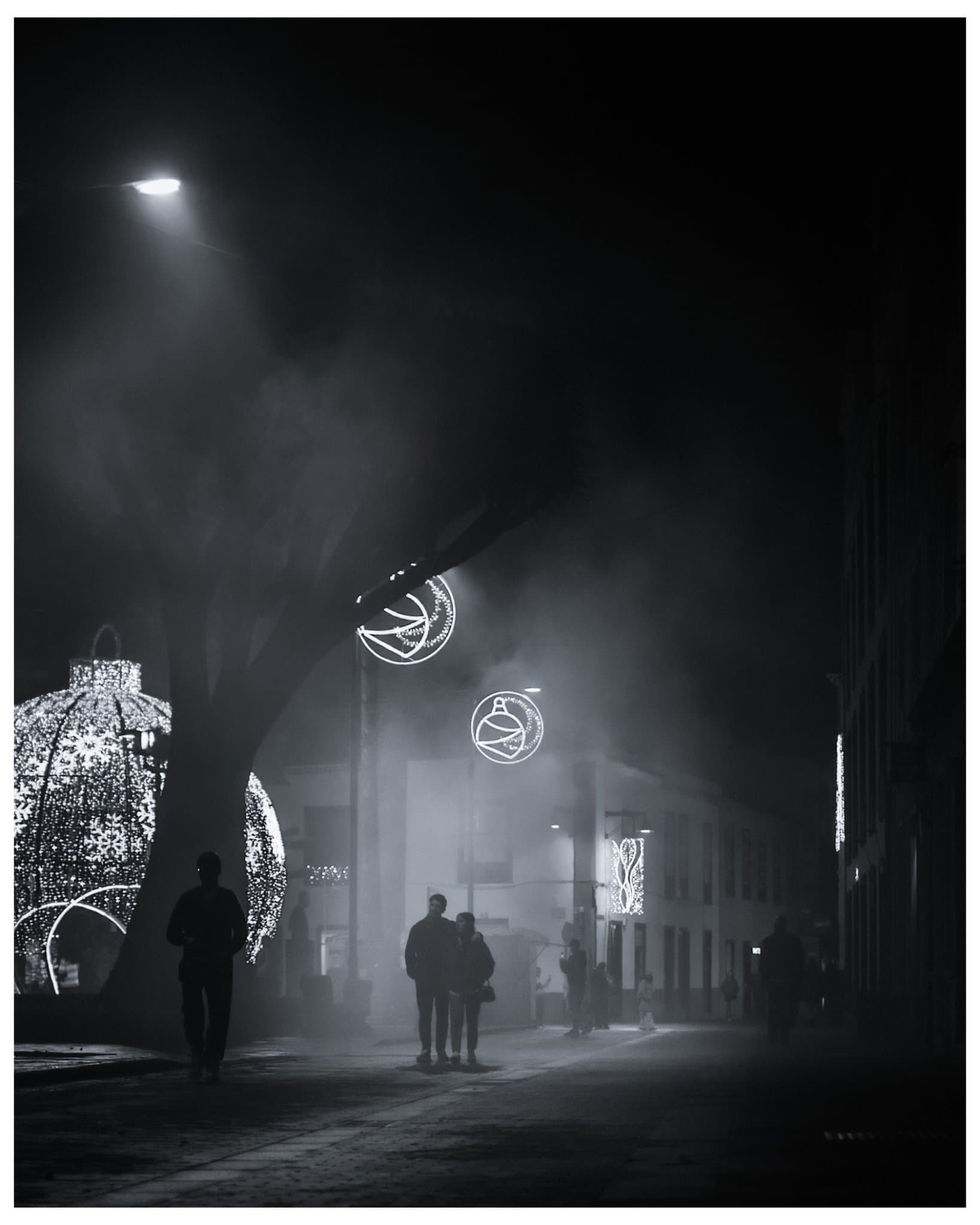
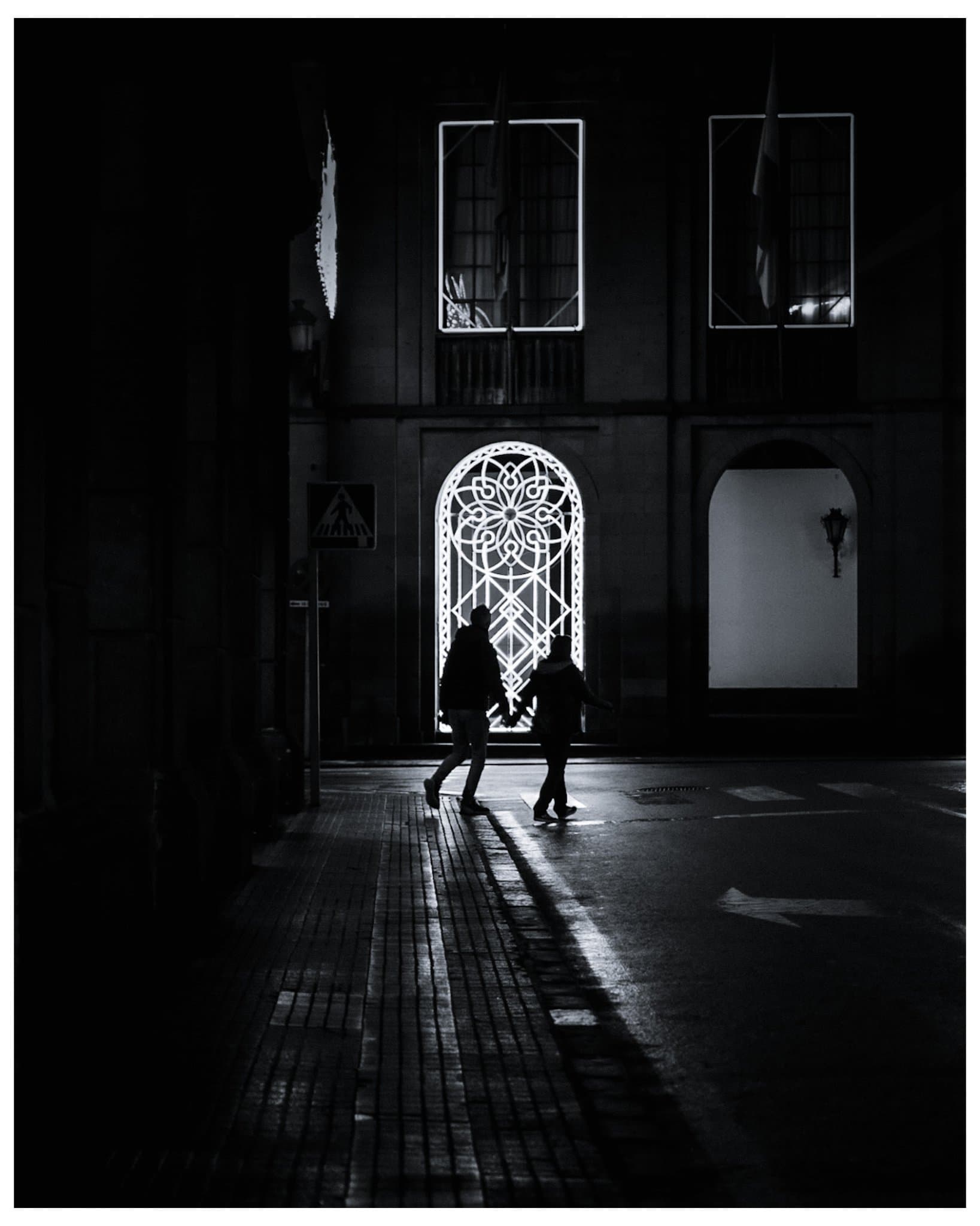
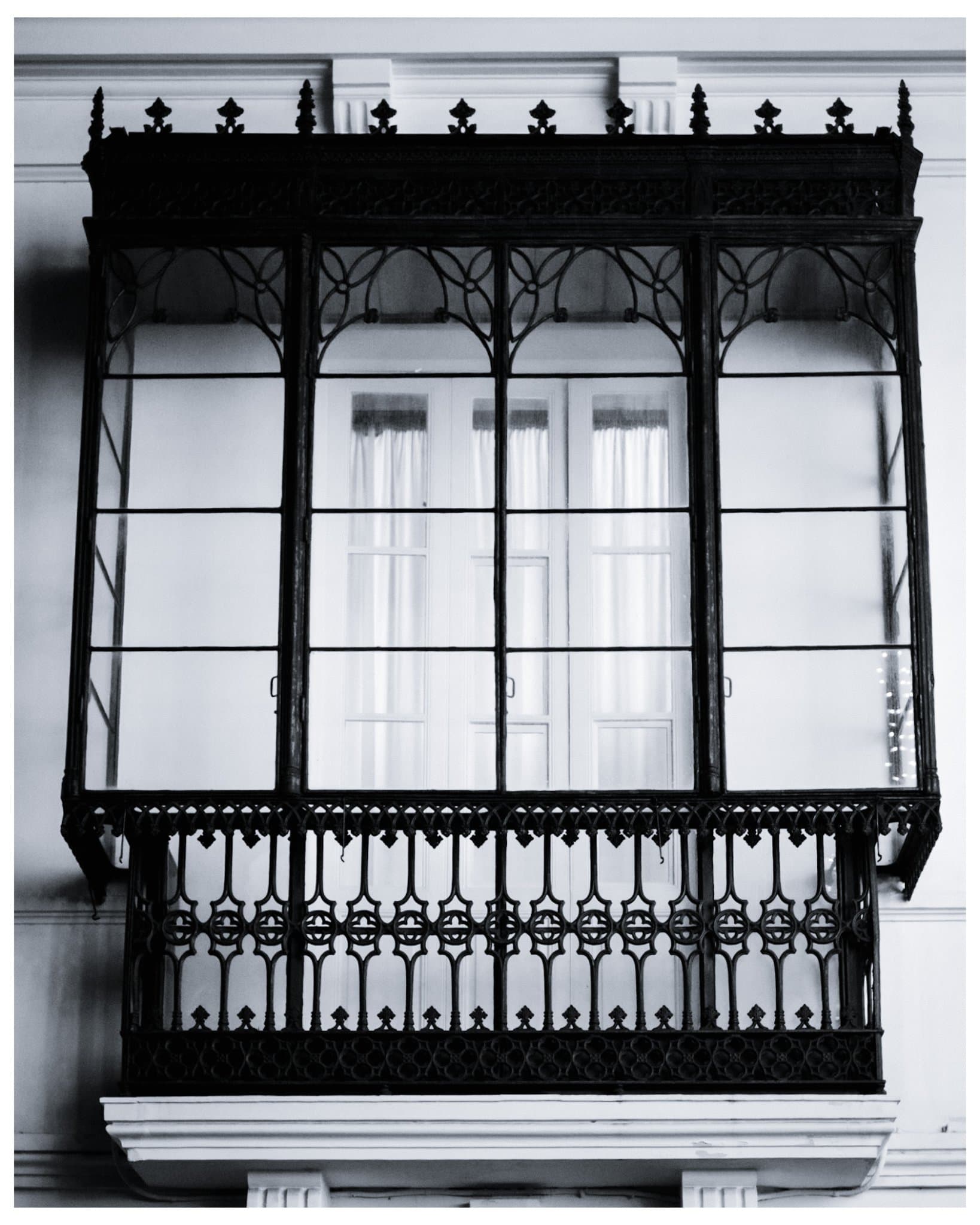
After the noise of the New Year, the island decided to wash everything clean. We drove north to La Laguna, driving straight into a cloud. It had rained all day—a relentless, soaking gray that emptied the streets. By late evening, the rain stopped, but it left the city wrapped in a thick, cinematic mist. Walking through the plaza, the giant Christmas lights glowed softly through the fog, turning the city into something dreamlike and eerie.
Click to view gallery
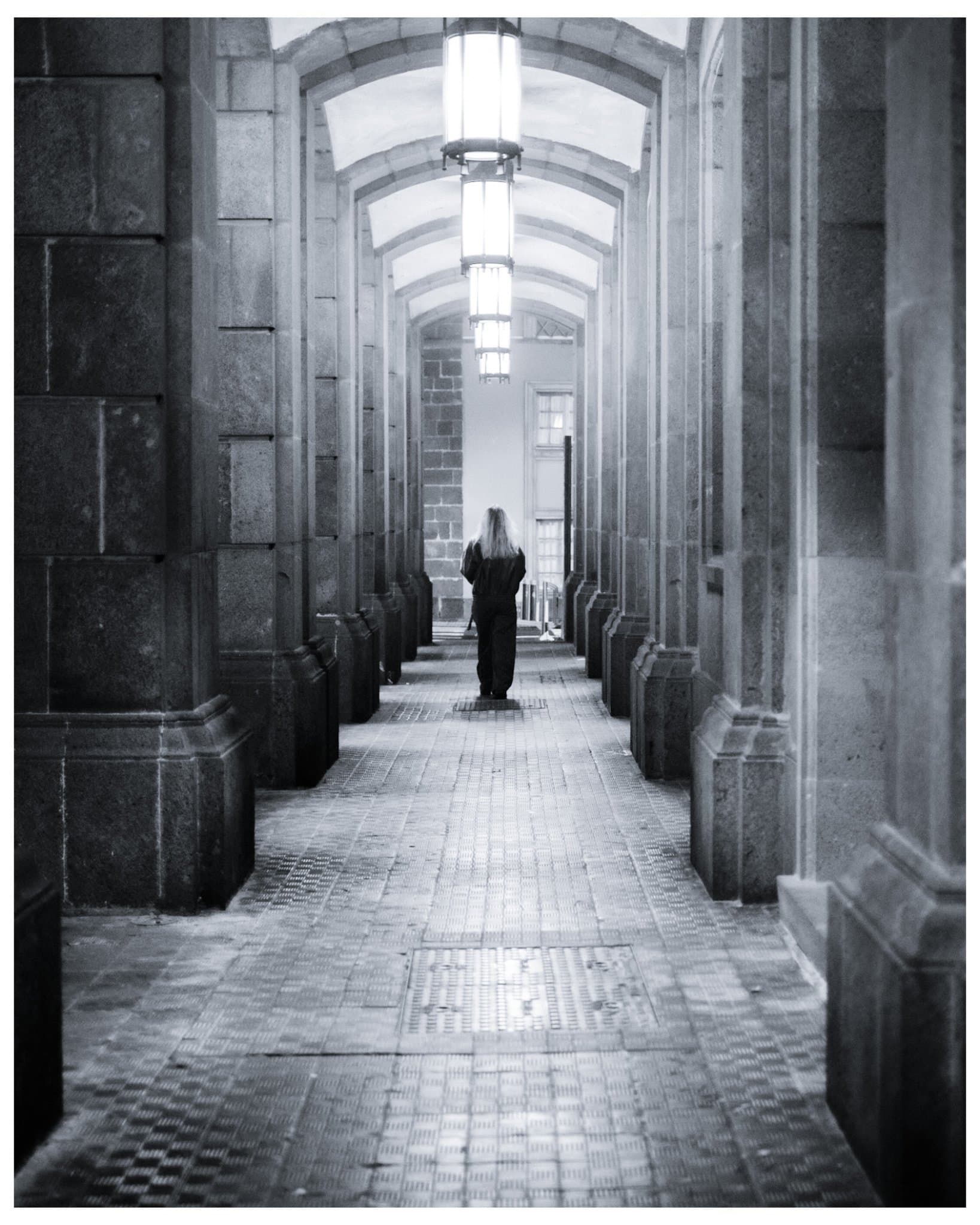
La Laguna feels different from the south. It is old, colonial, and grounded. We wandered through the wet streets, seeking shelter under the stone arcades. The pavement was slick and reflective, turning every streetlight into a mirror. It was quiet. Just the sound of our footsteps and the occasional couple hurrying home.
Day 4: The Edge of the World
Click to view larger
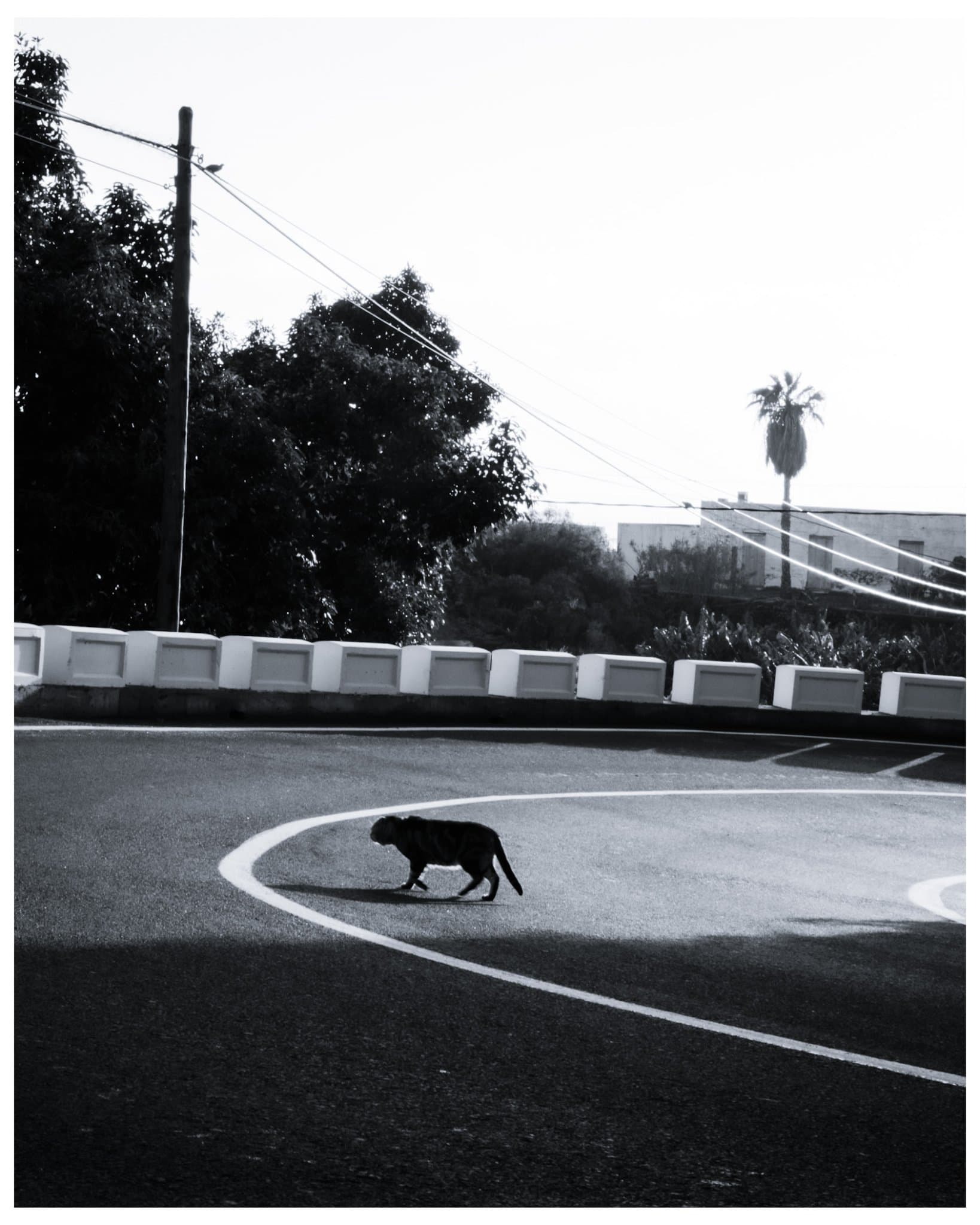
We headed south again, chasing the sun to Los Gigantes. Before reaching the cliffs, we wound through the quiet residential streets. I love how animals own the roads here. A cat crossed the curve of the tarmac, perfectly framing itself against the white barriers. It didn't rush. In this light, even a stray cat feels like it’s part of a carefully composed scene.
Click to view gallery
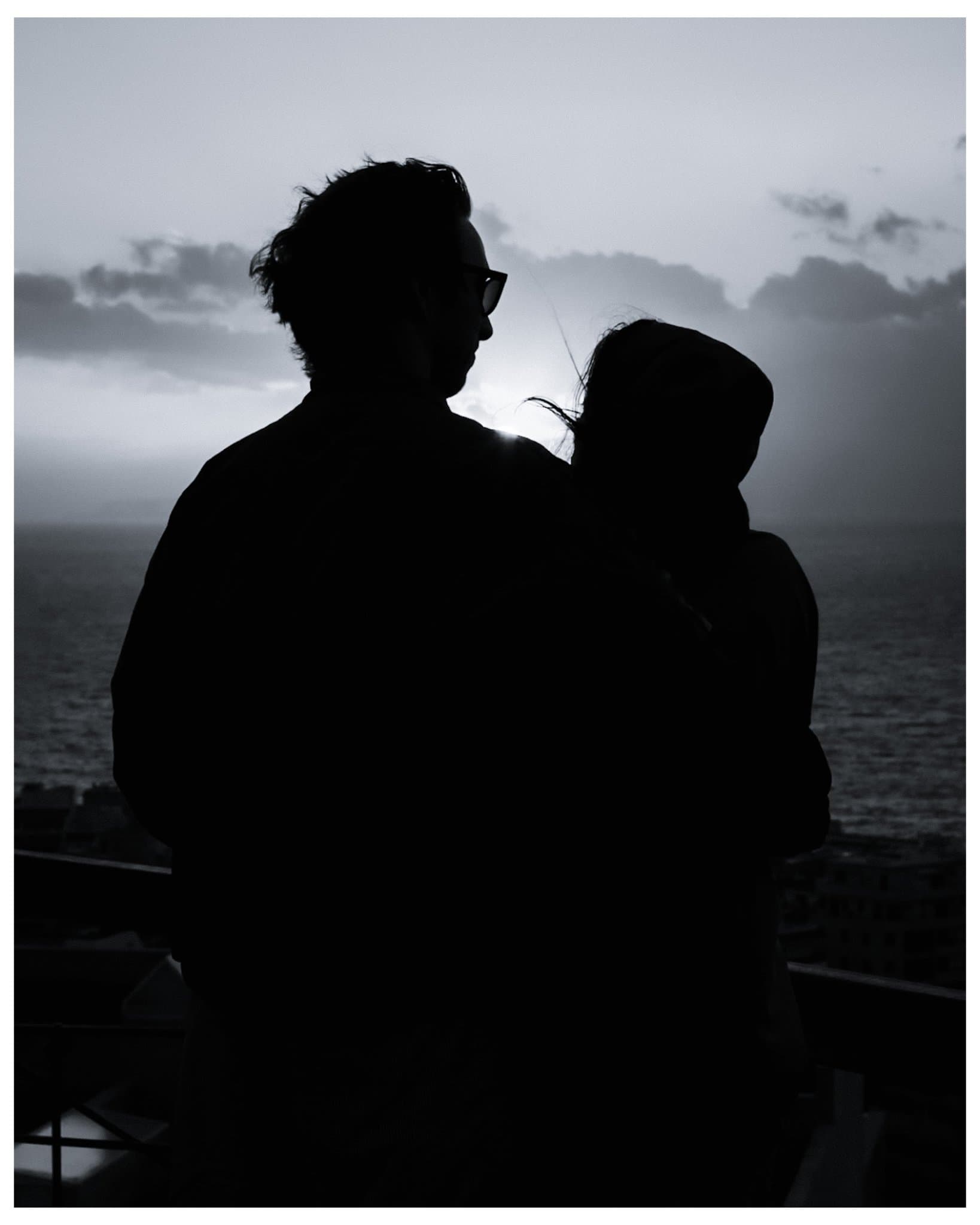
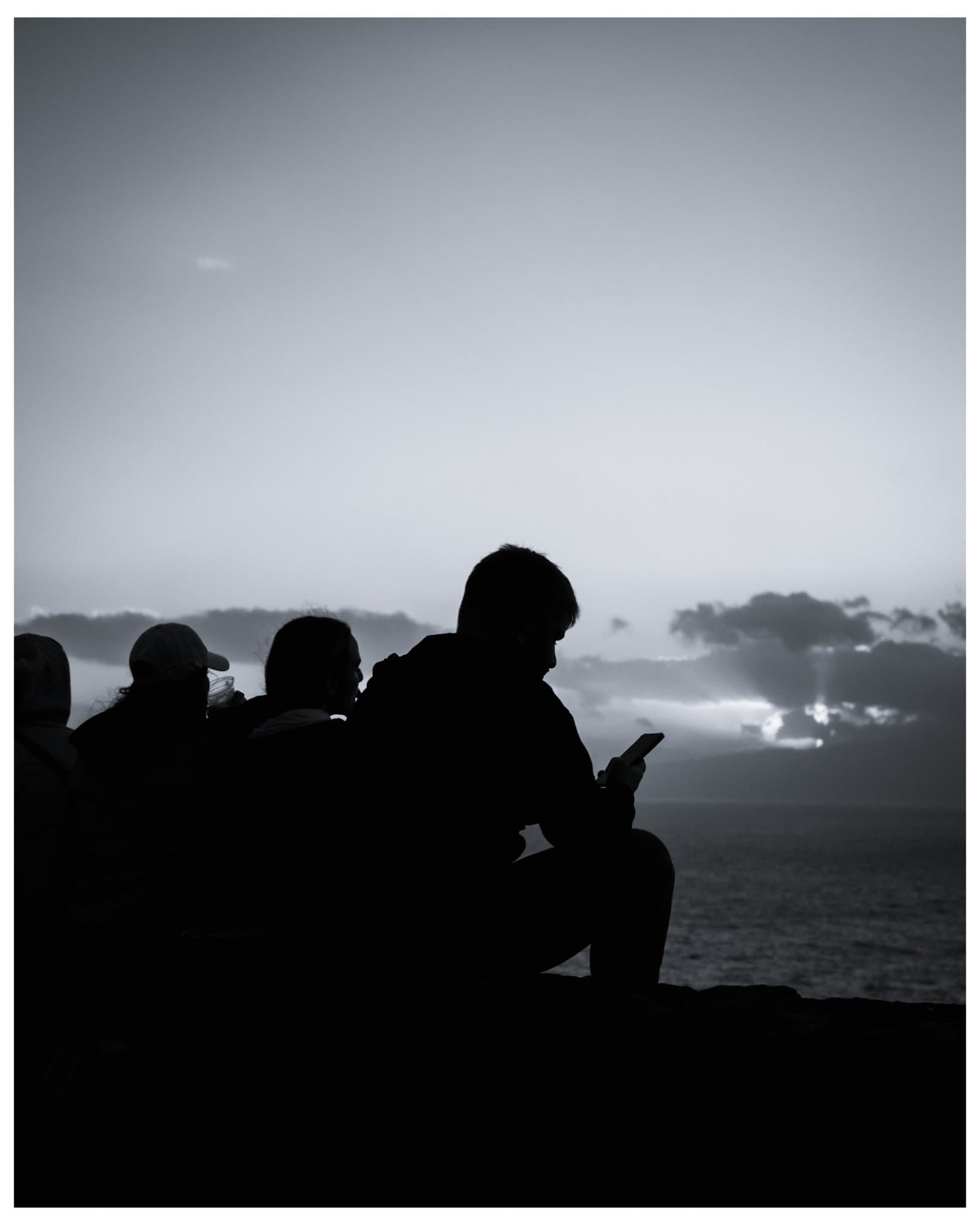
There is a collective ritual at Los Gigantes. As evening approaches, people stop what they are doing and turn toward the sea. We stood on the viewing deck, surrounded by strangers, all facing the same direction. I didn't photograph the sun itself; I photographed the people watching it. A couple leaning into each other, a father pointing out the horizon to his daughter—in silhouette, these personal moments become universal.
Click to view larger
The Atlantic looked like liquid metal. We sat on the wall as the light began to fail, black shapes against a gray sky, letting the day fall into the ocean.
Day 5: The Aftermath
Click to view larger
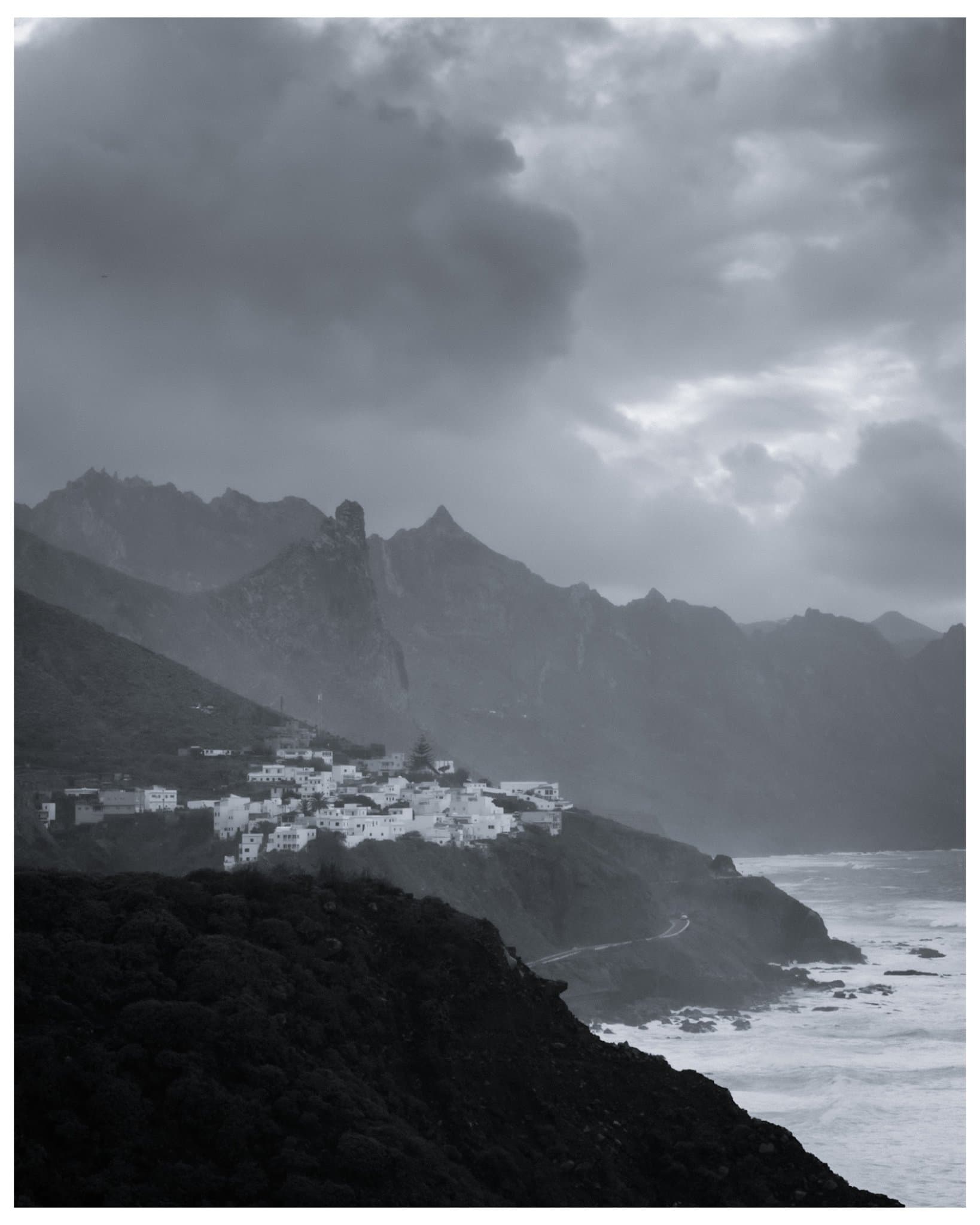
We learned later that it had a name: Storm Francis. While we were sleeping off the New Year, a massive Atlantic system had collided with the islands. By Day 5, the worst of the wind had passed, but the ocean was still angry. We drove north into Anaga, the oldest part of Tenerife. The air here always feels prehistoric, but with the lingering storm clouds, the coastline looked like the edge of the world—jagged, dark, and violent.
Click to view gallery
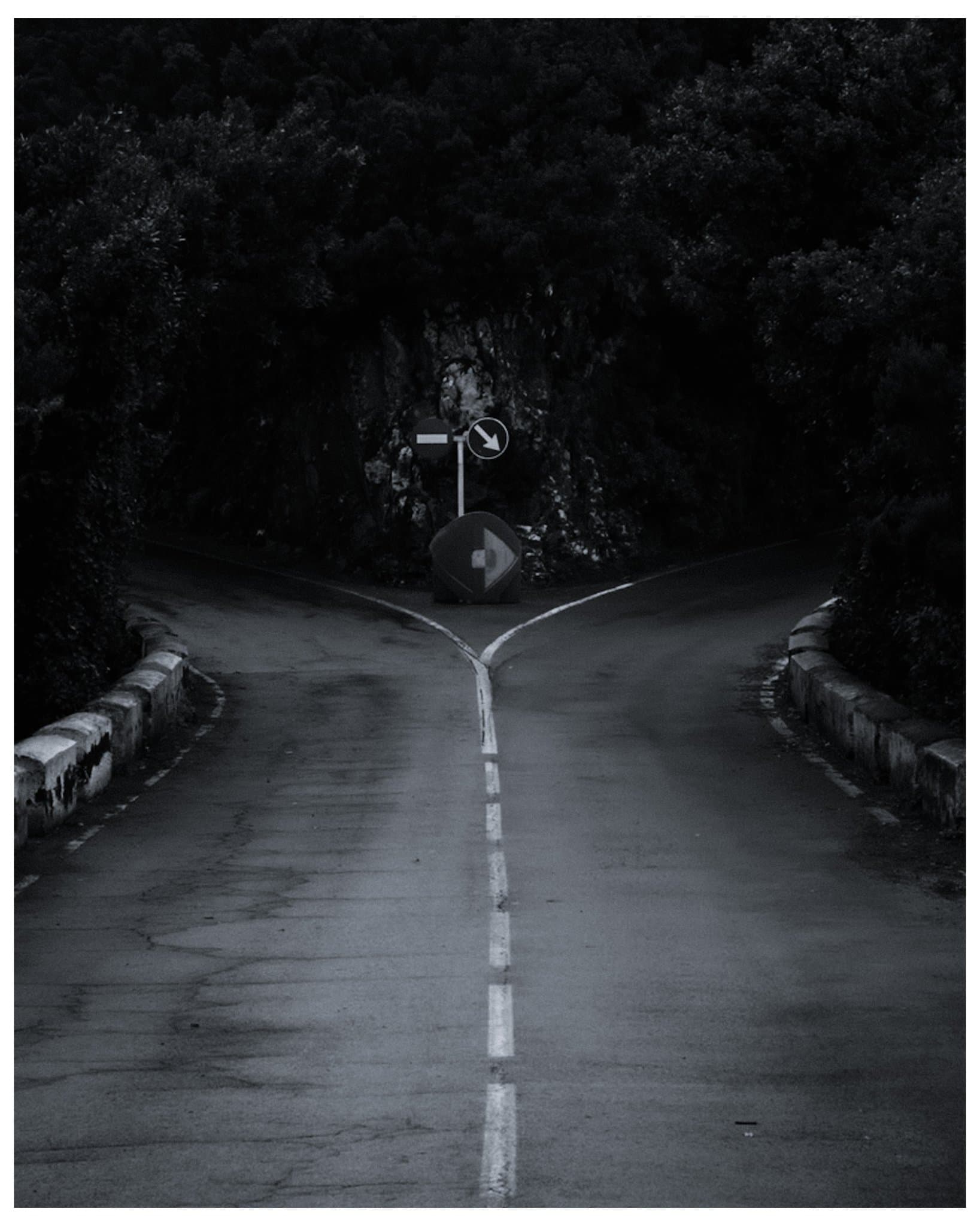
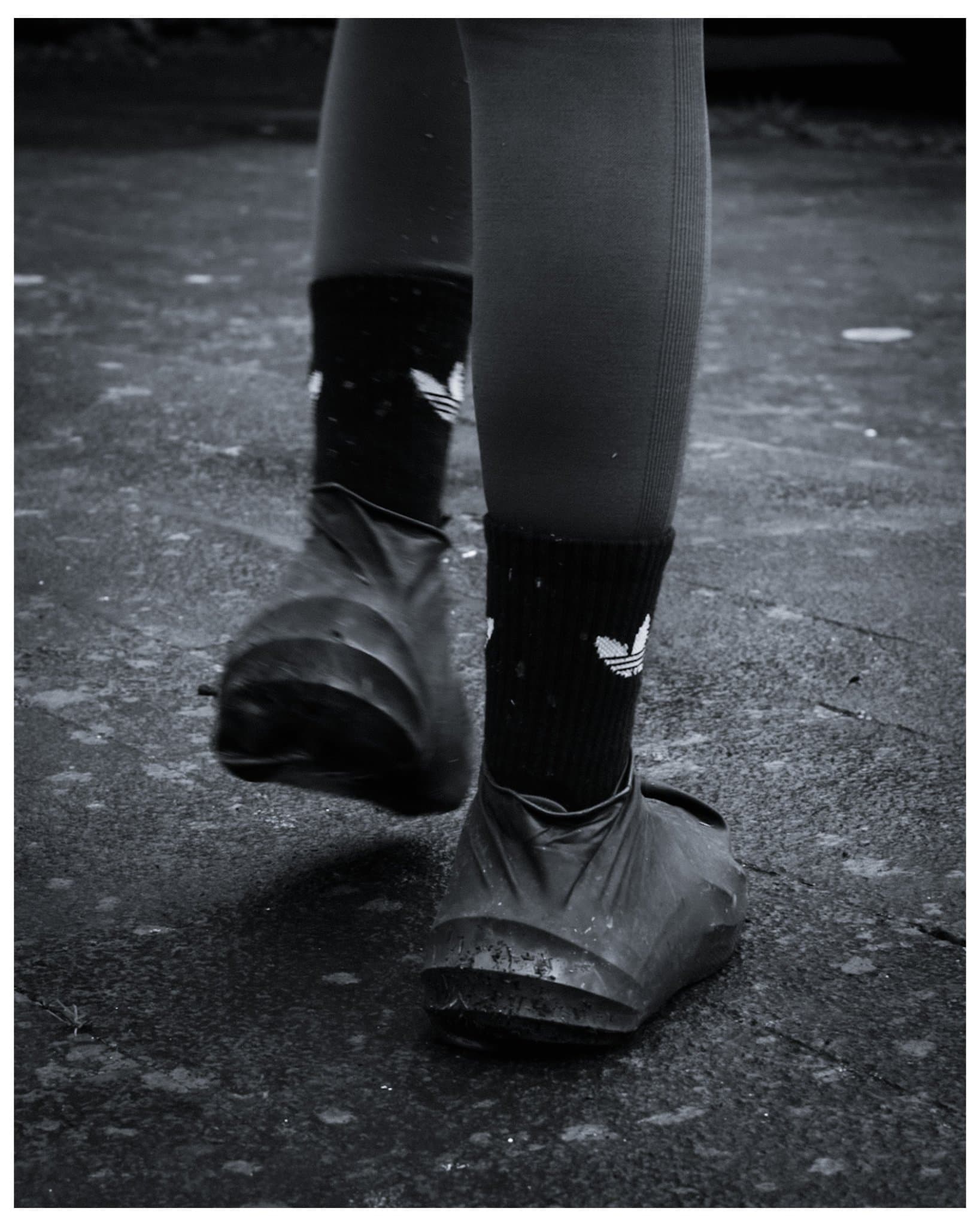
The drive down to the coast is a test of nerves even in sunlight. In the rain, the laurel forest felt suffocating. We stopped at a fork in the road—left or right? It didn't matter; both led into the mist. We got out to stretch, and within seconds, we were soaked. This isn't the "holiday" version of Tenerife. This is wet socks, muddy boots, and the smell of damp earth.
Click to view larger
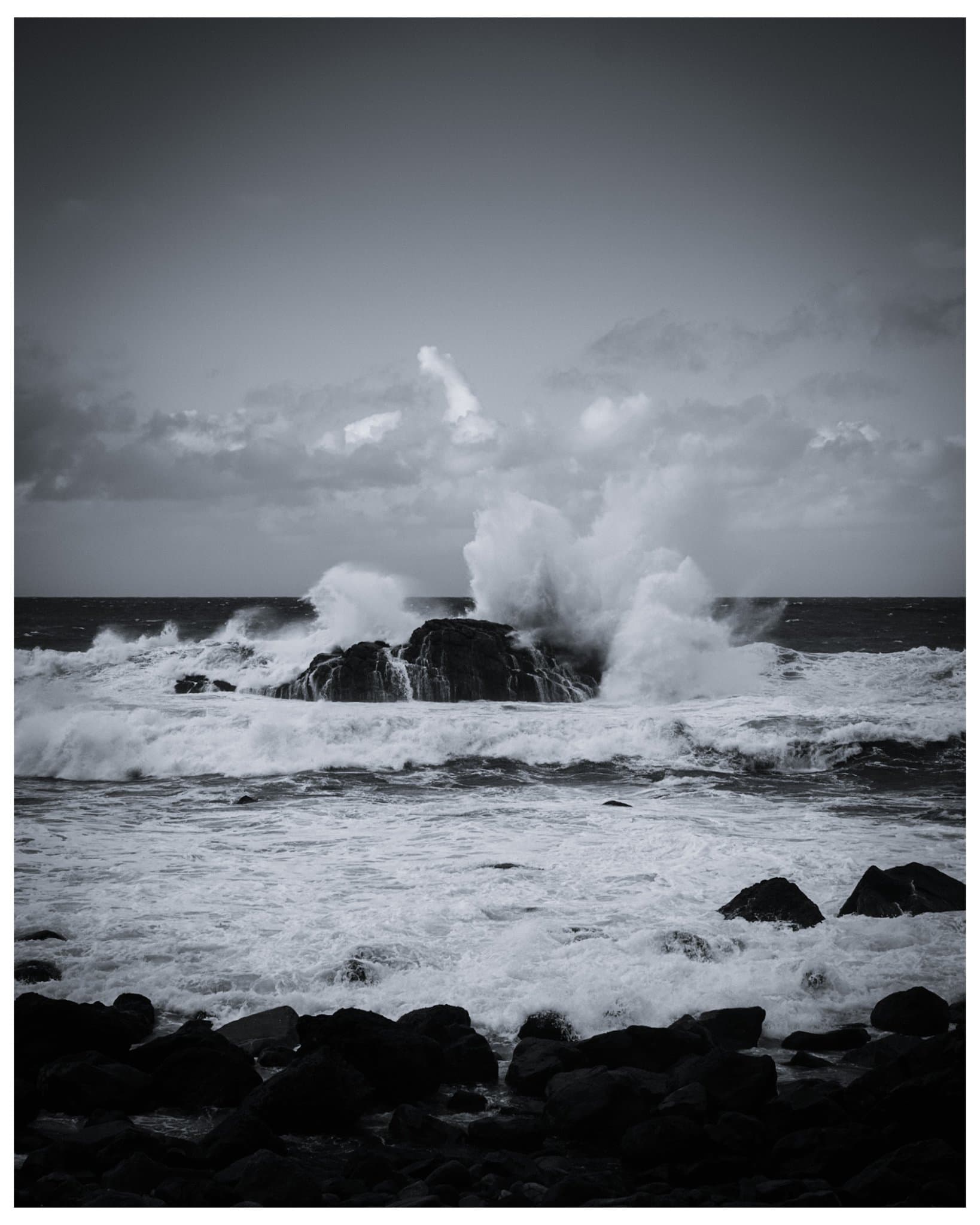
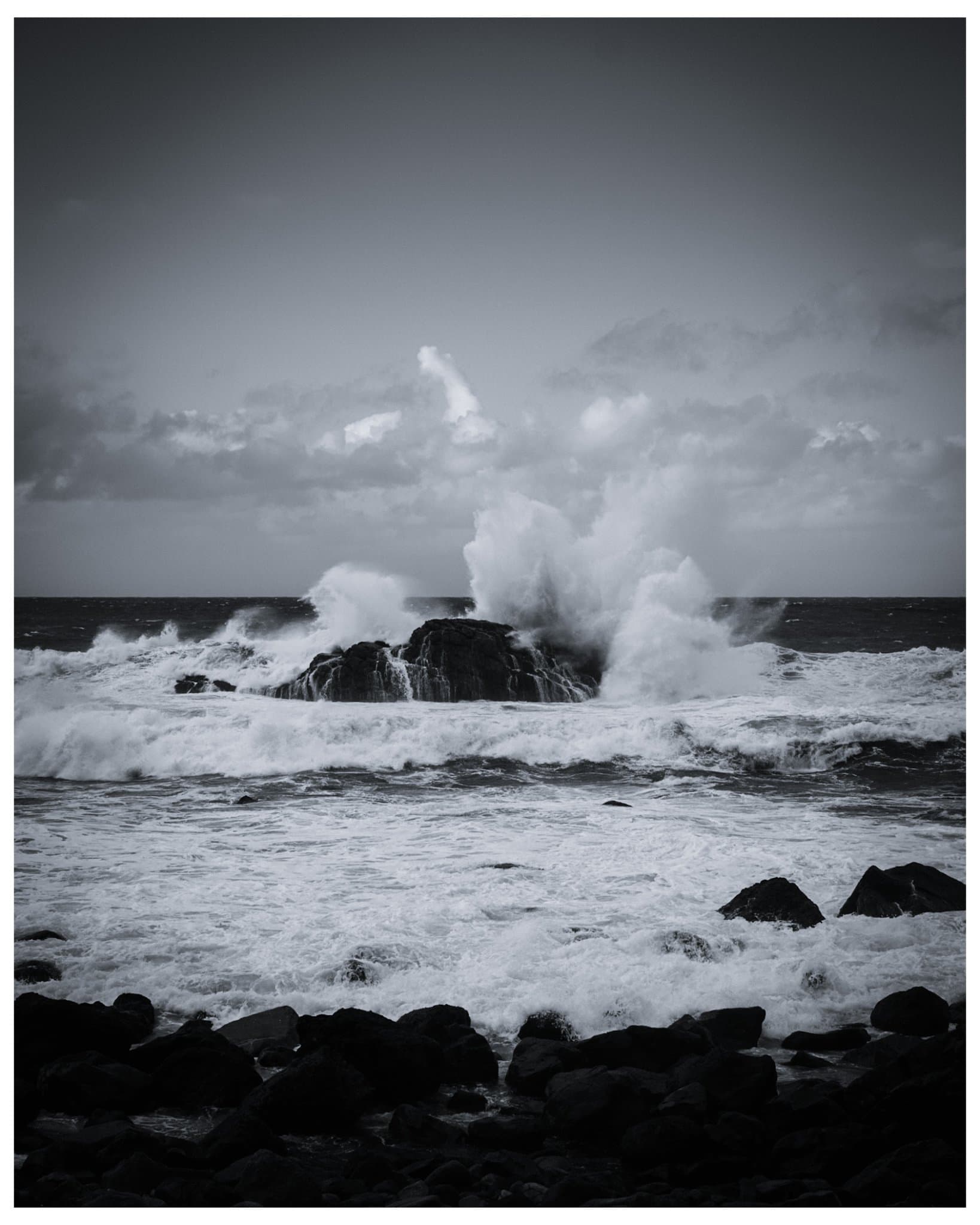
When we finally reached Roque de las Bodegas, the sea was putting on a terrifying show. The swell from the storm was hammering the volcanic rocks. In black and white, the blue water disappears; you just see the sheer force of the white water exploding against the stone.
Click to view larger
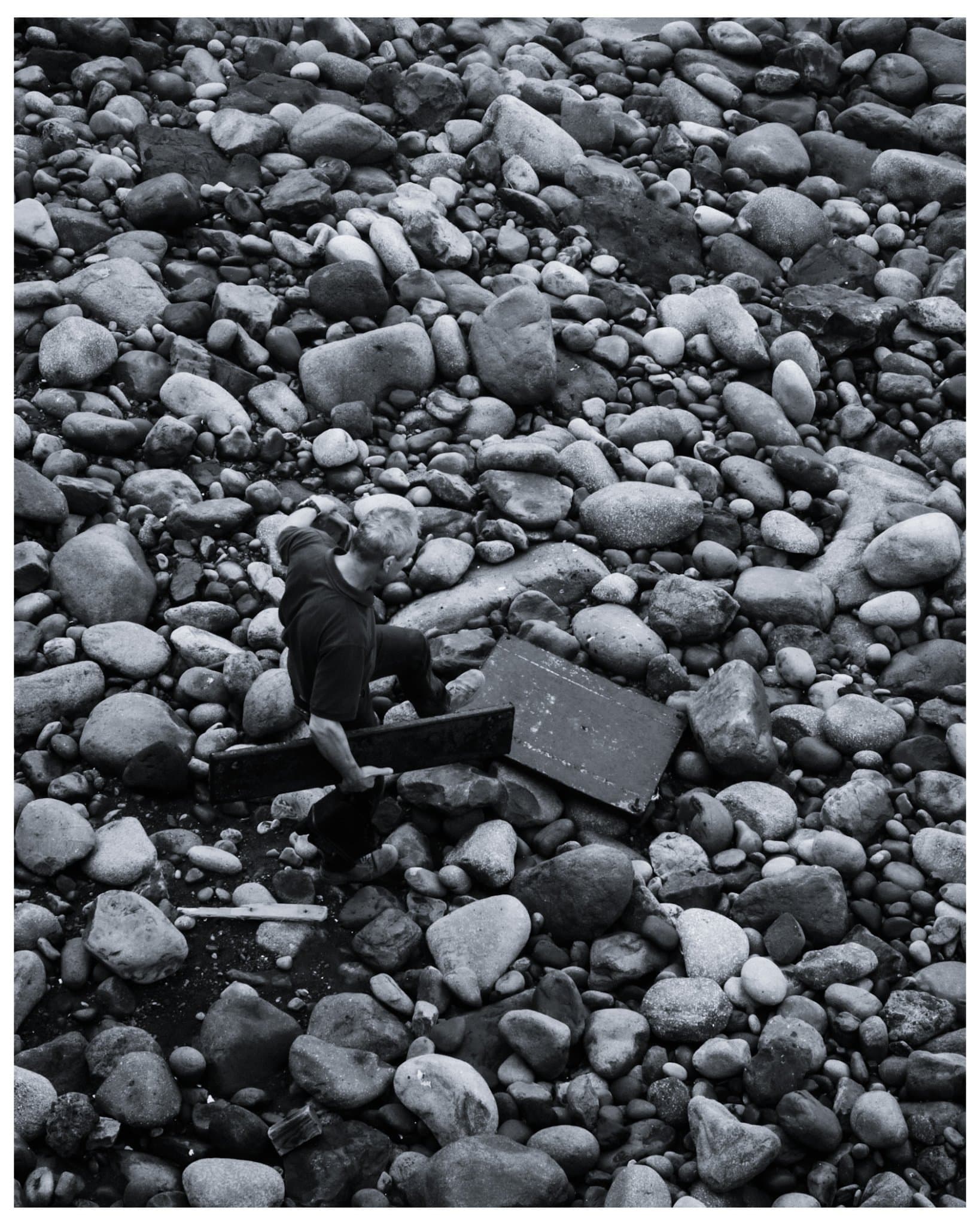
The sound on the beach was deafening. Not just the waves, but the sound of thousands of large stones rolling over each other as the tide dragged them back. It sounded like thunder. A local man navigated the rocks, carrying a plank of wood—maybe salvaging something from the storm. Life goes on, even when the Atlantic is screaming.
Day 6: Roots and Resilience
Click to view larger
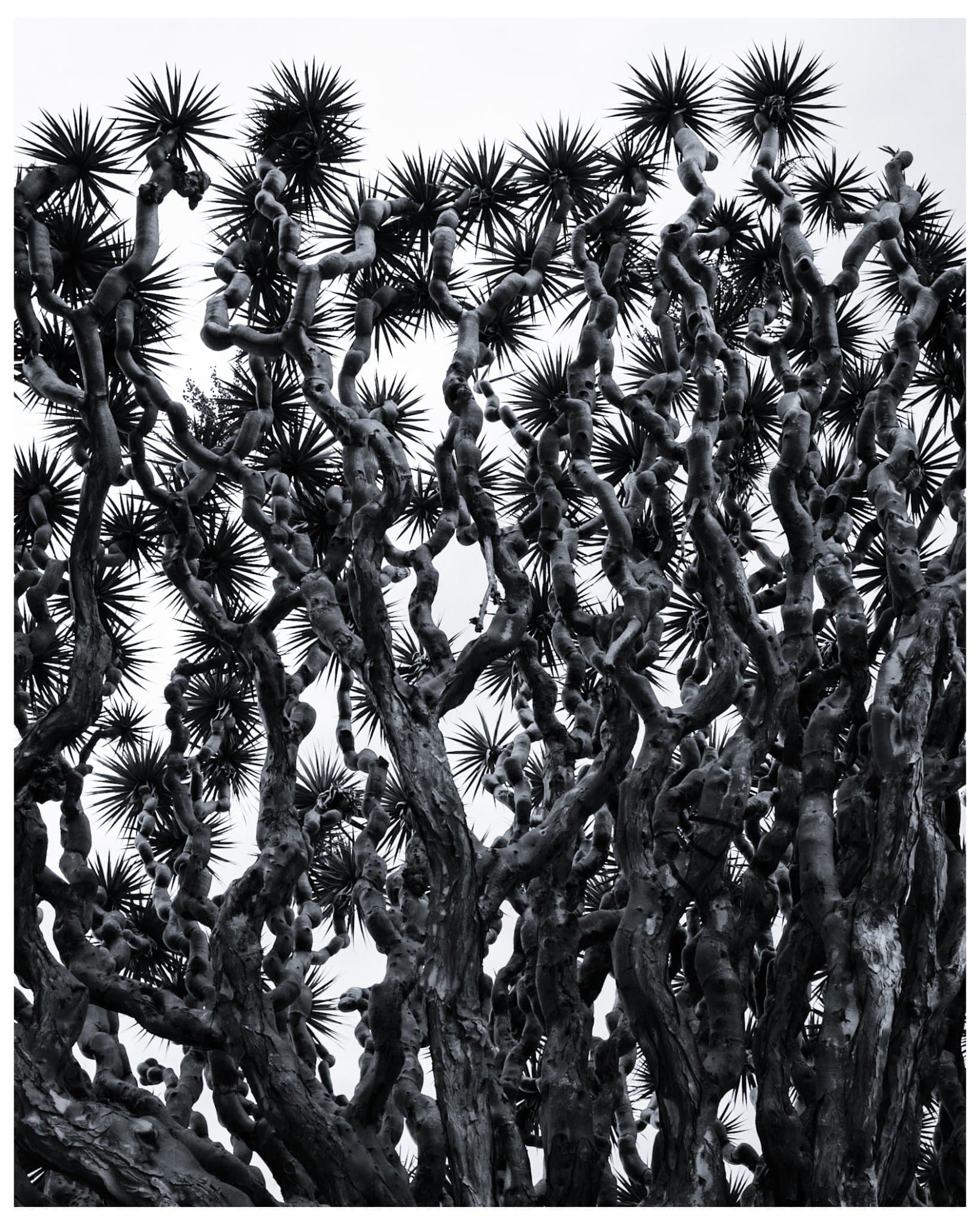
We moved west to Icod de los Vinos. Everyone comes here to see the "Drago Milenario," the ancient dragon tree. In color, it’s just a big green tree. In black and white, it transforms. It looks like a nervous system, or a tangle of snakes rising from the earth—chaotic, mesmerizing, and alive.
Click to view gallery
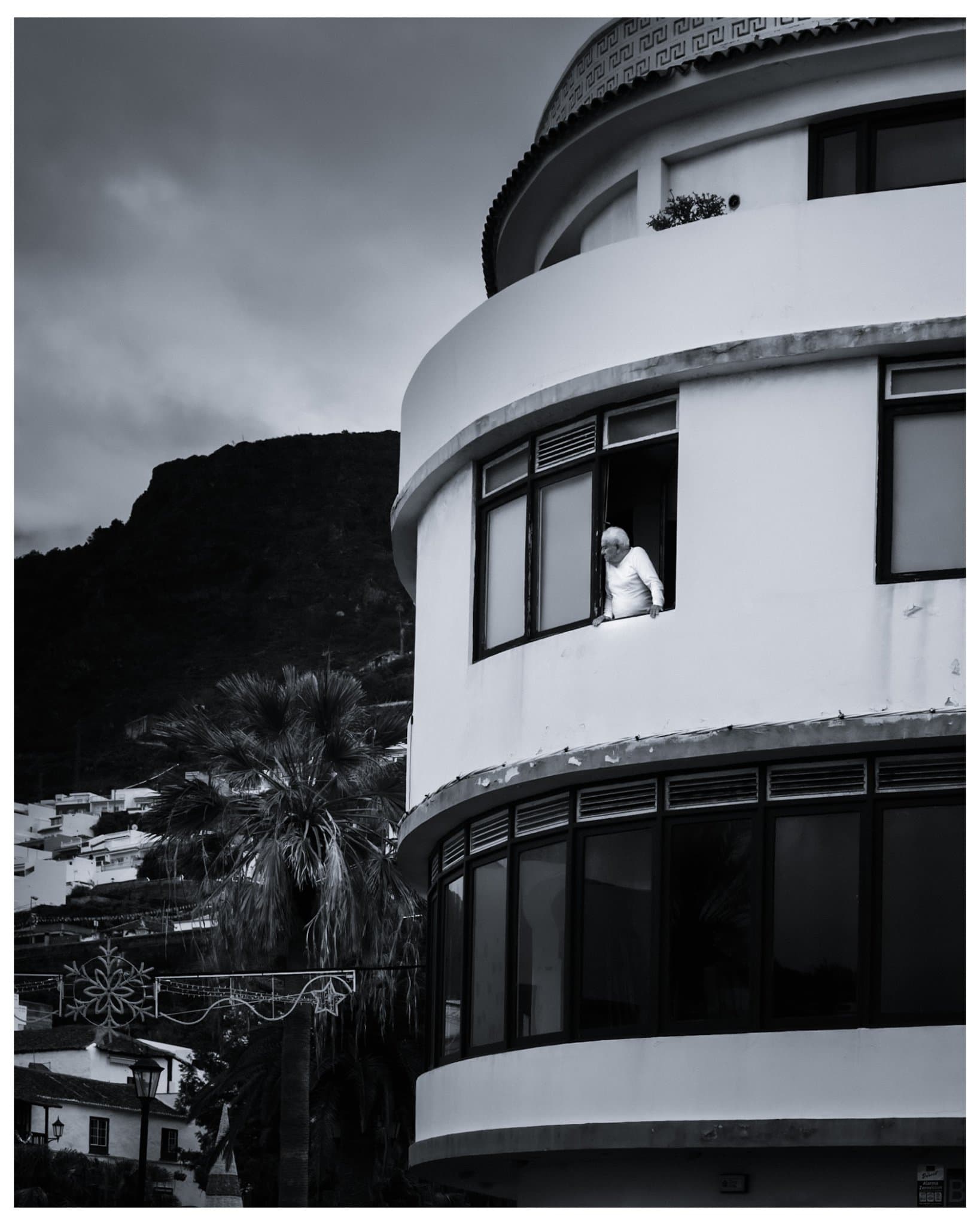
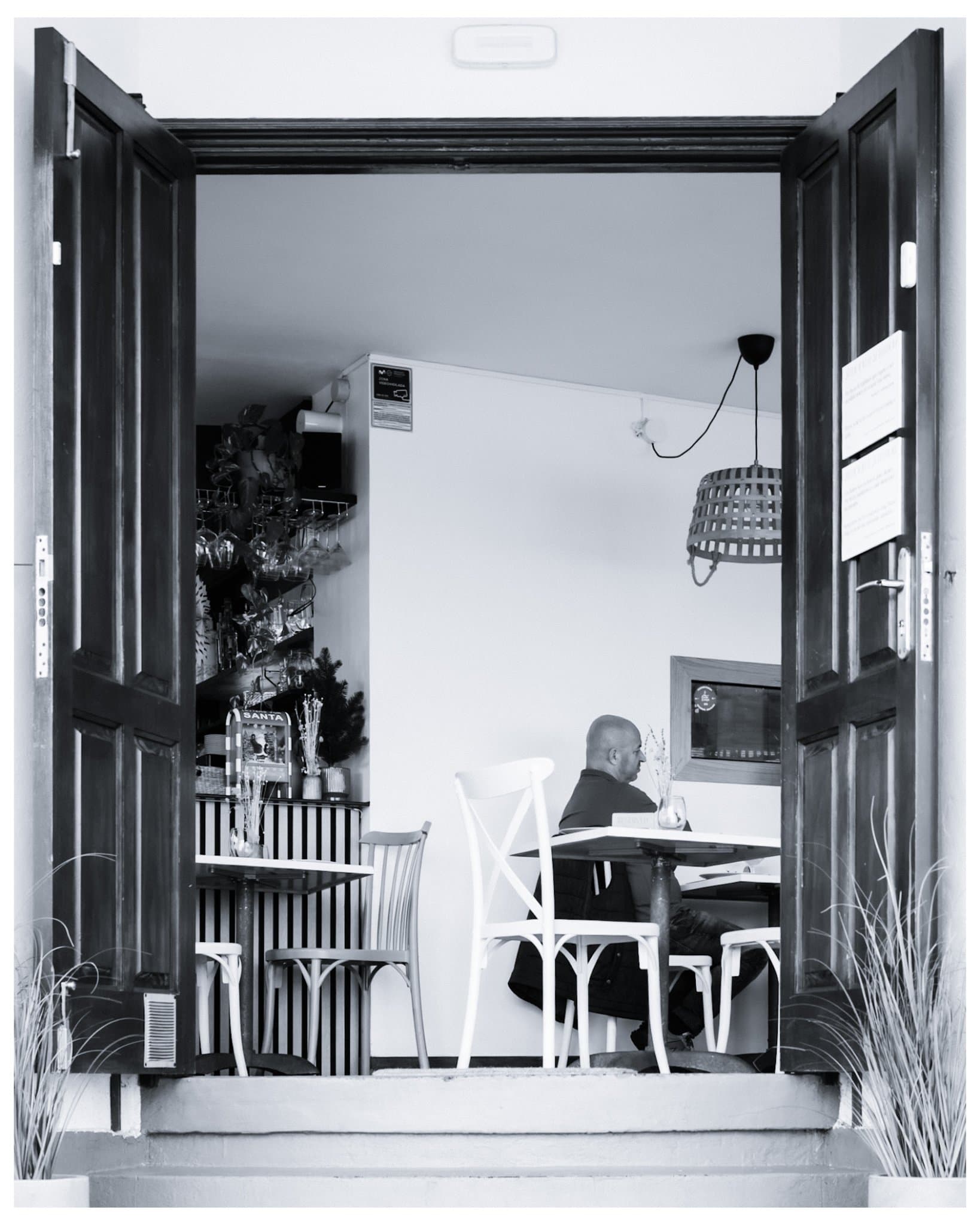
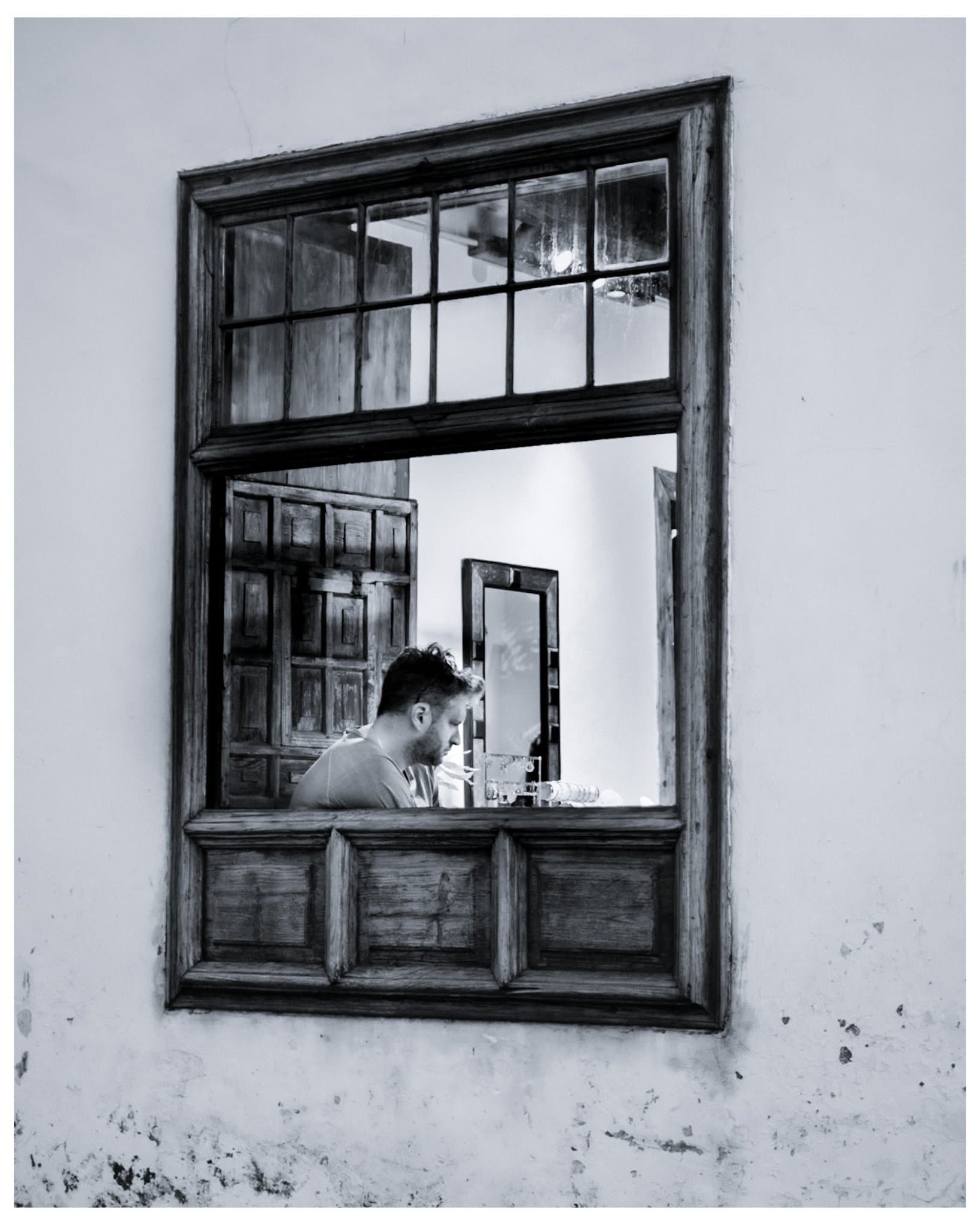
Moving down to the coast at Garachico, I noticed a pattern. The storm had passed, yet people remained inside, looking out. I love the contrast between the modernist curves of the white apartment block and the heavy, colonial wood of the old window. In both, you have a solitary figure, framed perfectly, watching the world go by.
Click to view gallery
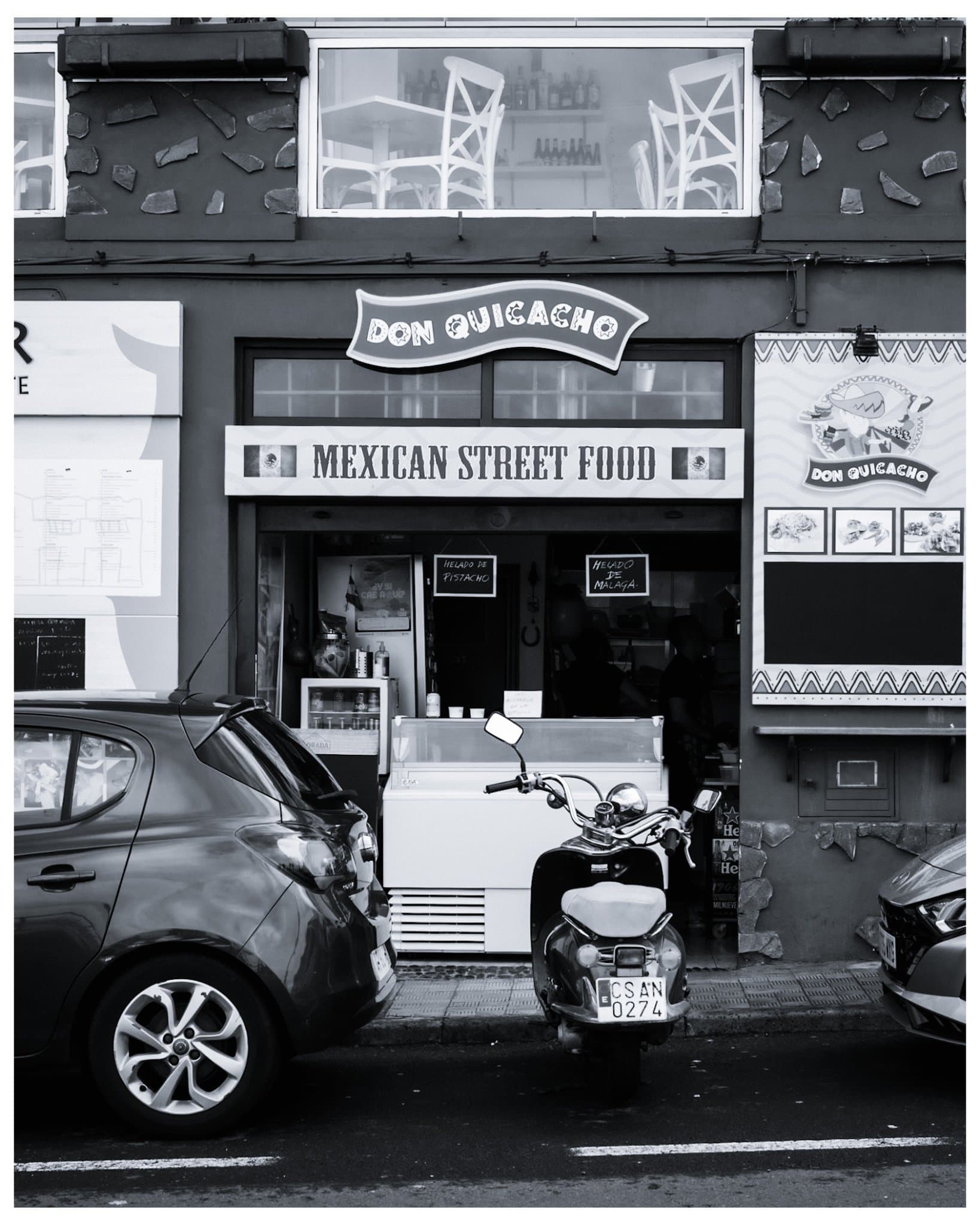
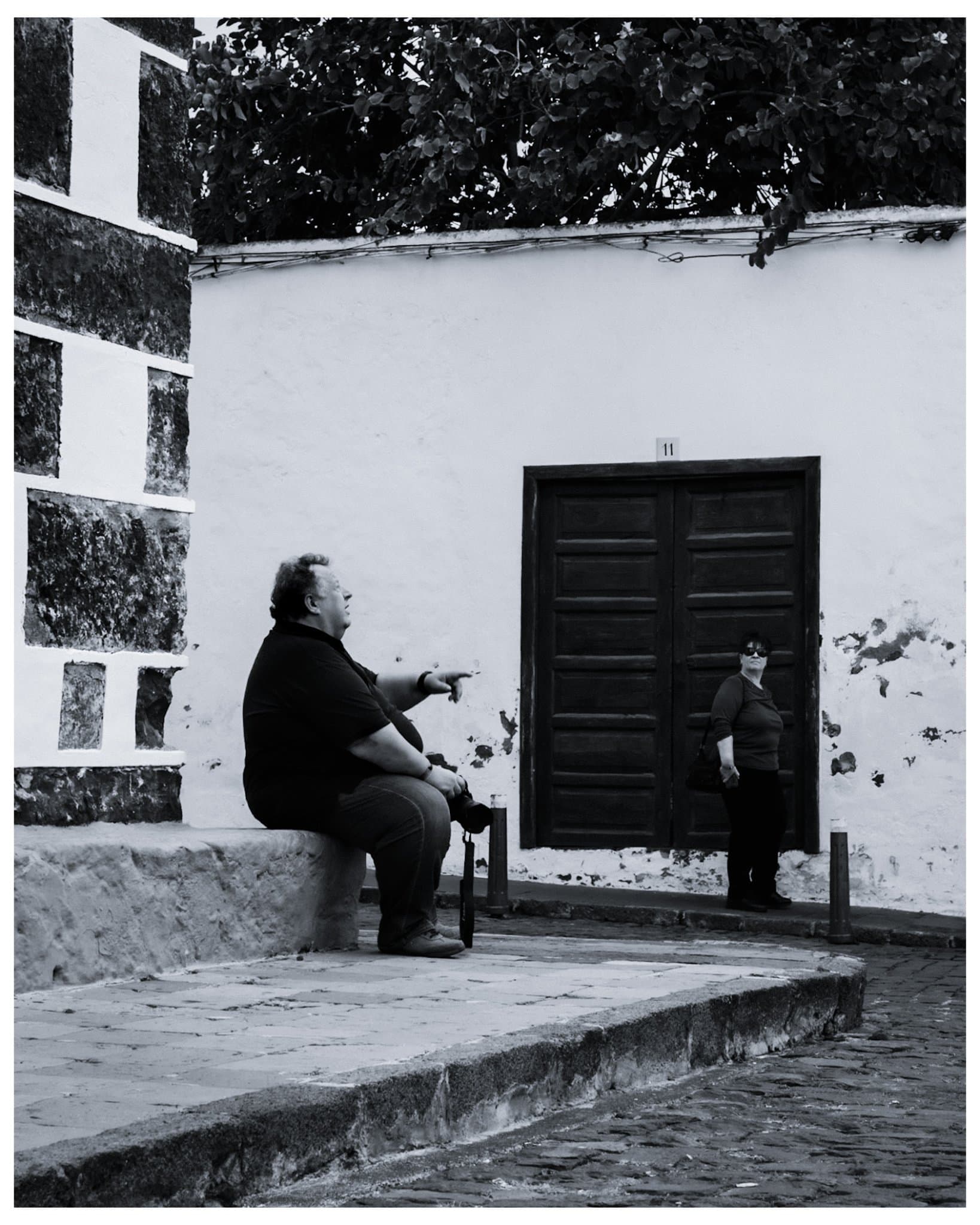
Garachico has a history of being destroyed and rebuilt, which perhaps explains the relaxed pace of life. Why rush when a volcano might change your plans anyway? We walked the cobblestones, past a scooter parked outside a Mexican street food joint, and watched locals chatting on the corners. There is no urgency here. Just neighbors talking, pointing out directions, and living in the shadow of the cliffs.
Click to view larger
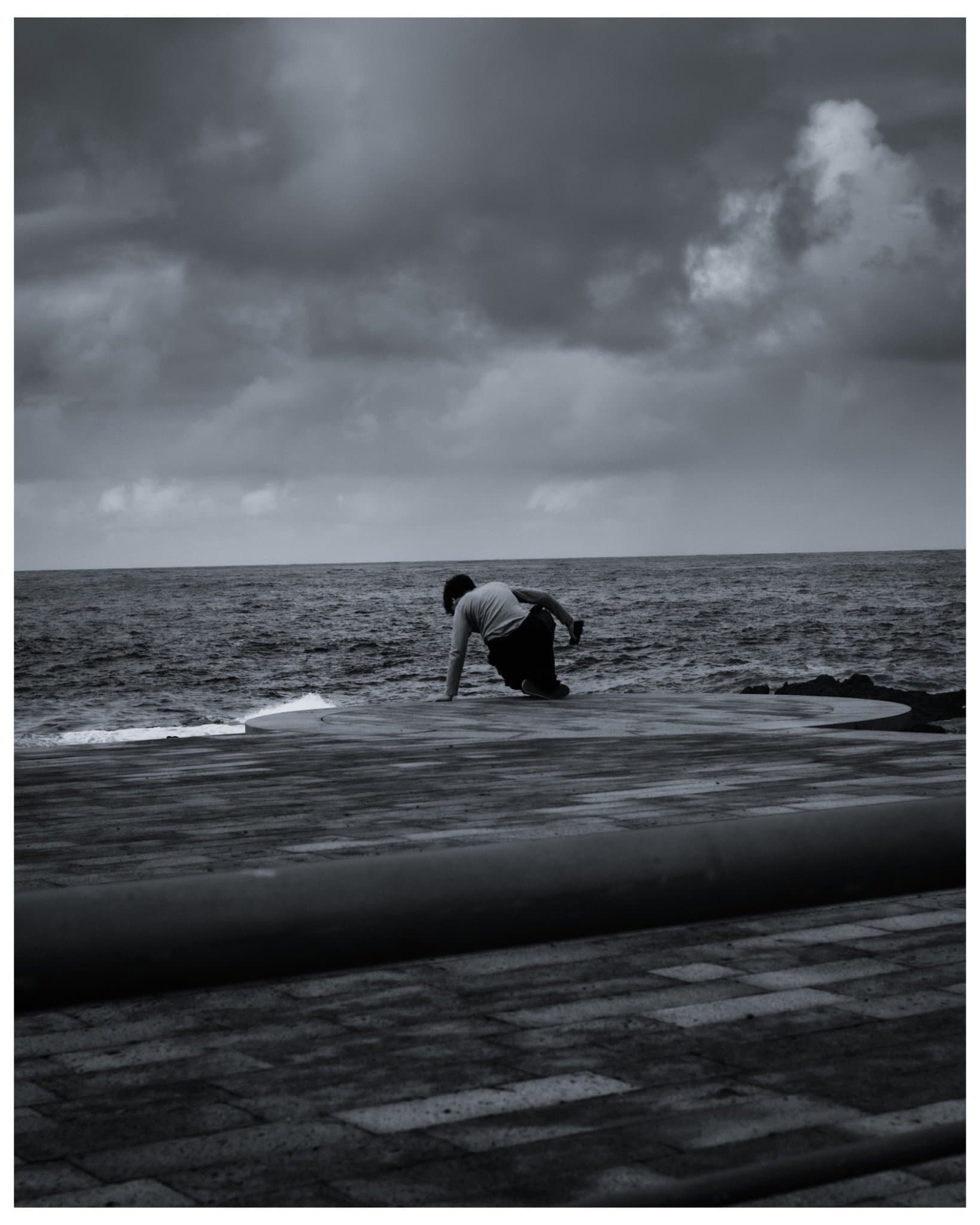
We ended the day by the natural pools. The ocean was still restless from the storm. I saw a figure crouching on the stone platform, bracing against the wind, perhaps checking the waves. It was a fitting end to the day—a human figure small and fragile against the vast, dark horizon of the Atlantic.
Day 7: Grounded
Click to view larger
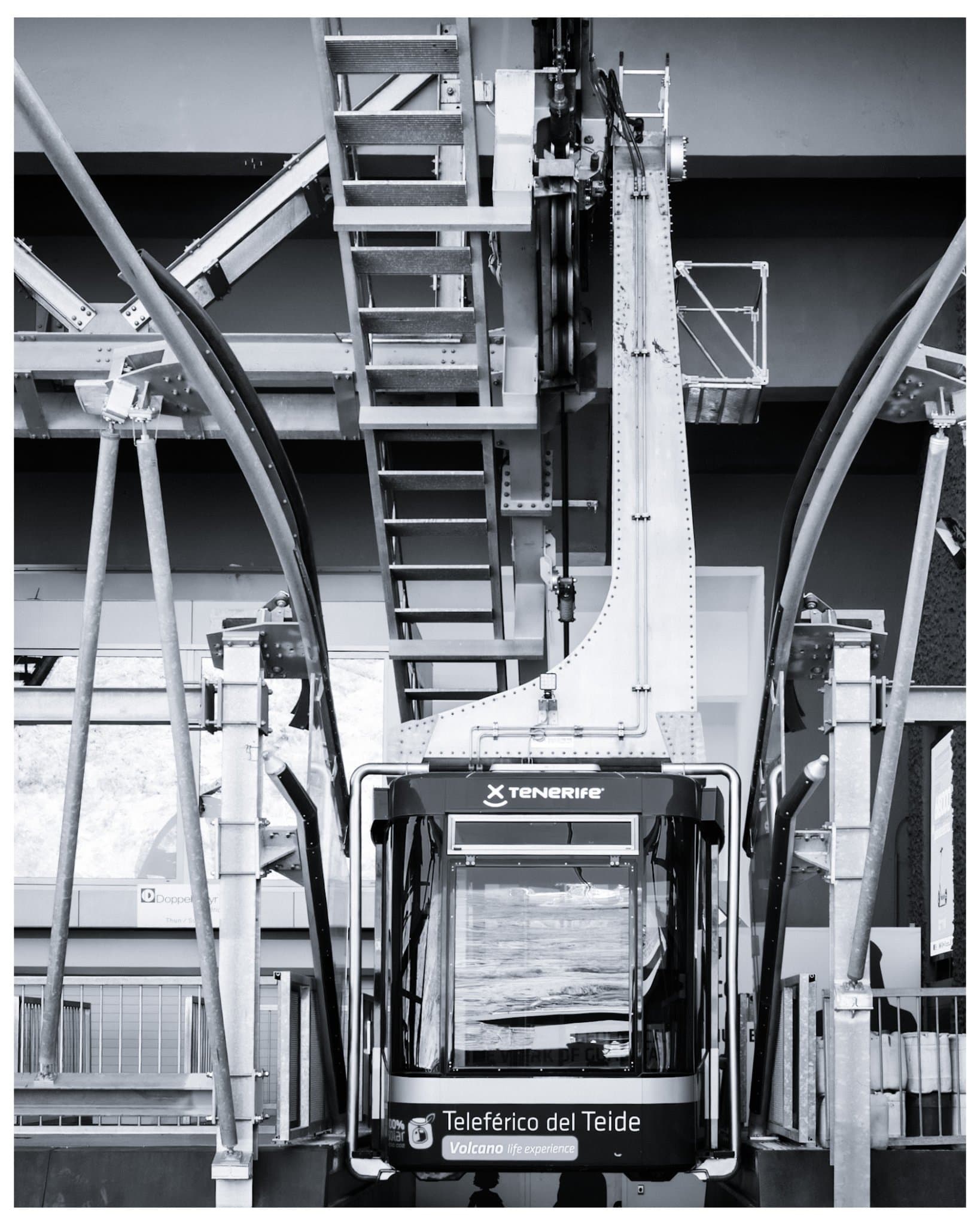
We woke up ready to conquer the summit. The plan was simple: take the cable car to the top of Teide. But the mountain had other plans. The wind was howling up there, and the machinery stood frozen. There is a specific kind of disappointment in looking at a piece of engineering that is perfectly capable of taking you to the sky, but is sitting completely silent. We were grounded.
Click to view larger
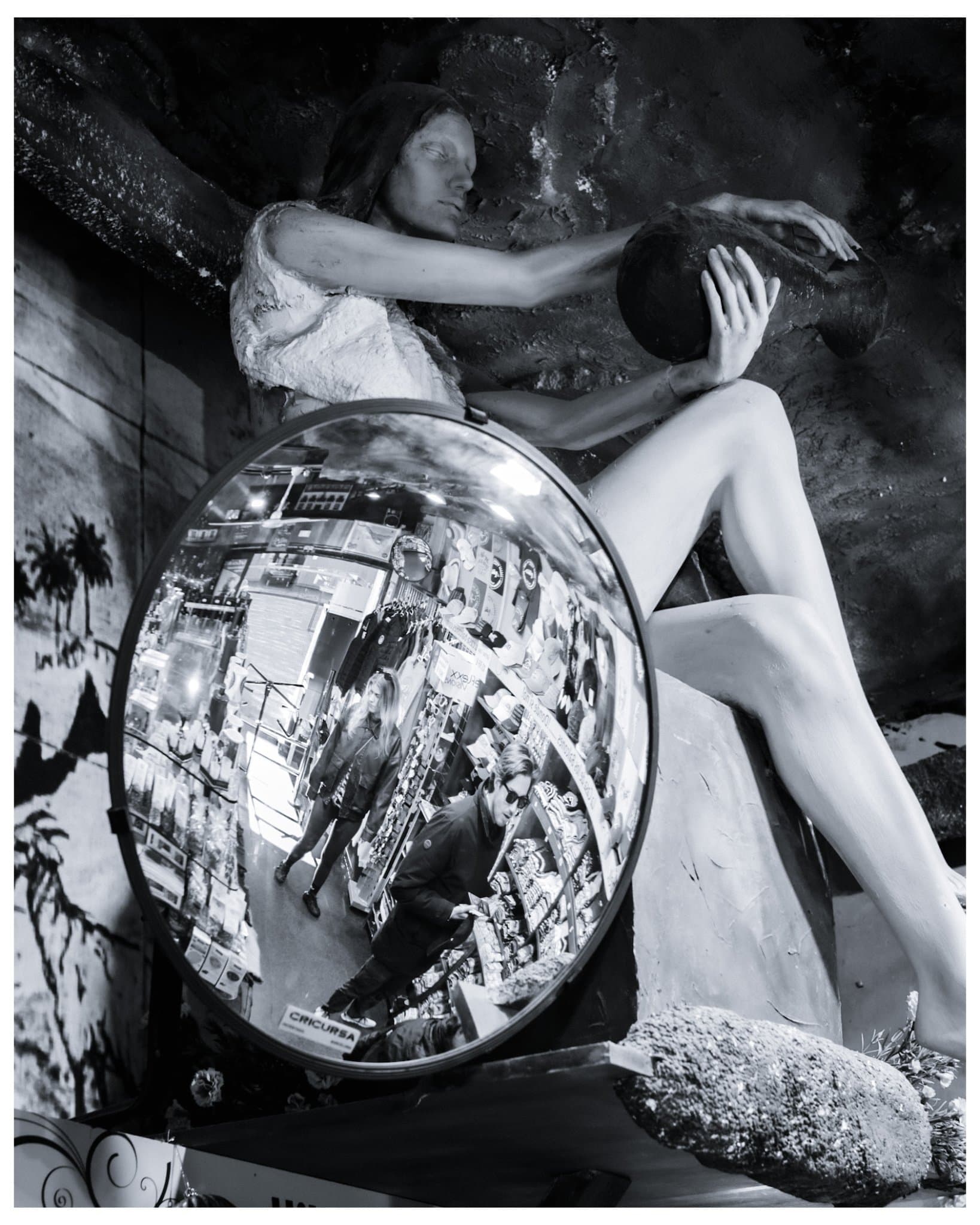
We couldn't walk on the crater, so we walked through the gift shop. It felt surreal. Instead of the vastness of the volcano, we stared into a convex security mirror, watching ourselves wander through aisles of postcards. Outside, we looked out over the barrier into the clouds, wondering what the view would have looked like. Sometimes, you just have to accept that the mountain doesn't want visitors today.
Click to view larger
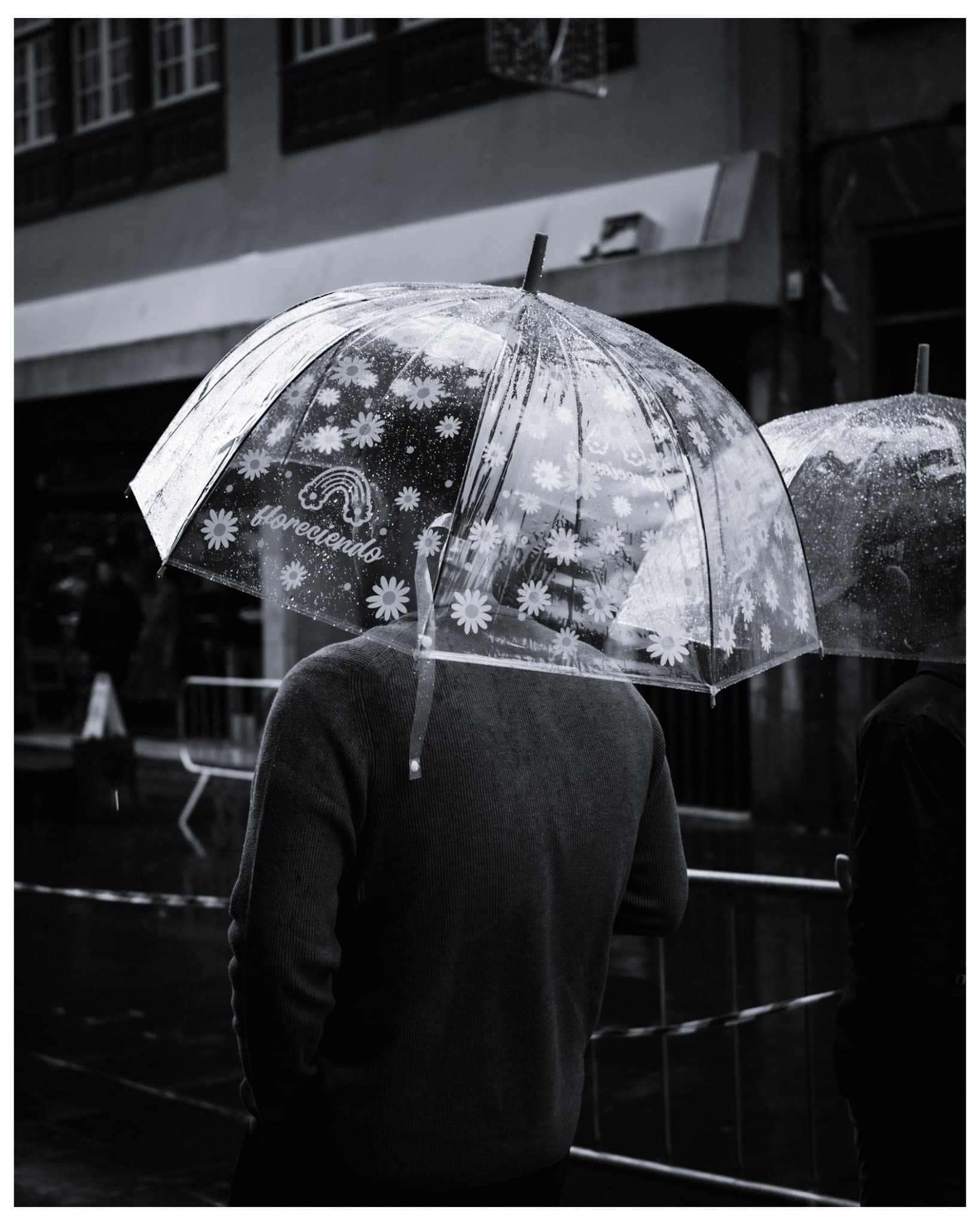
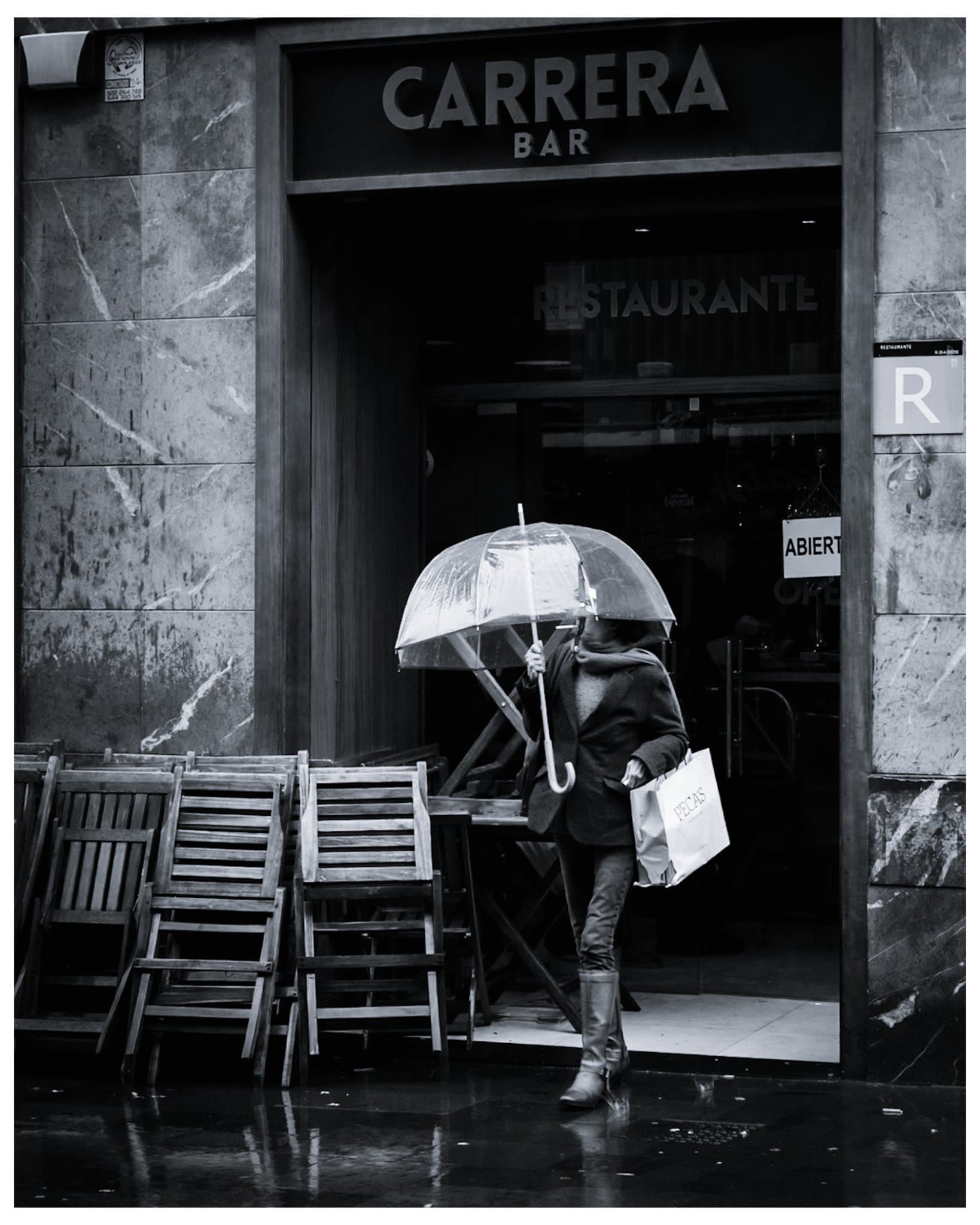
We retreated back to La Laguna to hunt for souvenirs, hoping for better luck. We didn't find it. The rain we escaped in the south was waiting for us here. It poured. But there is beauty in the irony—I captured a clear umbrella with the word "floreciendo" (blooming) protecting a stranger from the gray winter sky.
Click to view gallery
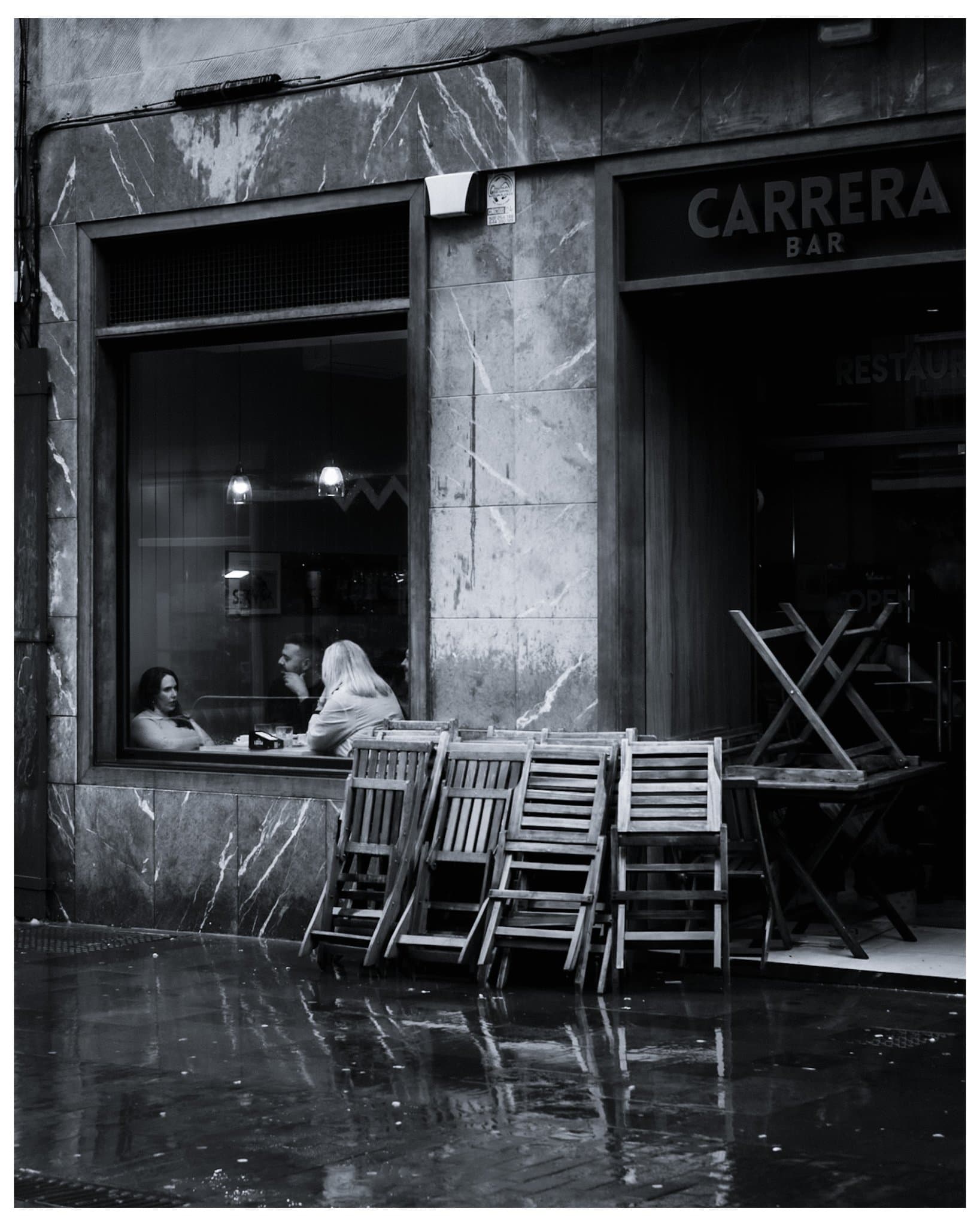
When the rain wins, you go inside. We ran for cover in a coffee shop. The streets were empty, the patio chairs were stacked and soaked, reflecting the gloom of the streetlights. We spent the afternoon watching water run down the cafe windows.
Click to view larger
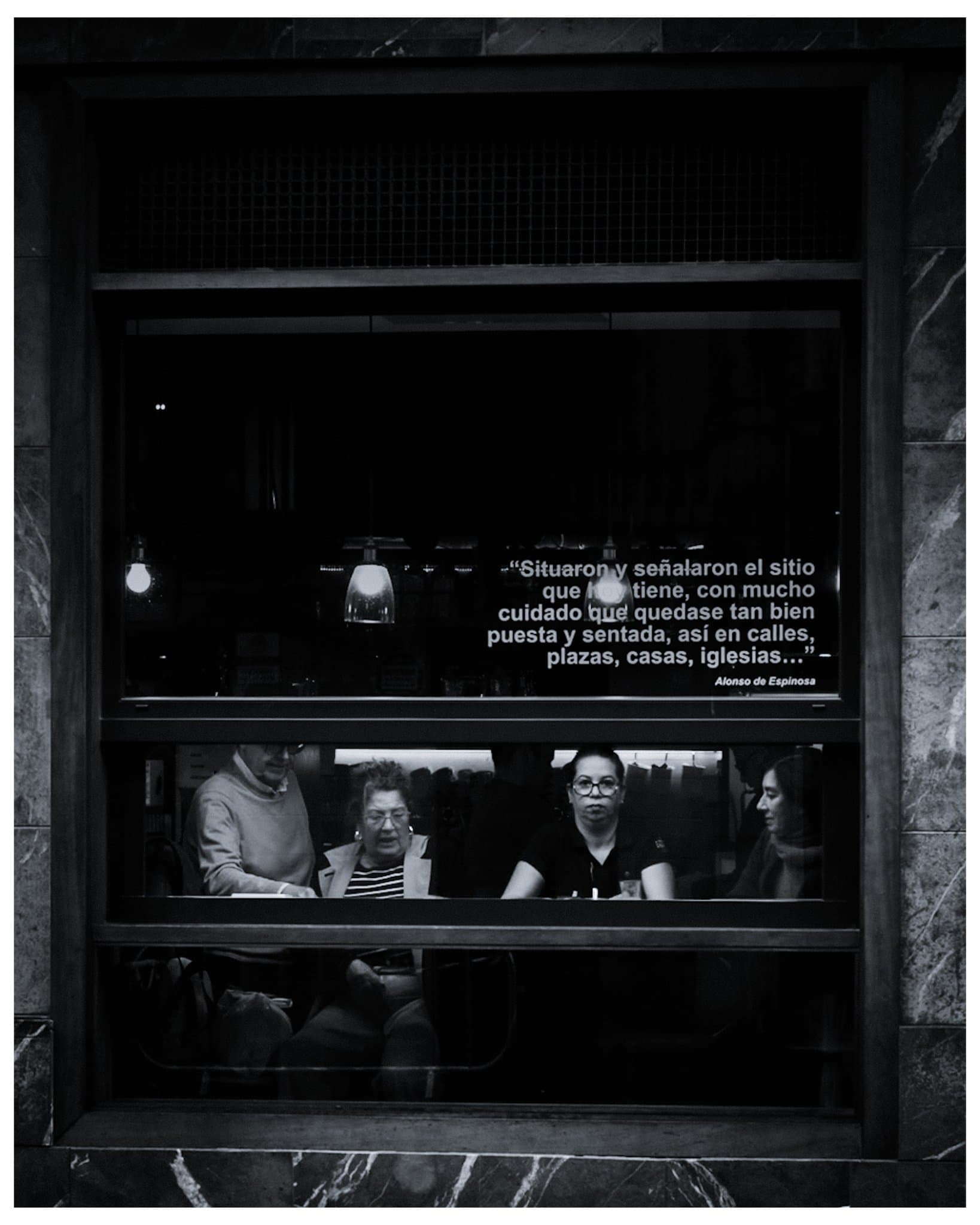
I stared at a quote on a window across the street. It spoke of "placing and marking the site with great care." It felt like a fitting end. We didn't conquer the volcano, and we got soaked to the bone, but we had been here. We had marked the site.
Day 8: The Black Sand
The sun finally broke through. After days of gray rain, the light felt blinding. We drove to Playa de Las Teresitas, the famous beach on all the postcards. It was beautiful, but the imported yellow sand felt too manicured. We got back in the car and drove further, looking for the island we had been exploring all week.
Click to view larger
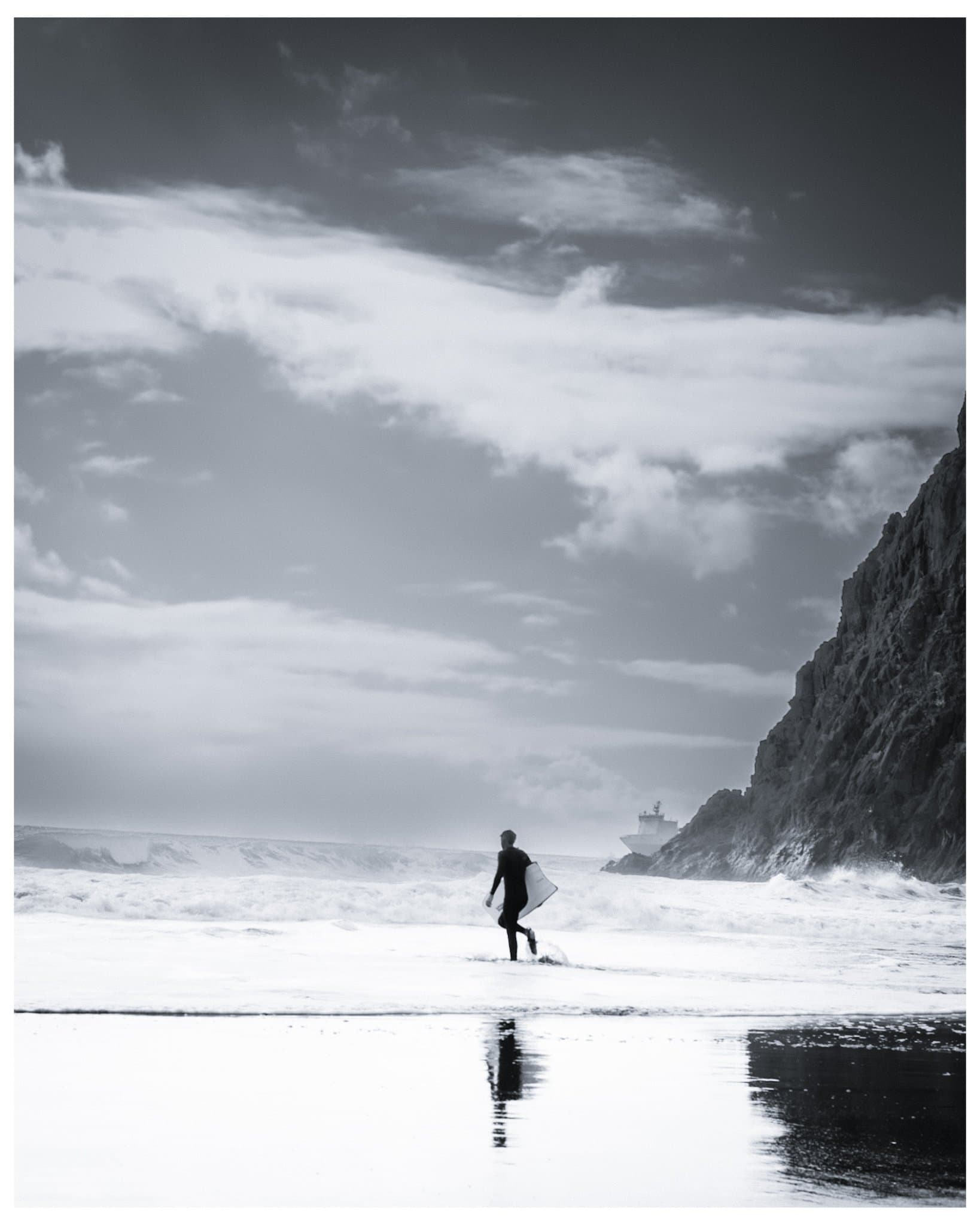
We found it at Las Gaviotas. No imported sand here—just volcanic black dust. The cliffs wrap around the beach like an amphitheater, casting long, dramatic shadows. I watched a surfer running toward the break, his board a stark white shape against the dark cliffs.
Click to view larger
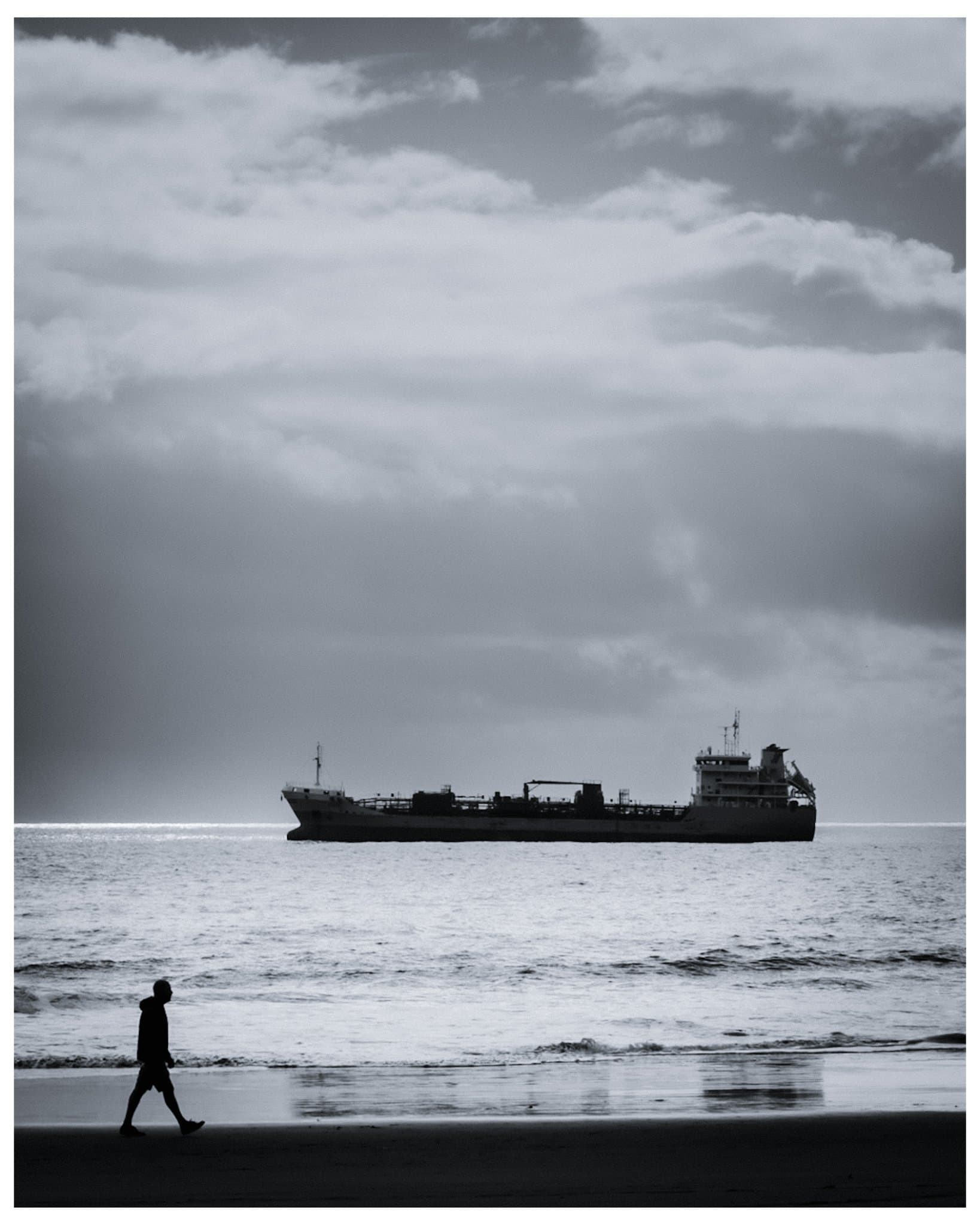
The scale of this place makes you feel small. I captured a lone figure walking the shoreline, just a silhouette against the shimmering Atlantic. In the distance, a massive cargo ship drifted slowly across the horizon. It was a moment of perfect alignment—the walker enjoying the leisure of the morning, and the steel giant working in the distance. Both moving, but at very different speeds.
Day 9: The Reflection
Click to view larger
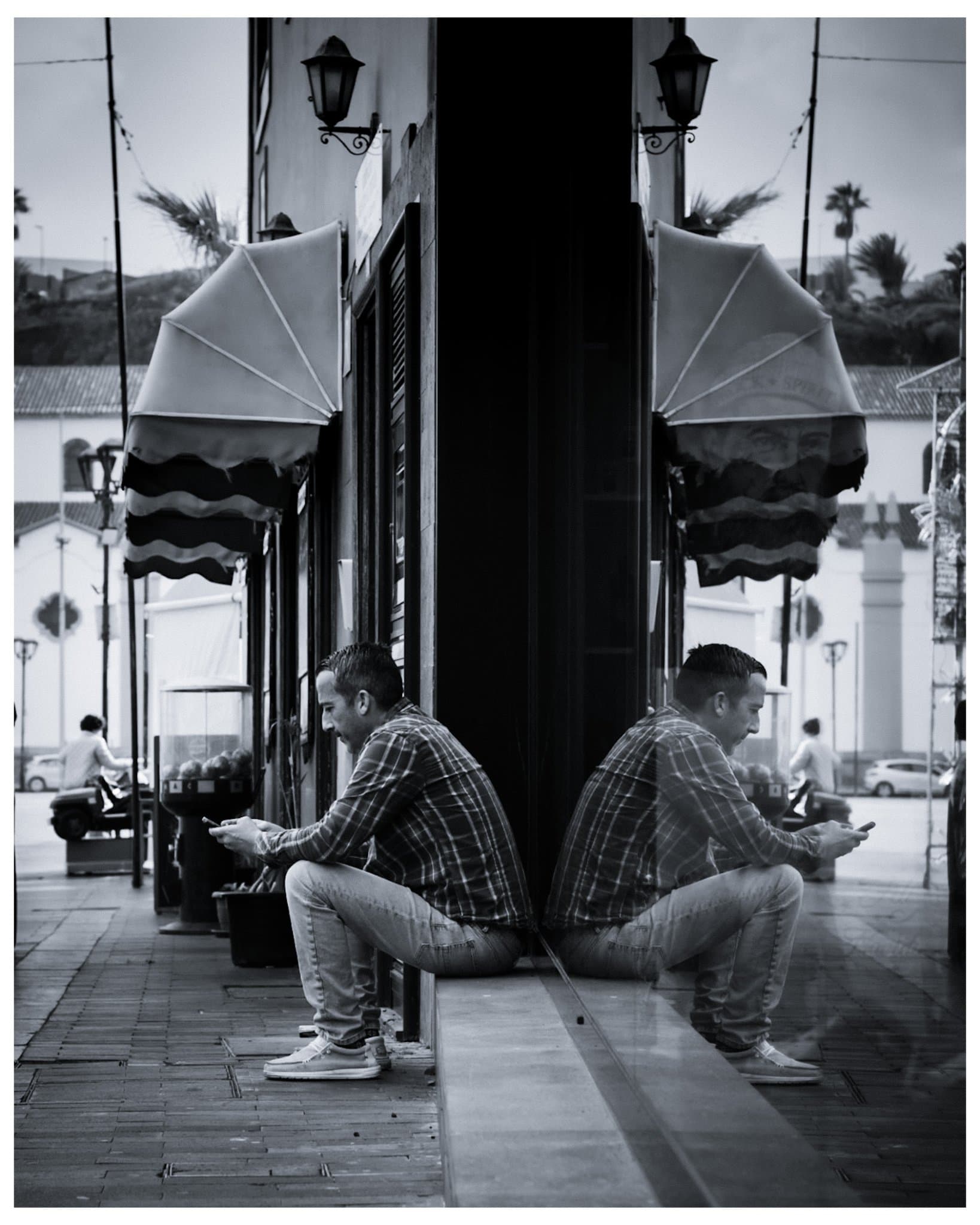
We spent our final day in Candelaria, the spiritual capital of the island. But we weren't there for the basilica; we were just killing time, hunting for small gifts to bring home. I spotted a man sitting against a shop window, checking his phone. The reflection created a perfect ghost of him. It felt like a metaphor for the end of a trip: part of you is still here sitting on the curb, but the other part is already checking the flight schedule, ready to leave.
Click to view gallery
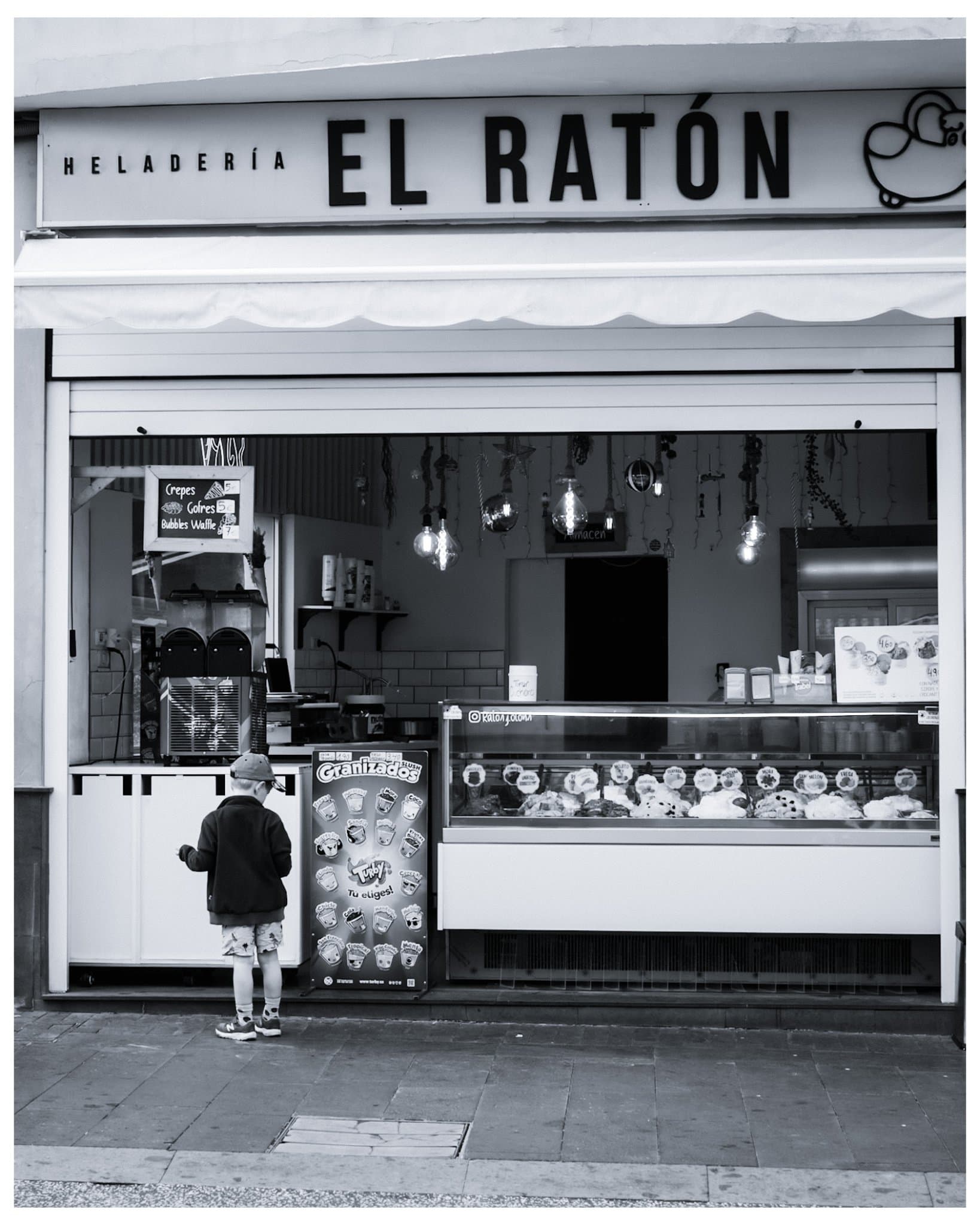
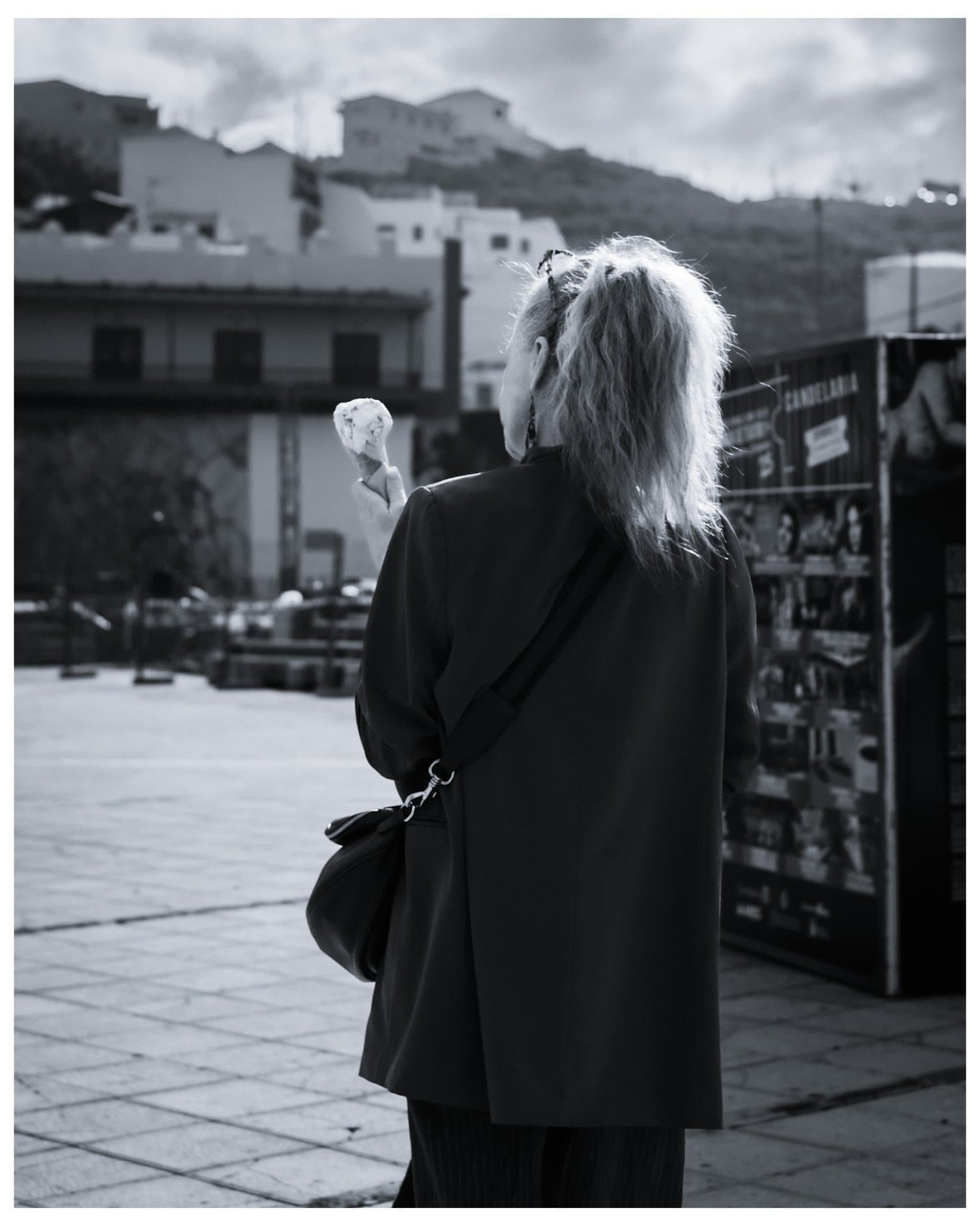
There is something intriguing about watching people eat ice cream in winter. It’s January, the wind is cool, people are wearing blazers and jackets, yet the holiday ritual persists. At a shop called "El Ratón," I watched a child standing completely still, overwhelmed by the serious decision of choosing a flavor. Nearby, a woman stood alone in the square, finishing her cone. We didn't indulge; we just watched. It was a quiet, human end to a week of storms and stone.
Day 10: The Machine
Click to view larger
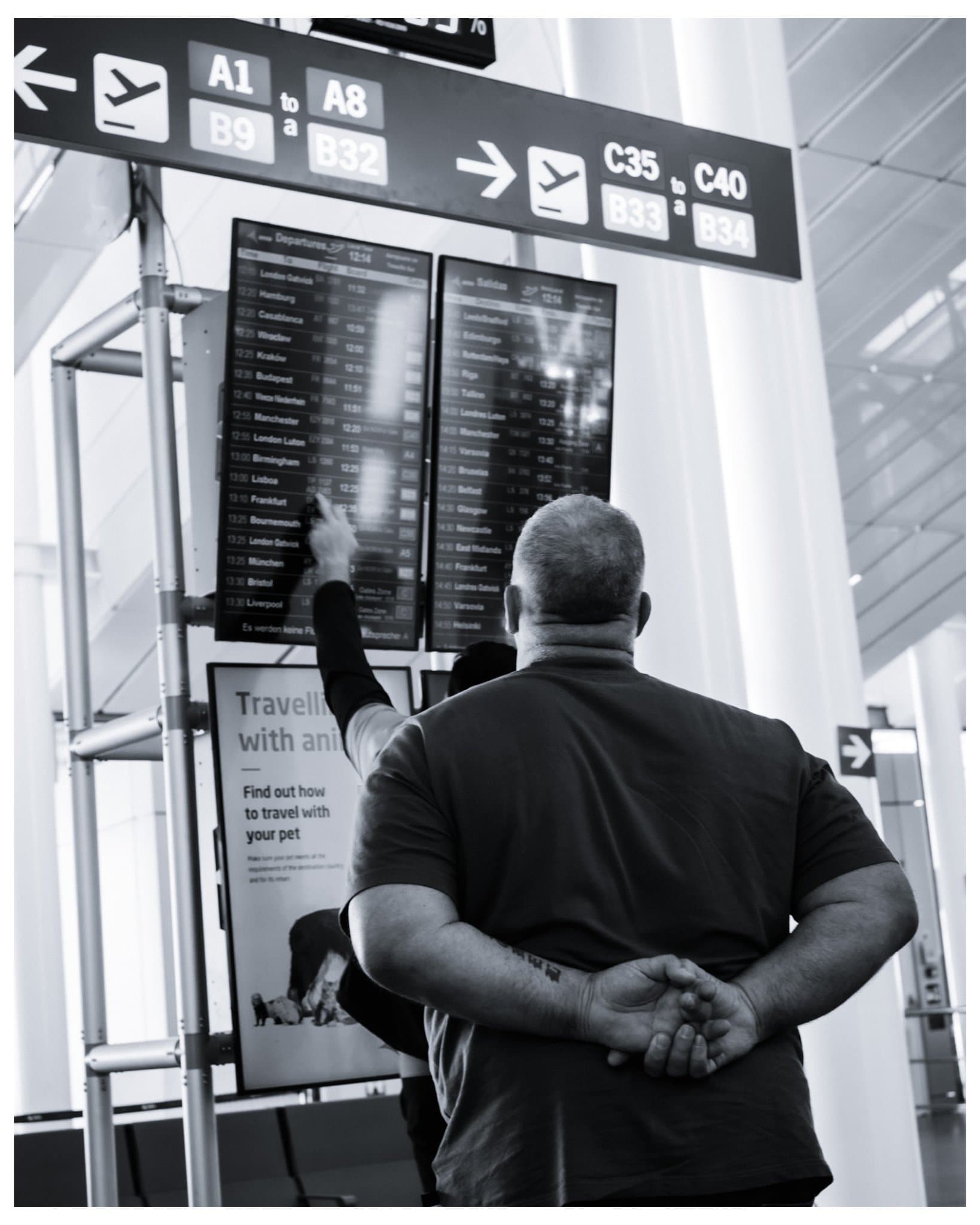
The airport is a sharp wake-up call. After ten days of organic shapes—twisted dragon trees, eroding cliffs, and fluid waves - we are suddenly back in a world of straight lines and digital schedules. I watched a man studying the departure board, hands clasped behind his back. It’s the universal posture of the traveler: a mix of patience and resignation, waiting for a number to change so real life can resume.
Click to view gallery
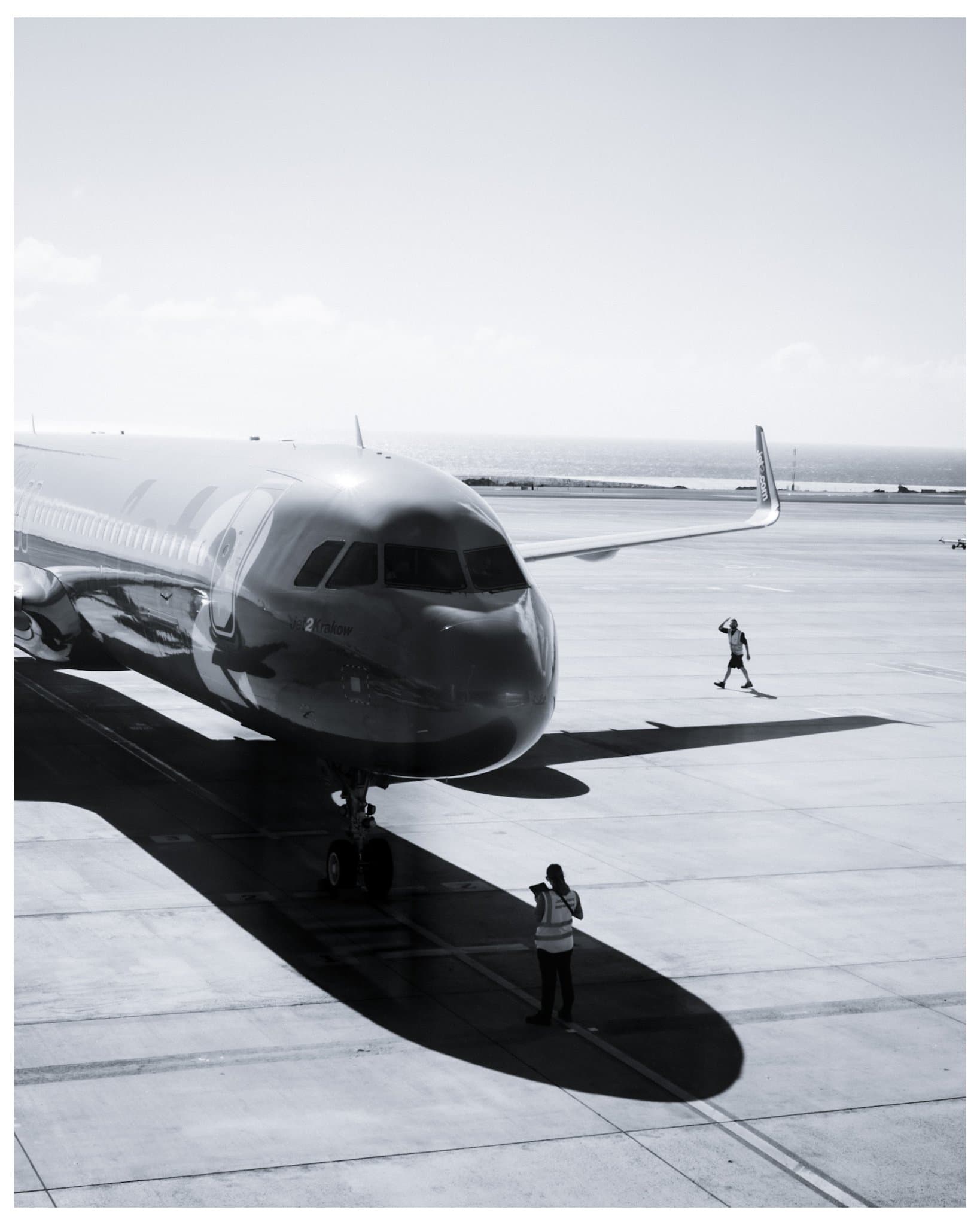
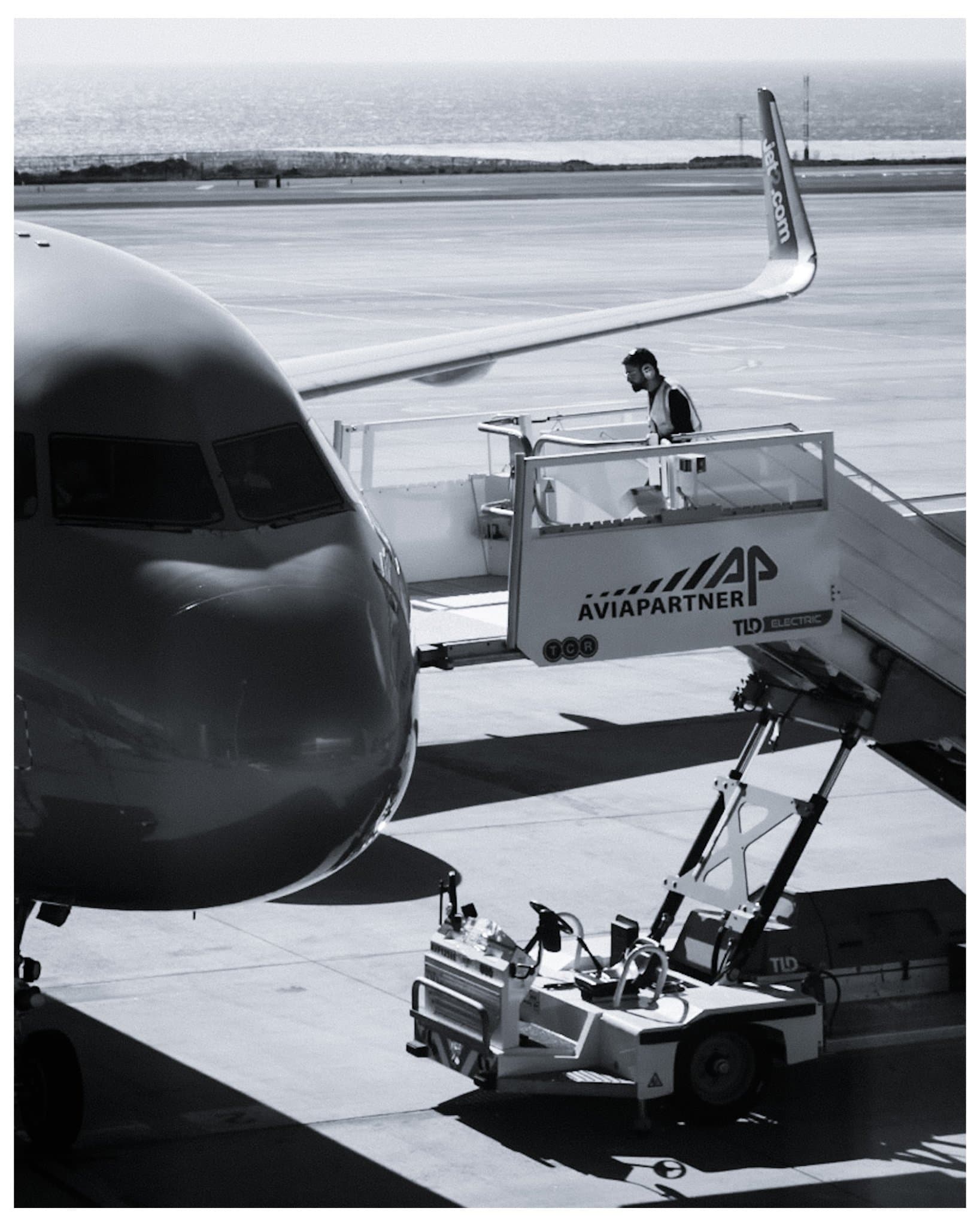
Out on the tarmac, the sun was harsh. It cast a long, hard shadow of the Airbus nose across the concrete. In the distance, you can still see the Atlantic Ocean shimmering—the same ocean we watched crash against the rocks in Anaga just a few days ago. But now, it’s just a background layer. The foreground is dominated by the machine that will take us away. A lone ground crew worker walked across the vast empty space, a final human element in a landscape of metal and kerosene.
End of Roll
And just like that, the shutter closes. This trip wasn't about capturing the "perfect" postcard. It was about seeing Tenerife without the distraction of color. It was about the mood, the texture, and the quiet moments between the storms. Thank you for walking through these contact sheets with me.
Beyond the Monochrome
This collection was about silence, texture, and mood. But the trip itself was alive, colorful, and full of moving parts. If you want to see the unedited reality—the golden sunsets, the behind-the-scenes videos, and the color stories that didn't make the black-and-white cut—I’ve compiled everything into a Highlight on my profile.
Tenerife Highlight
instagram.com
And while you are there, please consider hitting the follow button. It creates a direct connection between us and is the best way to support my work.