Curating Humanity for the Void
The Interstellar Mixtape
A profound, almost aching optimism defines the Voyager Golden Record. In 1977, humanity cast a bottle into the cosmic ocean - a 12-inch gold-plated copper disk carrying the sounds and images of life on Earth. My return to this subject wasn't calculated; it was sparked by a simple message from a friend. He shared a compelling breakdown by Vox that explored the audacity of Carl Sagan and his team, who attempted to summarize the entire human experience into 118 photographs. It was a gesture of hope, a "hello" thrown against the infinite silence.
Watching the story behind the record shifted my perspective on my own archive. Street photography often dwells in the grit, the shadows, and the imperfect geometry of daily life - elements largely polished out of NASA's sanitized version of Earth. But if the opportunity arose to send a personal capsule into the dark? If I could curate ten frames to represent the raw, unpolished reality of my world - the solitude, the architecture, the fleeting glances - what would they be?
This serves as my personal addendum to the Voyager legacy. Ten images. Ten fragments of time. This is what I would send to the stars.
Exhibit A: The Spark
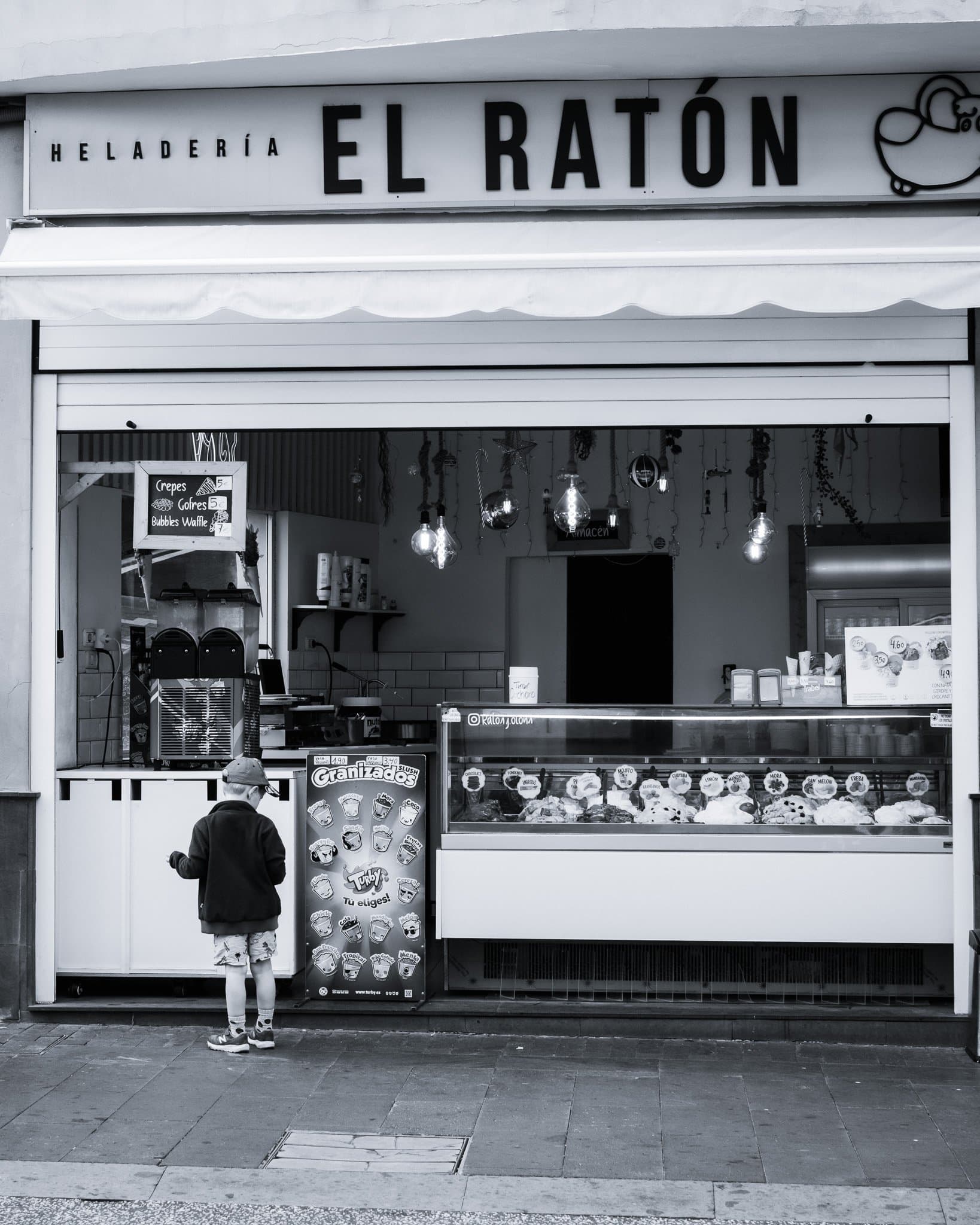
It begins here. Not with grand monuments or technological marvels, but with a small figure standing before a lit window, paralyzed by choice. This image captures the primal spark - curiosity. It is the raw code written into our double helix, the quiet hum in our blood that refuses to let us sit still. Before we looked up to map the constellations, we stood on tiptoes peering into glass cases, wondering what if? This innate hunger, this relentless drive to explore the options laid out before us, is the engine that drove us out of the caves and may one day drive us beyond the stars. It represents the "Why" of our species: the moment we decide to step forward and engage with the world.
Click to view larger
Exhibit B: The Anchor
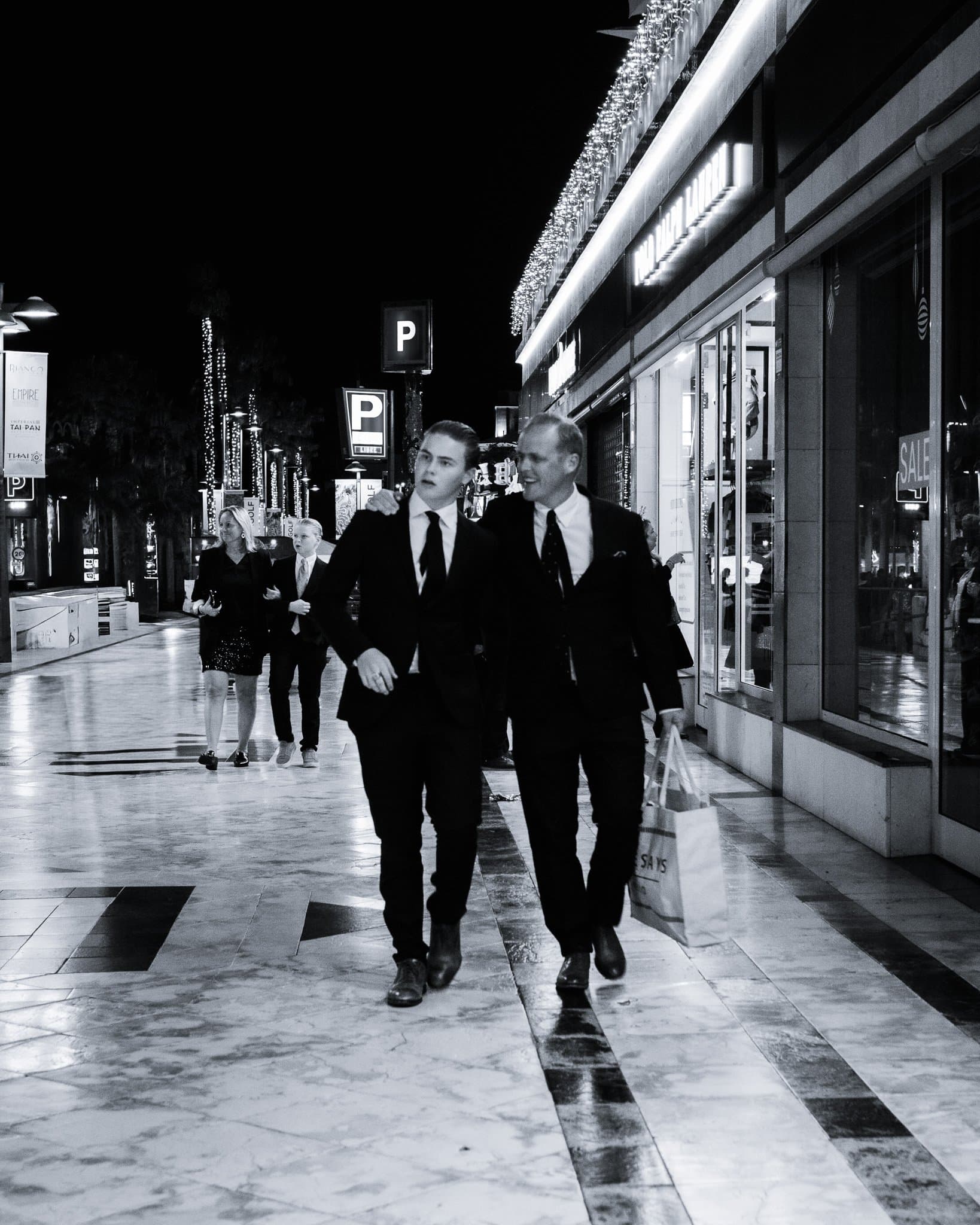
In the neon-lit entropy of the modern city, we do not wander alone. This frame captures the essential architecture of survival: lineage. The gesture is ancient - an arm draped over a shoulder, a physical weight that offers both protection and guidance. Here, the future pauses to listen to the past. It is the transmission of wisdom, a silent language where the elder creates a shelter for the youth against the noise of the world. We send this to the void to prove that we are a species of mentors, that we navigate the dark by holding onto those who walked the path before us.
Click to view larger
Exhibit C: The Bell Curve
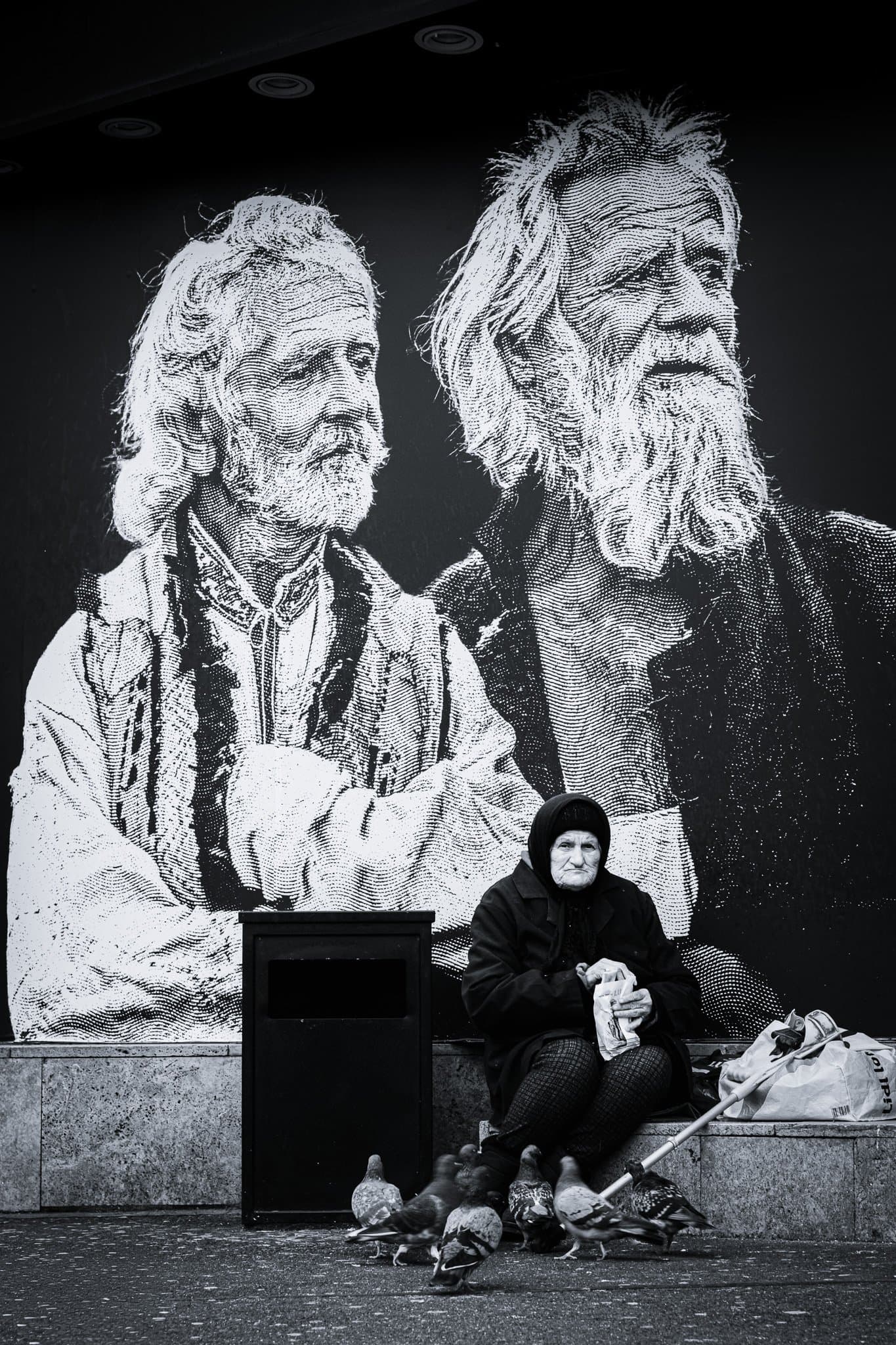
Life follows the ruthless elegance of a mathematical model: the normal distribution. We begin at the far left of the chart - born fragile, grasping, utterly dependent on others to survive. We climb the slope to the peak of our "prime," that brief, arrogant plateau where we stand on our own two feet and believe we are invincible. And then, inevitably, we slide down the other side. This image captures the descent of that arc, where the cycle returns us to a state of fragility and need. The woman, dwarfed by the sketched giants of the past, inhabits the solitude that often waits at the end of the line. Yet, there is a quiet dignity here. We send this to the void to confess our mortality: that we are not static, but a wave that rises and falls, and that in the end, we all circle back to the need for grace.
Click to view larger
Exhibit D: The First Technology
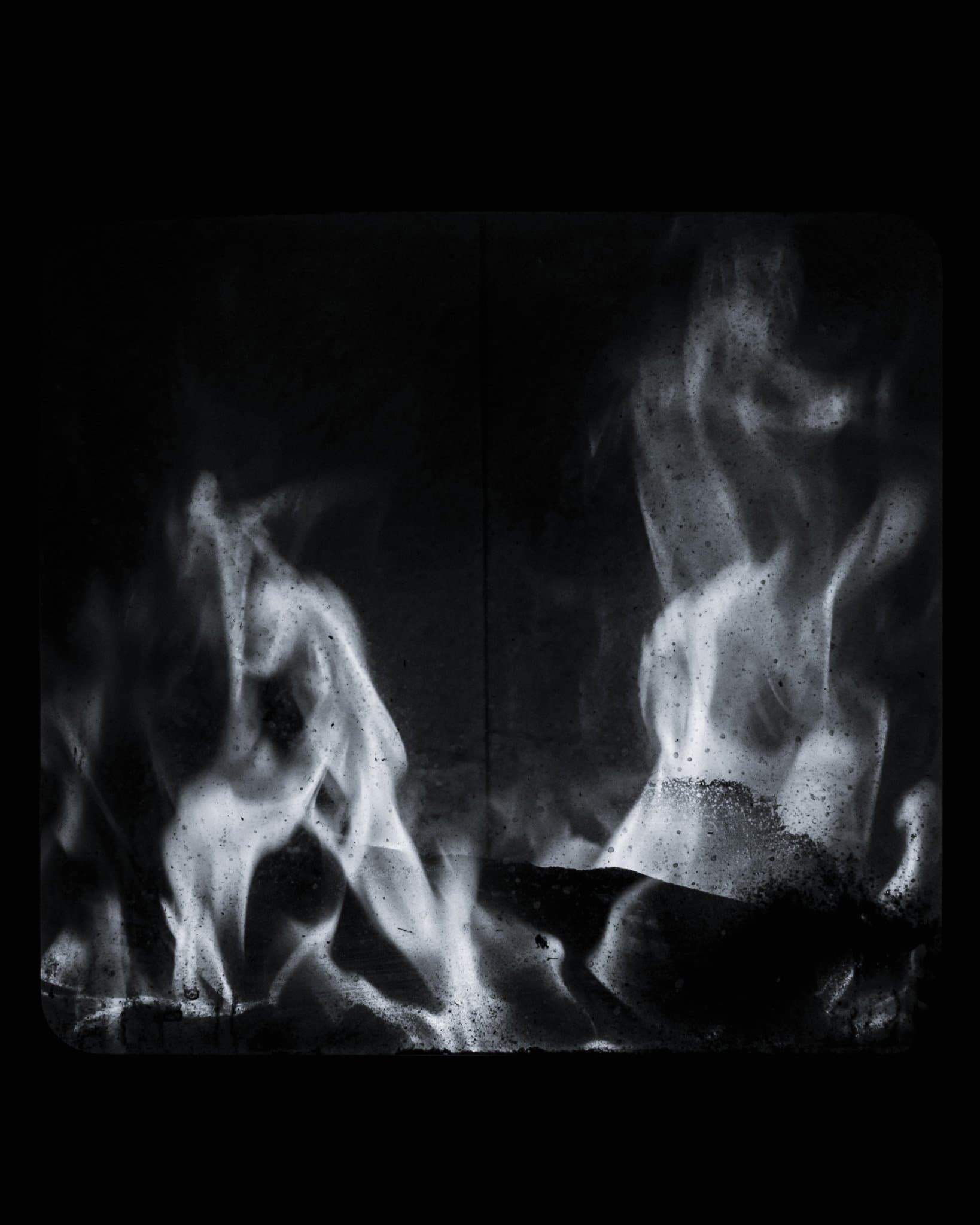
Before we built upwards, we gathered inwards. This frame captures the primal element that sparked our divergence from the rest of the natural world: fire. It is often cited as the catalyst of our cognitive revolution - cooking our food allowed our brains to grow; its light extended our days; its warmth allowed us to migrate. But visually, as seen here, it is also a hypnotic dance, a shapeshifting spirit. It was the original television, the first focal point around which culture, language, and myth were spun. We send this to the void to honor the Promethean gift - the dangerous, flickering tool that turned the night into a canvas.
Click to view larger
Exhibit E: The Rewrite
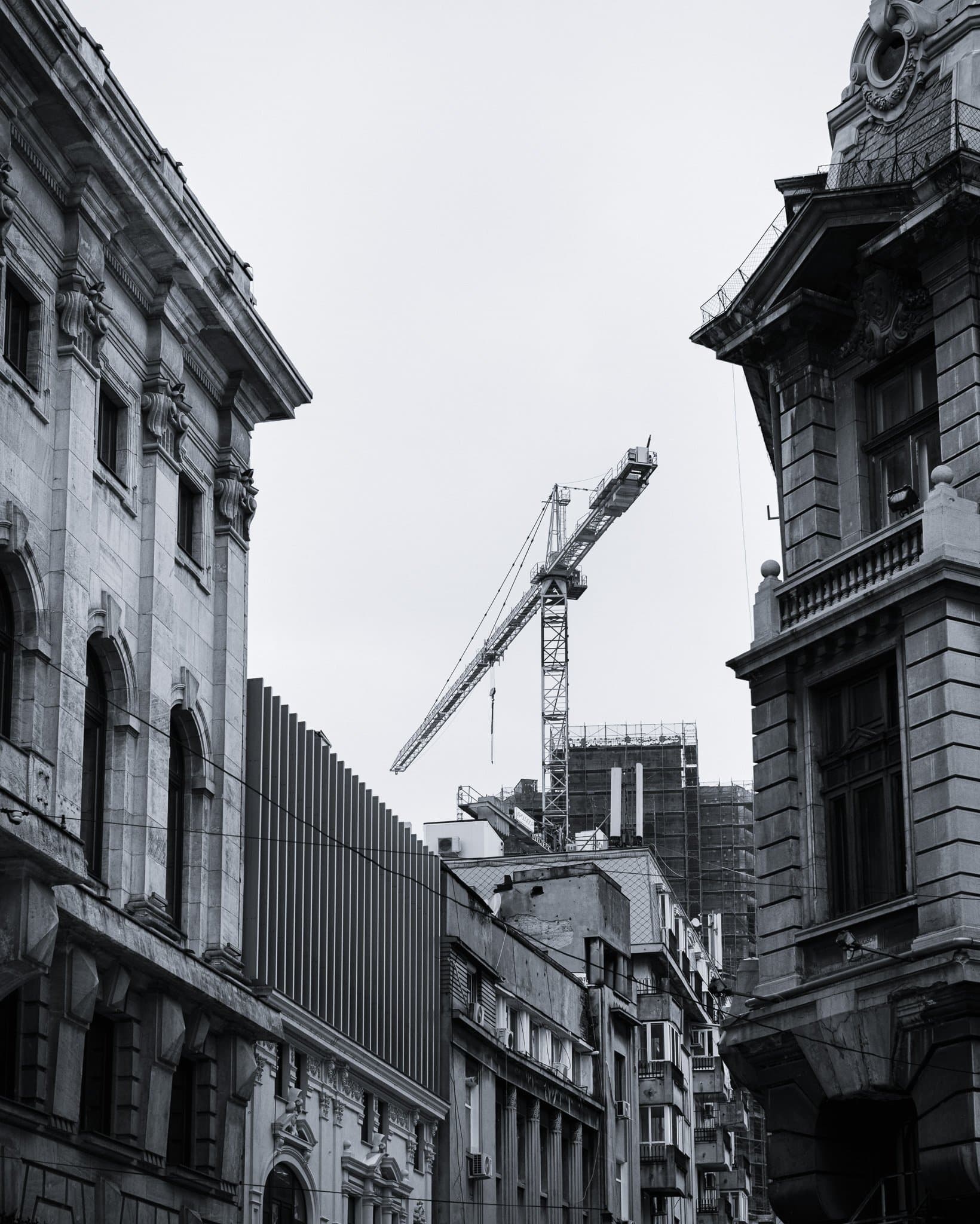
We are a species that refuses to remain static. This frame captures the violent elegance of our evolution: the skeletal arm of a crane rising between the heavy, ornate stone of the past. It illustrates our restless need to rewrite our own environment. We do not simply inhabit the world our ancestors built; we layer upon it, and sometimes, we must dismantle the old to make space for the new. The city is not a museum; it is a palimpsest, a manuscript written over again and again. To send this image to the stars is to admit that we are perpetual builders, forever unsatisfied with the horizon, constantly trading history for height.
Click to view larger
Exhibit F: The Vestige
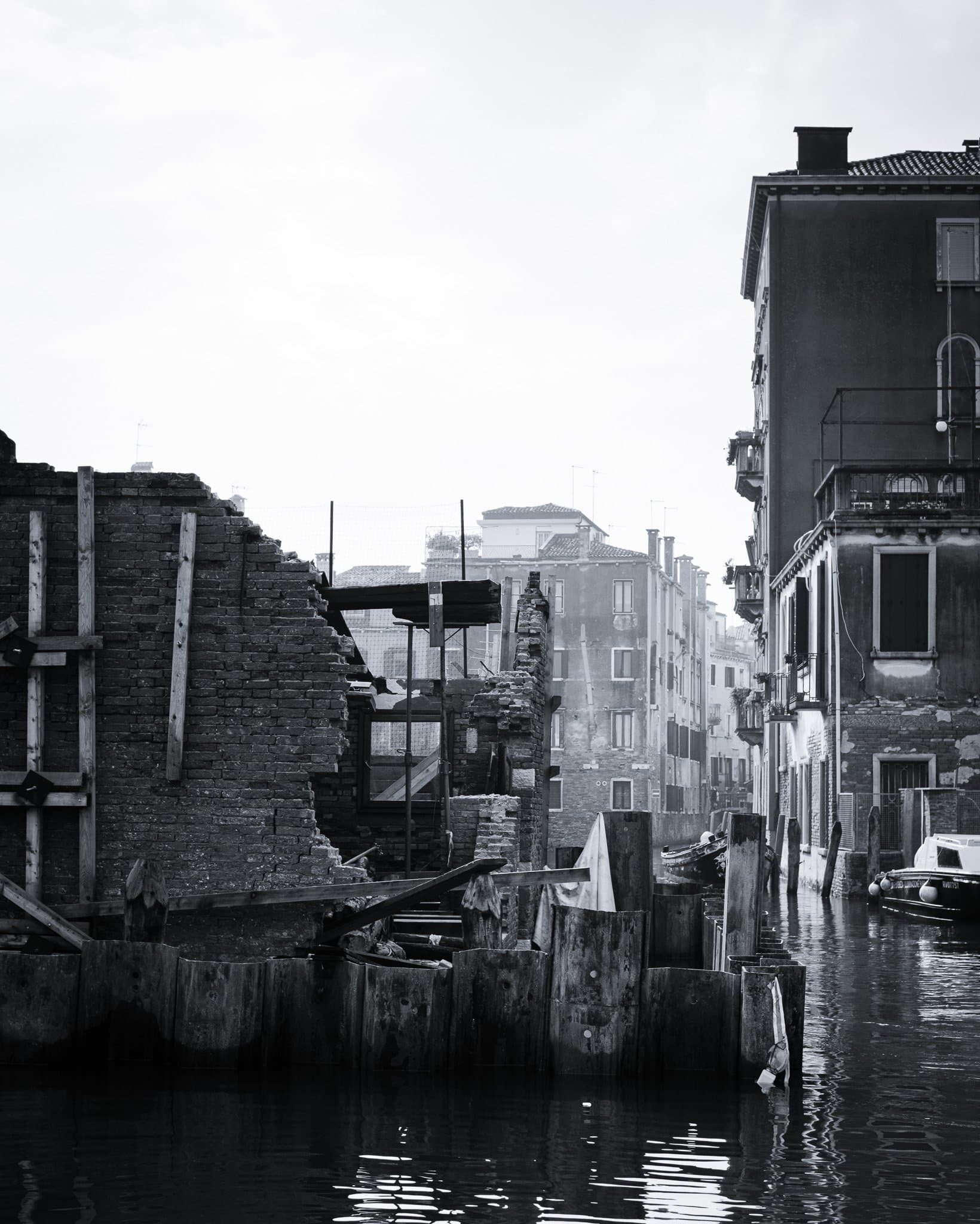
We are defined by our audacity to inhabit the uninhabitable. This frame, with its crumbling walls rising from the water, is a testament to our relentless adaptation. We do not just find homes; we carve them out of rock, ice, and tide. We force the world to accommodate us. Yet, the decay speaks to a colder truth about our nature: we are ruthlessly utilitarian. The moment a creation ceases to serve a desperate need, it is surrendered to the elements. We leave our history to rot not out of malice, but out of indifference. We send this to the stars to show that we are a species of conquerors who are only loyal to necessity.
Click to view larger
Exhibit G: The Leviathan
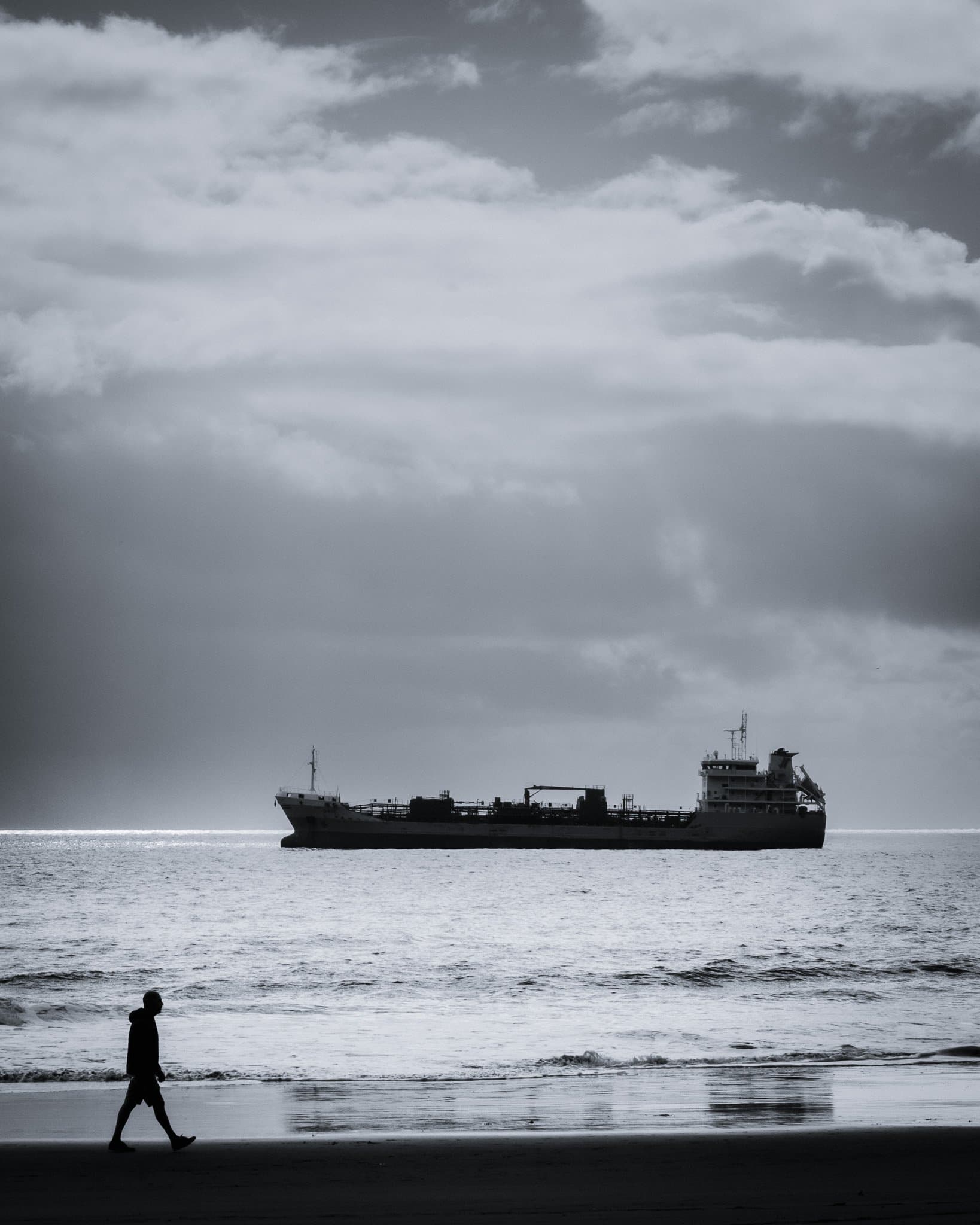
We are biologically small, but our ambition casts a massive shadow. This frame captures the distortion of scale that defines our species. A solitary figure walks the edge of the world, dwarfed not by a mountain or a storm, but by his own creation. The ship on the horizon is a steel island, a floating monument to physics and engineering that defies both gravity and the ocean. It serves as proof that we have outgrown our physical limitations. We no longer just inhabit the landscape; we engineer the horizon itself. We send this to the void to show that while our bodies remain fragile and tethered to the sand, we have built giants that carry our will across the seas.
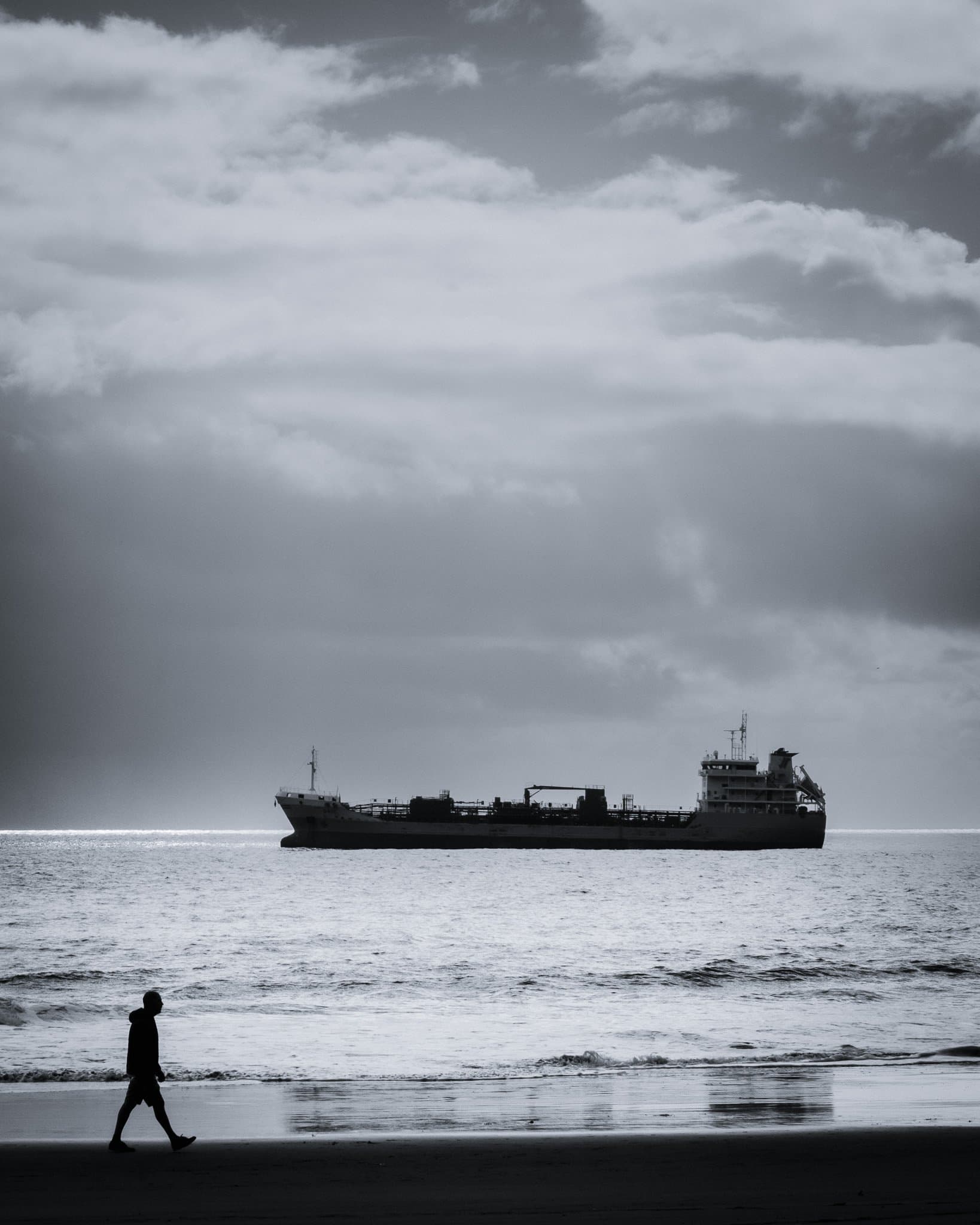
Click to view larger
Exhibit H: The Partition
If we are to be honest with the cosmos, we cannot only show our unity; we must also show our divides. This frame illustrates the invisible but impenetrable wall that slices through our society: a single pane of glass. On one side, warmth, consumption, and the comfort of the "haves." On the other, the cold damp of the street and the solitude of the "have-nots." Yet, the profound truth of this image lies not in the tragedy, but in the irony attached to the backpack. That smiling plush toy - a bright, synthetic grin against the grey reality - serves as a jarring totem. We send this to the void as a reminder that wealth and contentment are not synonymous, and that sometimes, the brightest symbols of hope are carried by those with the heaviest burdens.
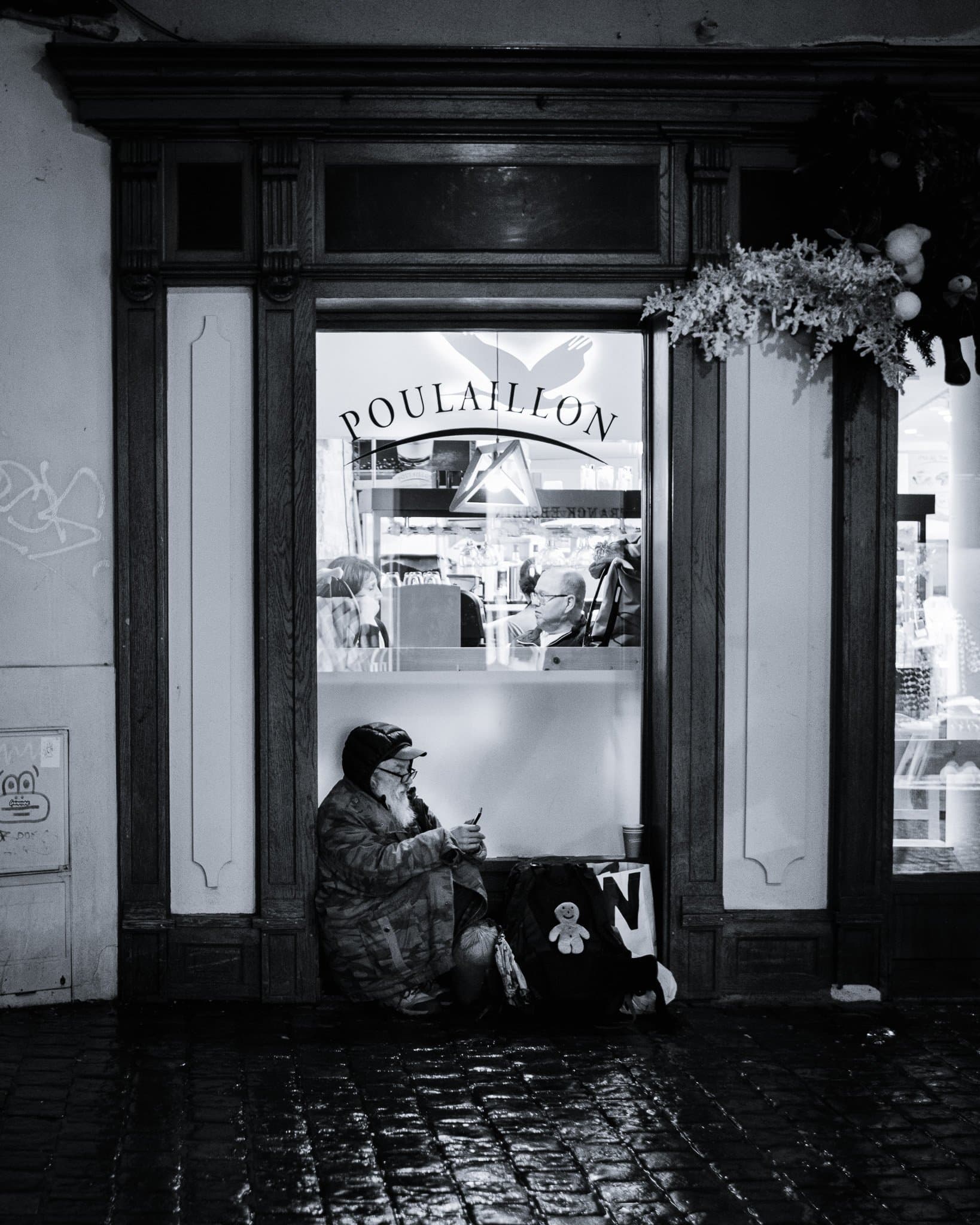
Click to view larger
Exhibit I: The Resonance
Space is defined by its silence and its cold indifference. In contrast, humanity is defined by its noise and its warmth. This frame captures the electric current of connection - the "tribe." We are not solitary hunters; we are social animals who find safety and meaning in the proximity of others. The open-mouthed laughter and the leaning in suggest a shared frequency, a moment where the burden of individual existence is temporarily lifted by the collective. We send this to the stars to prove that while we are born alone and die alone, in the brief interim, we find our greatest purpose in the company of others.
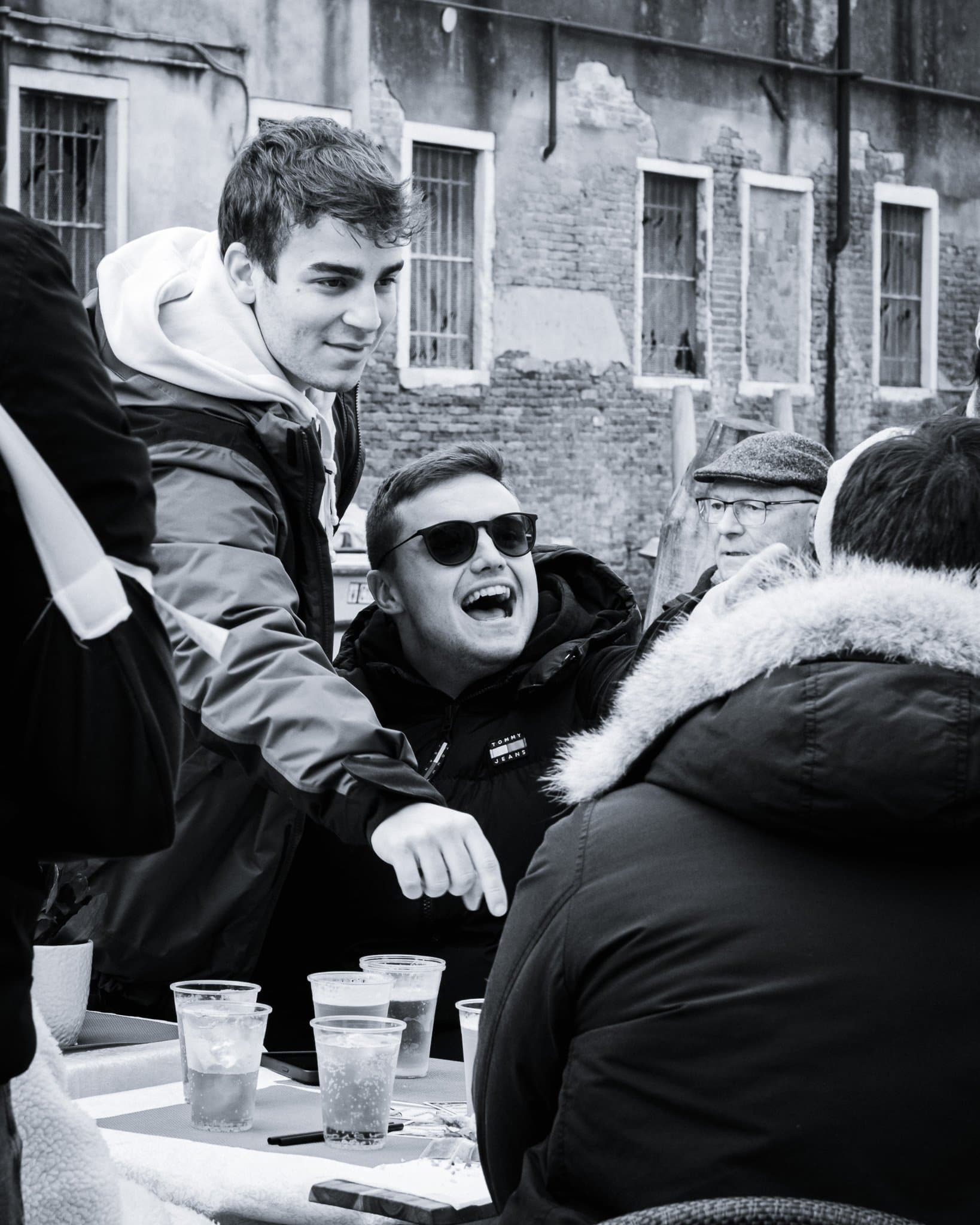
Click to view larger
Exhibit J: The Constant
Finally, we arrive at the answer to "Why?". After the fire, the concrete, and the ships, we are left with this. This frame captures the only force arguably stronger than entropy: love. Two silhouettes merged into a single dark form against the fading light. It is the most irrational variable in our equation - it serves no clear utilitarian function, yet it is the sole reason we endure the struggle of existence. We send this to the void not as data, but as a confession. We are creatures who will cross oceans and build leviathans just to stand beside someone else and watch the sun go down.
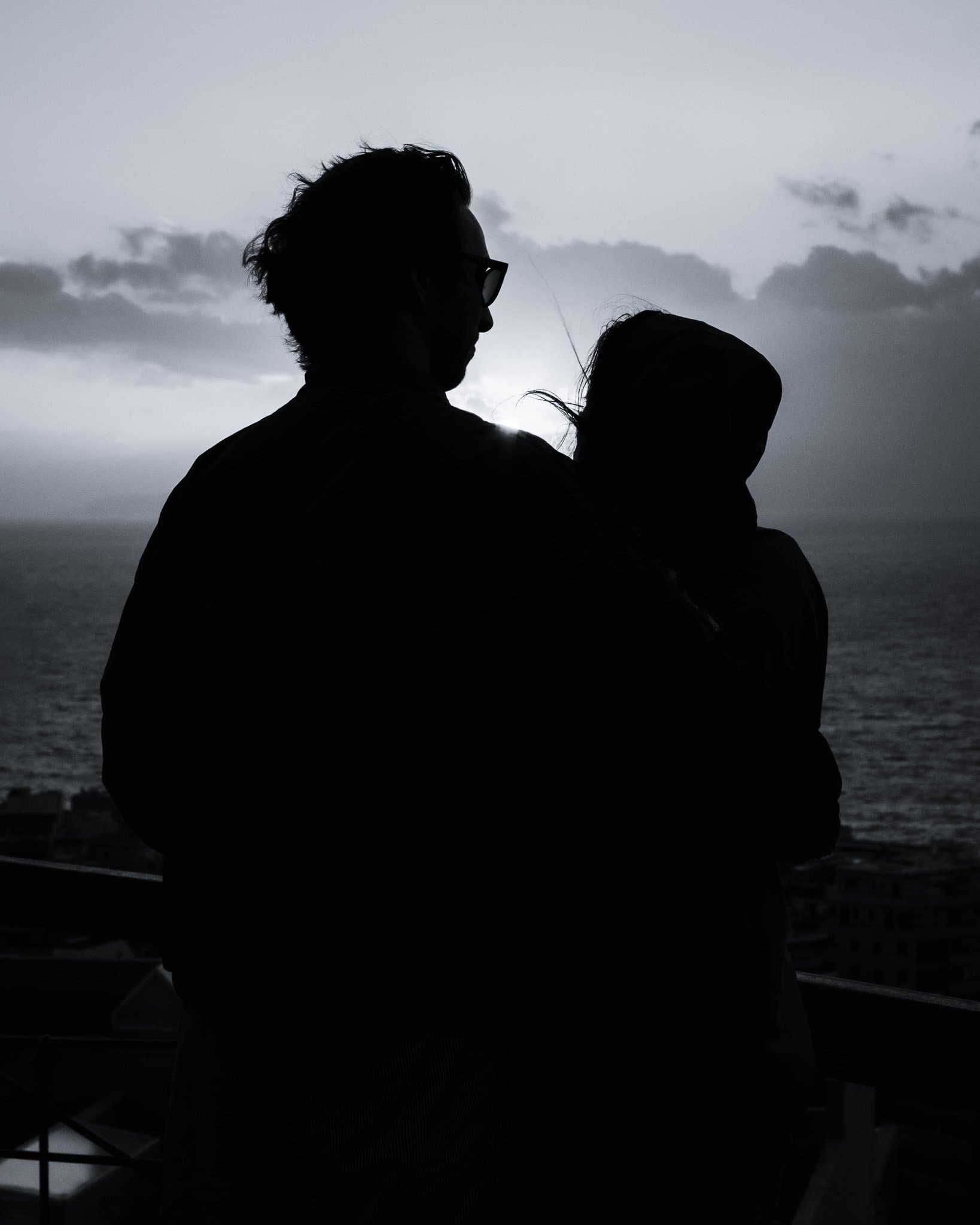
Click to view larger